




The Documentary
When the King of the United Kingdom and head of the Commonwealth nations makes a film with the aid of Amazon, one of the most successful companies in history—if not the most—and solicits the help of various celebrities to feature in it, including narration delivered by actress Kate Winslet, one expects a rather loud reception. But since King Charles III’s film Finding Harmony: A King's Vision was released at the beginning of this year, we’ve heard little more than crickets.
Those who decided to pay it some attention have not exactly been kind, with one Guardian columnist describing it as little more than a tedious vanity project.1 That same article drew attention to the fact that underpinning the film’s case for a renewed ecological ethics to address widespread environmental degradation is a philosophy that comes across as “nebulous” and “woo-woo”. The philosophy in question is what Charles himself refers to as ‘Harmony’.
The fact is that, however much I might want to disagree with the snarky prose of a Guardian columnist, the diagnosis of the documentary is more or less fair. The film tries to do two incompatible things at once, namely convey the King’s philosophy of Harmony whilst simultaneously refusing to explore the spiritual dimension of that philosophy, which—if you read anything that King Charles has written on the topic over the years—is the fundamental foundation of his entire worldview. Hence, the film struggles for ninety minutes to express a metaphysic that it concurrently appears to be deeply embarrassed about.
After the initial third of the film, which is a sustained apologia for what at times have been judged the eccentricities of Charles (talking to plants, biodynamic farming, etc.), and before the final third on the issue of widespread ecological devastation, there is a very odd intermezzo that tiptoes around Charles’s spirituality through the prism of his interest in the sacred geometry. One is left confused as to why the film has been interrupted with this odd focus on what’s seemingly just one of Charles’s pet hobbies or interests. This section ends with a story about a school for the study of sacred geometry that was established in Kabul, Afghanistan, under the auspices of the King’s charities. And for anyone who doesn’t know what the King really thinks, the take home lesson is that we should all be appreciative of the King’s peculiar interests, for if he didn’t have them there wouldn’t be twenty or so new jobs in Kabul.
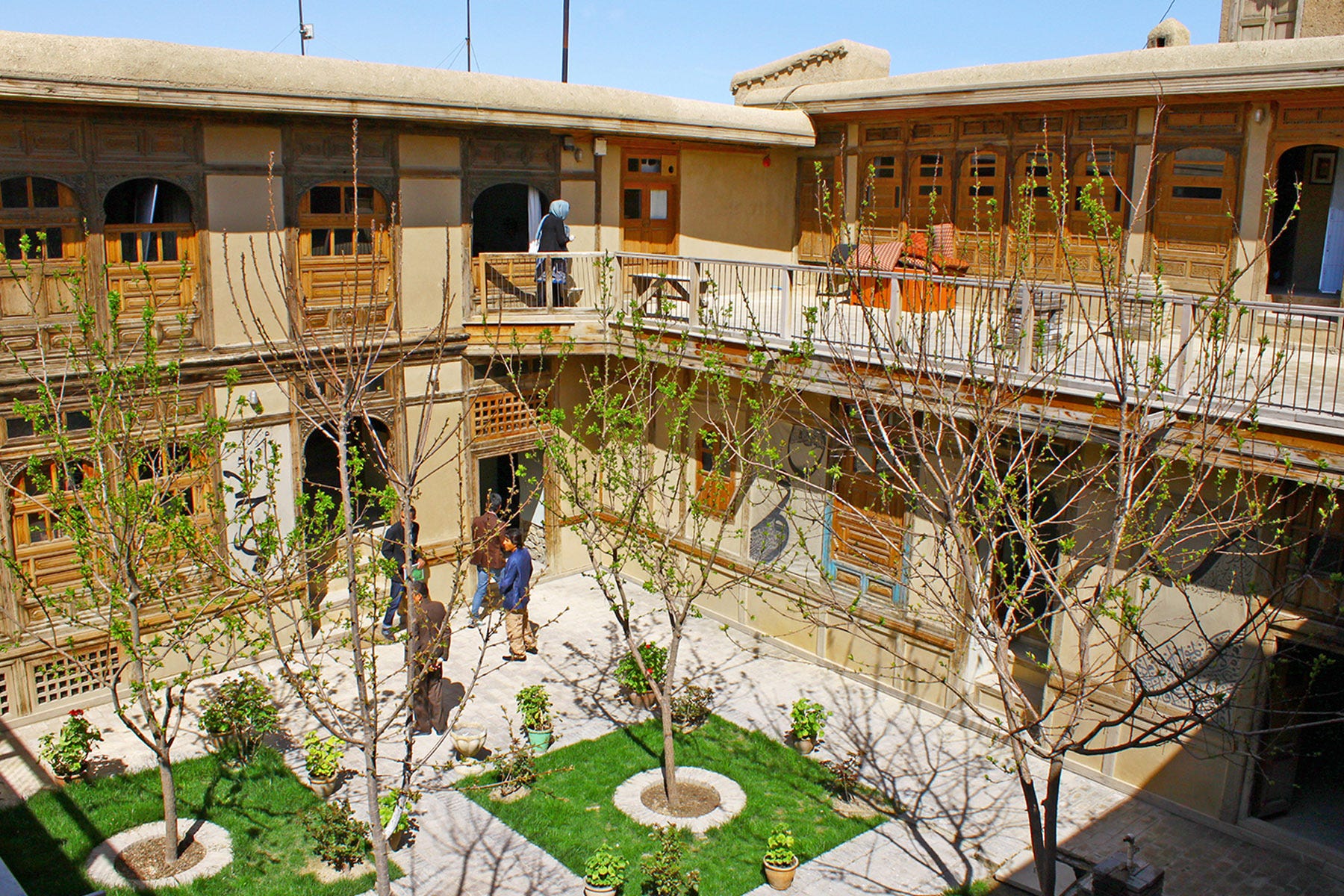
This strange intermezzo illustrates the fundamental flaw of Amazon’s Harmony documentary. The problem with it is not that it’s an otherwise interesting documentary, just ruined due to being plagued by recurring mentions of a “nebulous” philosophy comprising little more that “woo-woo”. Rather, the problem is that it didn’t lean into the woo-woo enough, so to speak.
Had the film been bolder about King Charles’s religio-philosophical worldview and its extremely sophisticated synthesis of various ancient wisdom traditions, it would have greatly displeased some people and hugely pleased others, rather than doing what the film actually did, which was bore everyone who bothered to watch it. Well, not everyone. I, for instance, found it fascinating, but that’s because I was likely among a comparative few to have read Charles’s 2010 book Harmony: A New Way of Looking at Our World, co-authored with Tony Juniper and Ian Skelly, and also to have read a large number of his essays and addresses. Without having some considerable familiarity with his thought, however, Charles’s sophianic yet opaque analysis in the film just seems, as noted, like woo-woo.
Despoiling the Egyptians
King Charles is, in essence, a Christian Neoplatonist. He believes that the world of our experience—the corporeal world—is actuated from the pure potency of materia prima by the reception of likenesses of the divine ideas emanated from the Divine Mind in ever-present God’s creative act. He thus thinks that the universality of the Eternal can only be known by us in a highly developed sensitivity to the particular. As the 20th century perennialists who have had such an influence on Charles’s thought extensively demonstrated, some variant of such a view of the Creator-creation relation was not only the undergirding ontology of Aquinas and other Christian philosophers, but of all great sapiential traditions.
So, when the documentary portrays King Charles talking about the imperative to preserve “heritage variety” root vegetables because, it seems, he just loves crispy skins on his roast potatoes, there may in fact be something much deeper going on than mere preferences concerning his Sunday roast. That different peoples have unique cultures, unique foods, unique ways of relating to the land, and so forth, is all part of how the Timeless and the Universal self-communicates through the temporal and the particular. And the degree to which we undermine that particularity is the degree to which we, as it were, silence the Creator amid His own self-communication.
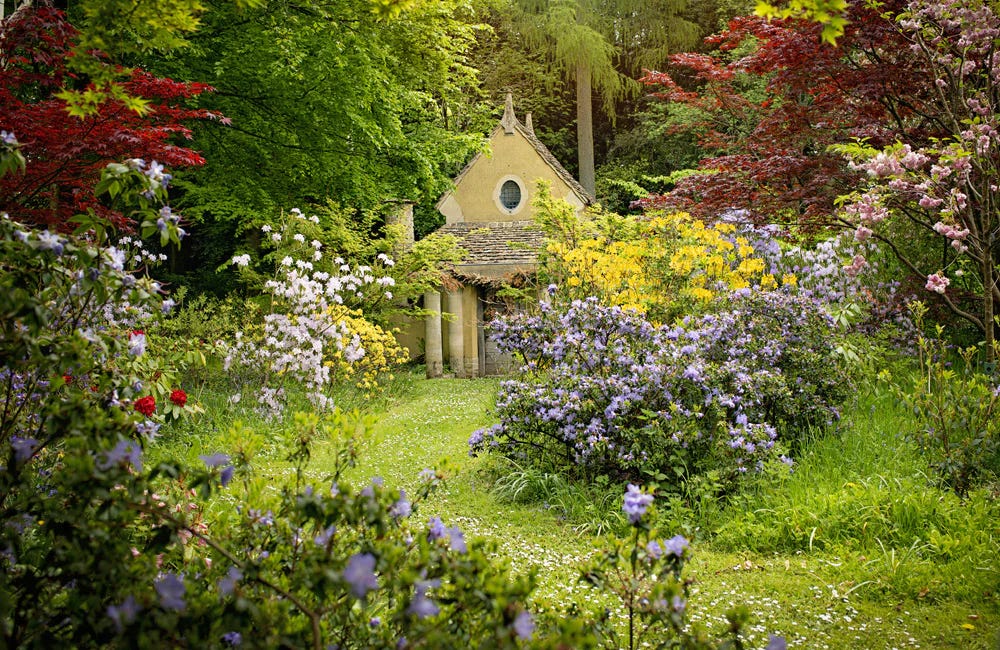
There is a significant and rare moment in the film wherein King Charles walks the camera crew to his chapel, called The Sanctuary, in the gardens of his Highgrove Estate in Gloucestershire. He explains that the building instantiates the Universal in the particular. The building, he explains, is localist in the extreme, comprising only earth, straw, and some other materials from the very estate on whose grounds it sits, but is constructed on the universal patterns of the sacred geometry that is treasured by every great and ancient sapiential tradition. This concern for reconciling the universal and the particular by manifesting the former in the latter is expressly explored by him in that scene:
How do you link the two together? Because we are a microcosm of the macrocosm. There are these universal principles which seem to apply. All our bodies and everything are constituted around these proportionate systems, as is all the rest of nature.
Then Kate Winslet’s narration takes over: “Meeting the King, you get the feeling that he believes strongly in the physical and even spiritual connection we all share with nature”…No shit. This little nugget of script perfectly exemplifies how the film attempts to do two irreconcilable things at once: convey the King’s spiritual vision of reality whilst simultaneously attempting to downplay that same spiritual vision.
In truth, the King’s philosophy of Harmony is essentially built upon a cosmology of theophany. Indeed, in his book of the same name, after describing at length the “timeless principles” that underpin all truly sacred architecture, he writes of holy buildings:
These principles also inform their religious symbolism and open up a clear experience of a deeply anchored view of the cosmos and of humanity’s spiritual role within creation. It is this traditional insight that I firmly believe could be of such help in our own troubled and philosophically impoverished times.2
For Charles, principles conveyed not didactically or catechetically, but symbolically, convey to us—in a way that’s deeper than language—our spiritual vocation and how to live in right relation with the rest of the created order. To the degree a philosophical system cannot accommodate such a sacred symbology, it is, Charles claims, impoverished.
In this shamefully understudied book, the King offers a dizzying whirlwind analysis of Egyptian mysteries, Pythagorean initiatic wisdom, Platonic cosmology, spiritual alchemy, Sufi mysticism, and ever traces God’s own self-communication as understood in these sapiential pathways, repeatedly contrasting what he calls the “grammar of harmony” with the “grammar of the Enlightenment”.
After asserting that “Many aspects of our culture have their deepest roots in the land that clings to the banks of the River Nile”, he writes the following passage:
It is clear that the tomb paintings and papyrus texts they left behind were created by a people alive to their meaning in a way that is hard for us to imagine. As they mapped out those murals in black and red inks the artists who created them attached symbolic importance to absolutely every stroke they painted. Their work was ‘sacred’ art. It was a form of prayer, a vision of the universe conveyed in a pictorial language that did not depict the ‘outside world’. It mapped their experience of the inner realm, which was supremely important to ancient civilizations, to the extent that they considered the inner world the very ground of reality. It was the source that informed the ‘lower’ realm of form and matter and where everything begins. To depict this inner, or higher, reality was to activate the soul and to draw down the qualities of this higher, inner reality. In other words they were bringing alive the realm of spiritual reality in order to empower the lower, mundane world of space and time and things with spiritual significance. This has always been the purpose of sacred art and architecture. It is the process of ‘earthing’ Heaven and is just as alive today as it was 3,500 years ago, for instance in the world of artists who paint icons for a Greek or Russian Orthodox church.3
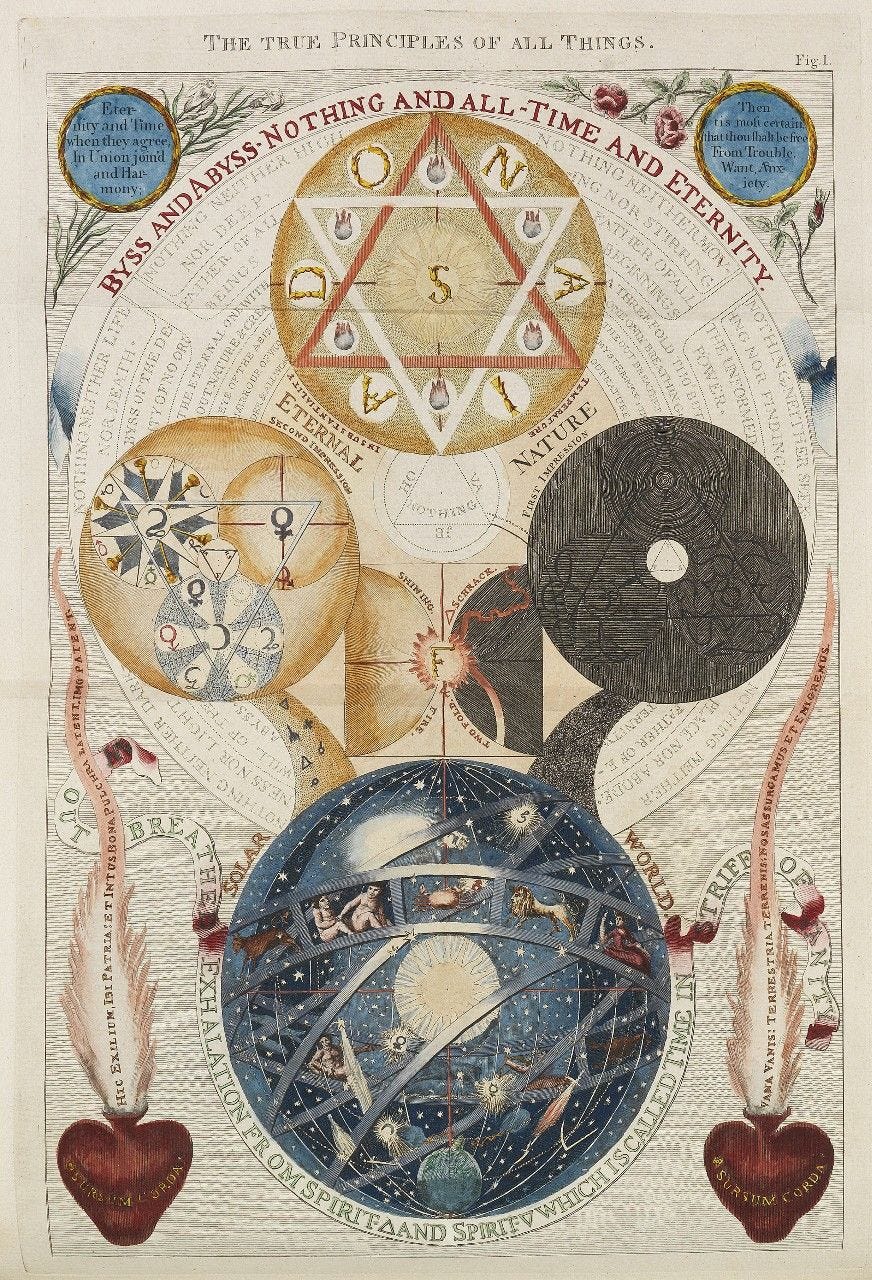
This astonishingly rich excerpt implicitly distinguishes sacred art from religious art. The latter is generally produced to cause some affective response in the observer, like works so widely produced in the baroque age. Sacred art is quite different, and as Charles highlights, its purpose is not only to express the prayer of its author but to re-create an image of the cosmos in its archetypal, transcendent condition in the Divine Mind. That eternal cosmos is encountered through the ‘outer world’ but known in the ‘inner world’ of our souls, by our spiritual ascent to contemplation of the Creator.
Sacred art, then, manifests in the corporeal world that which is the Ground of Being and hence the foundation of that corporeal world. By so doing, sacred art bestows upon the realities of our experience a spiritual significance that they wouldn’t ordinarily have, and which they come to possess through the sacerdotal agency of mankind. Sacred art is, then, a kind of magic in the best sense of the word, incarnating heaven in the earth.
The King’s Perennialism
When we unlearn how to sacralise reality in this way, the execution of which is the vocation of man and the finality of the whole creation, our relationship with the created order falls into disarray. “Only the seductive allure of the level of materialism that now drives modern consumerism”, King Charles tells us, “has distorted this perception of the way the world works.”4 This materialism that has so distorted our perception of the world may be called the ‘reign of quantity’, to use the famous phrase of the philosopher and esotericist René Guénon, a thinker so important to Charles that he has delivered addresses on Guénon’s writings.
The modern reign of quantity is rooted in the misidentification of what number denotes. Number has denoted measurement and quantity ever since the time of Galileo and Descartes, two thinkers at whom King Charles takes aim repeatedly throughout his book. This association of number with quantity is in fact due to a displacement of a much older conception of number, one that Pythagoras learned in the mystery schools of the ancient Egyptian priesthood, and which was fundamentally centred on the qualities of the Divine Mind:
For Pythagoras … the nature of number went far beyond being simply a means of calculating quantity. He held that the nearest the human mind could get to the Divine Mind was through number and, thereby, the principles of proportion and harmony. In this way we should guard against treating the Pythagorean teachings as merely technical matters. They give insight into both the practical world and the immortality of the soul. Number has a living, qualitative value and was symbolic of the higher realms of reality, those levels of reality that lie beyond the touchable, ‘actual’ world. It may seem an odd thing to say in this day and age, but Pythagoras taught that number expressed divine quality. Not only is the natural world constructed according to a precise mathematics, Pythagoras suggested that if we contemplate its patterns deeply we are led into communion with the very source of number itself, which is unity.5
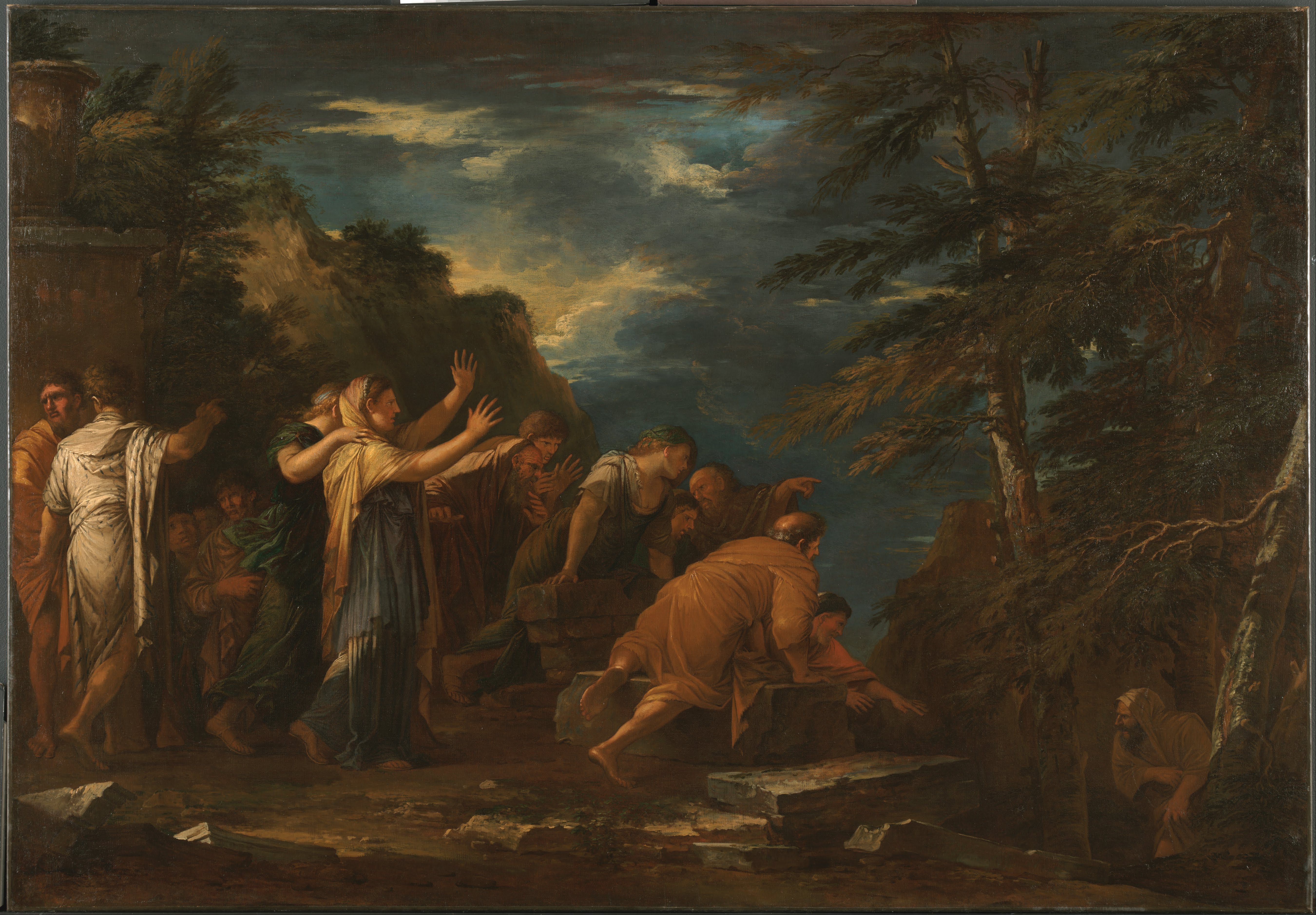
Again, in this passage the same theme occurs: the world we encounter through our senses is the incarnation of the ideas or qualities that exists eternally in the Divine Mind. As long as we do not grasp this, we close off the world from that of which it is a communication, and consequently we sever it from its meaning and its purpose. The practical result of such spiritual blindness is that number ceases to express the order, coherence, and goodness bestowed upon creation by its Author, and instead becomes inverted: a mere means for measuring the purposeless stuff with which we’re surrounded, and of which we no longer consider ourselves a part. In turn, the world spirals into a paradigm of fragmentation as we reap havoc upon it due to our inability to grasp what it is. Having forgotten that in our interaction with the world we are always venturing into the sacred, we proceed on a path of desecration. Every aspect of chaotic modernity follows from this, whether it is malpractice in healing, toxifying in agriculture, discord in politics, desolation in ecology, uglification in urban planning, or anything else.
Reconciling the Esoteric with the Exoteric
This is the fundamental teaching of King Charles: that somehow we must reconcile our exotericism with our esotericism. The exoteric is how we relate to the world, in our building, cultivating, healing, and so forth; the esoteric is why we must relate to it through the prism of Harmony, the understanding that our interrelation with creation is a form of intercourse with our Creator, and thus a sacerdotal and sapiential enterprise.
In a striking passage, following a profoundly deferential appraisal of Thomas Aquinas’s contribution to the Western intellectual tradition, Charles reflects on the damage done by medieval nominalism as a preamble, as it were, to the so-called Scientific Revolution:
In time it [nominalism] framed the outlook that allowed science to make its clean break from religion and forge ahead towards modernity. It effectively shattered the organic unity of reality, which could be traced back to Plato and Pythagoras and, before them, the Egyptians and the start of the Vedic tradition in India. At the heart of things, within a very short space of time, that all-important, timeless principle of participation in the ‘being’ of things was eliminated from mainstream Western thinking. Or, to put it more graphically, with God separate from His Creation, humanity likewise became separate from Nature.6
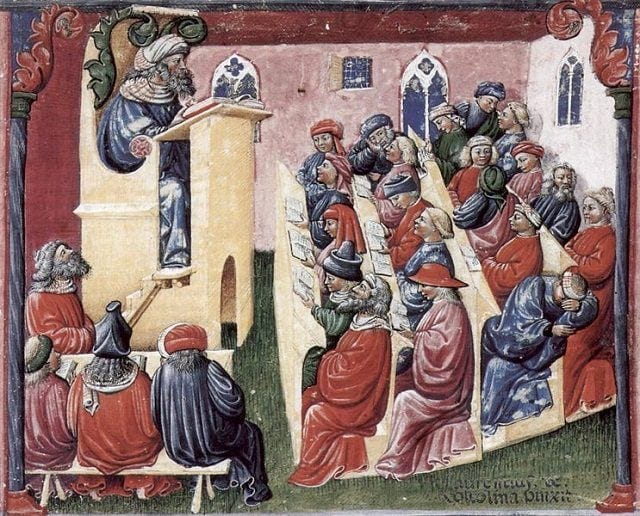
For King Charles, whatever its relative benefits, modernity—what that term both denotes and connotes, namely the machine-reality in which we’ve all found ourselves—really did require a clean break with everything that had preceded it; in short, a rejection of thousands of years of accumulated wisdom, alongside a concurrent denunciation of that wisdom as mere backwardness and superstition. The entire emanation-participation ontology, that had undergirded a philosophy centred on being as that one principle which could be predicated analogously of both God and creatures, was discarded for a nihilistic worldview centred of a universe of meaningless, purposeless stuff, to be utilised by isolated, insulated, atomised selves, severed from the corporeal world with which we were meant to subsist in a creative unity.
There is sometimes critical talk among some Christians concerning King Charles’s syncretistic views on religion, and no doubt some of that criticism is well-founded. Certainly, I have my own misgivings about some opinions he has expressed regarding the supposed need for our civilisation to accommodate Islam, and his repeated insistence that negative views of Muhammed and Islamic history are due to ignorance. (After all, many people develop such negative views on account of increasing their learning.) Be that as it may, it is clear that he thinks modernity, with all its nihilism, materialism, reductionism, instrumentalism, and every other pernicious ism you can think of, is fundamentally incompatible with Christianity, and he commends the Catholic Church for never accepting modernity’s ideational paradigm:
By the end of that volatile and bloody period in European history during the seventeenth century a messy divorce between science and religion had occurred. What had been a purposeful and unified understanding of Nature was replaced by a purely scientific, mechanistic conception of Nature. It is interesting that the Catholic Church has never accepted this reductive view of creation but, even so, the Christian Church in general has struggled to keep science within the larger unified view of Nature, not least because the majority of Christians have been swept along by the scientific view of the natural world regardless of the Christian view.7
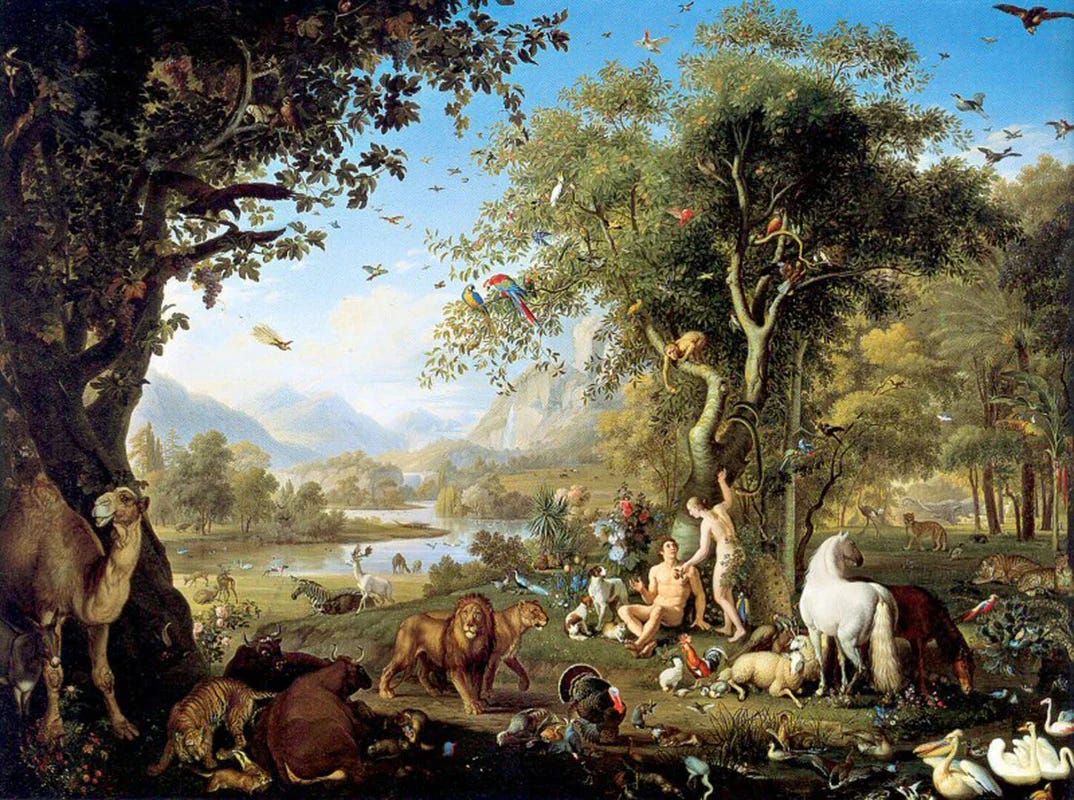
Here, King Charles highlights a crucial problem that plagues the Church in the modern age. It is, at bottom, an institution collapsing in on itself. At the level of its doctrine and its intellectual and moral tradition, the Church holds to a worldview that is entirely at odds with the modern paradigm. But its faithful largely, though unwittingly, reject the Church’s core ontology and deem her wisdom to pertain only to the interior, ‘spiritual’ sense of selfhood, not one that encompasses all reality. Beyond that sense of interior ‘spirituality’, which is so easily subjectivised into thin air, it is assumed by most Christians that only the scientistic account can say anything meaningful. Indeed, there are many movements within the Church now that aim to reinterpret Christian revelation in the light of contemporary science, which often means not science at all, just bad, physicalist philosophy. I might add that, having adopted the ideology of ‘pastoralism’, the institutional Church appears to hold that in order to adapt to the requirements of its modernised flock, it must performatively repudiate its own tradition, a disastrous trajectory that is especially observable in its widespread liturgical desecration.
Speaking of those few remaining communities across the globe who have, for various reasons, resisted the more harmful and deracinating effects of modernity—what Charles calls ‘primary people’—the King writes the following:
Just as Plato did 2,400 years ago, or the later ‘Neoplatonists’ like Plotinus of Alexandria, primary people today see … everything they do in the world to be an event formed first in the spiritual realm, where everything has its source. Back in the third century Plotinus was very clear about this. He was in no doubt that consciousness gives rise to matter, not the other way round.8
Whereas the ancients taught that being cannot come from non-being, and that matter cannot spontaneously produce consciousness, modernity requires us to believe—wholly against reason—that being comes from non-being, that effect can be produced without a cause, that contingent being need not be contingent upon anything, and that both life and consciousness can ‘evolve’ from inanimate matter, whilst providing no satisfactory answer for how such things can be the case.
In the excerpt above, Platonic and Neoplatonic thought are linked to the providentialist conception of human life. Thereby, one’s being is understood as unfolding along with all reality out of the Divine Mind. That reality being, in essence, the manifestation of the divine logoi through the reception of substantial form in materia prima, giving rise to the corporeal world of our experience, with which—given its sacral nature—we are called to be in a loving and contemplative relation. That loving and contemplative relation is one Charles goes on to describe in poignant terms:
Reverence is not science-based. It is not knowledge. It is an experience induced by love, and love comes from relationship. Without reverence and love, without a spiritual relationship, it seems to me that we are little more than a chance group of isolated, self-obsessed individuals, unmoved by love and un-anchored by any sense of duty to the thing that deserves our reverence.9
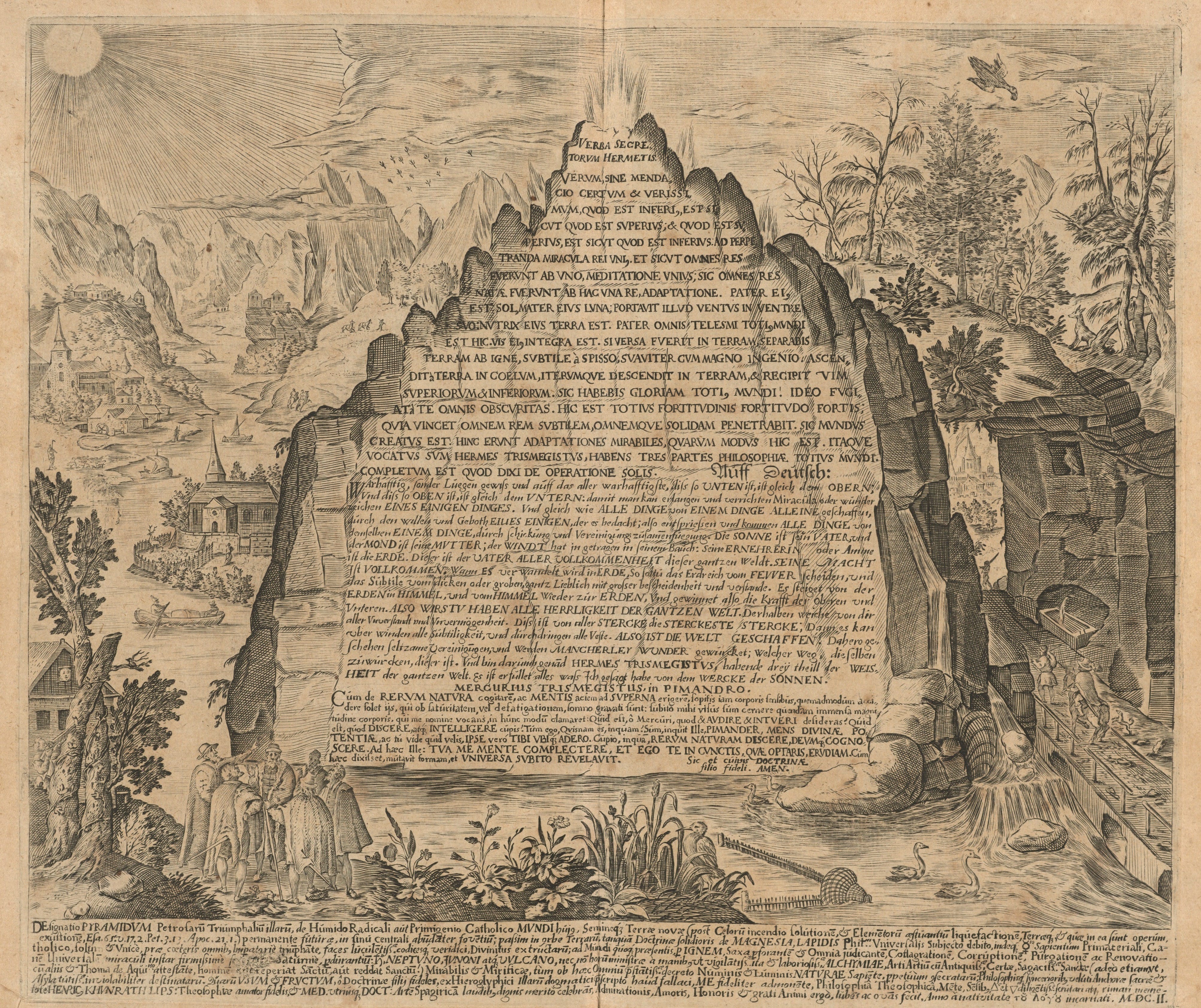
This, if you like, is the wholesome esoterica of King Charles’s philosophy of Harmony. As the Emerald Tablet famously states, as above so below, and so it is indeed clear that Charles deems the corporeal world to be a true and holy icon of the Deity. Grasping the veracity of this pre-modern worldview is the key, he believes, to bringing about an attitudinal change in us, one that will allow us to approach the created order with reverence and love. Accordingly, one might say that the corollary of as above so below is as within so without.
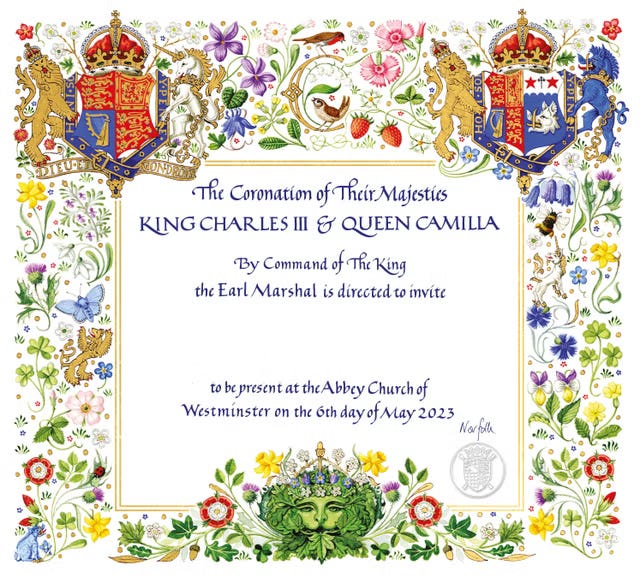
It is fair to call the King’s approach esoteric, and not merely metaphysical, because he seeks to transmute his listeners’ interior lives by an initiatic process of inducting them into a deeper, spiritual tradition than the one ordinarily available to them in the modern age. The desired effect of this initiatic process is something like the rise of a ‘Green Man Spirituality’, of the kind celebrated in Europe’s medieval cathedrals, which King Charles has indeed found creative ways of retrieving.10
Why It Failed
Whilst it brings me no pleasure to point it out, it is for the reasons detailed above that the Amazon documentary named Harmony was such a flop: it failed to convey what is actually interesting about Charles’s ecological ethics. It was utterly unsuccessful in conveying what radically differentiates his philosophy of Harmony from the ideology of any ‘green’ NGO or World Economic Forum racket, namely that it is not a progressivist vision but a backward-looking vision—in the best possible sense. His philosophy of Harmony privileges the world’s great sapiential traditions, especially the spiritual and intellectual tradition of the pre-modern West, as the indispensable key to amending our otherwise ever-worsening relation with God’s creation.
In a Preface to a volume entitled A Sacred Trust: Ecology and Spiritual Vision, published in 2002 by the scholarly community The Temenos Academy, of which King Charles is patron, he indicated the reason for the apparent embarrassment, that simmers under the surface of this documentary, concerning his religiosity:
Occasionally I pluck up enough courage to speak about the Sacred. It is interesting that when I do a strange, palpable silence descends upon the audience. You can tell that there is a subtle, harmonious chord that links us all on a deeper level and yet most of us are terrified to admit to feelings that might be considered ‘odd’ or, indeed, slightly mad.11
Perhaps, as I say, this quotation from a much earlier work than the one from which I’ve been hitherto quoting offers some indication for the reticence about the deeper, mystical, esoteric aspects of Charles’s philosophy of Harmony. But if that’s the case, then the film’s makers have entirely failed to tell the time. Perhaps never in the modern age has there been a more widespread and demanding appetite for a reappraisal of scientism, the Enlightenment, materialism, and all the devastating effects that together may be called ‘modernity’. King Charles’s sacramental cosmology underpins everything he has to say, including his teachings on architecture. Indeed, this has always been the case. For example, in his 1989 book entitled A Vision of Britain, he quoted St Catherine of Siena:
The city is the image of the soul, the surrounding walls being the frontier between the outward and inward life. The gates are the faculties or senses connecting the life of the soul with the outward world. Living springs of water rise within it. And in the centre, where beats the heart, stands the holy sanctuary.12
For Charles, the order and patterns that are traceable in the natural world and recur in disparate and diverse forms are the reflection of, and self-declaration of, the one timeless moment of the Eternal, conveying the very Logos of the Godhead. By assuming those patterns into our creative activity as qualities that bestow beauty on the forms we impress upon stone, wood, metal, and glass, we speak God back to God. In this way, our creative construction of the cityscape becomes the expression of our own mystical response to God’s creative act. This is the key to understanding Charles’s fascination with sacred geometry as the pathway to contemplation of the Divine Mind and its reflection in God’s own self-communication through the created order.
Now, had the Harmony documentary been honest about just how radical Charles’s sapiential vision really is, it certainly would have attracted a lot of adverse attention, but such attention would have been dwarfed by the enthusiastic reception by those who see modernity for what it is—and that’s an ever-growing population of people. As things stand, the film has been more or less ignored, and will likely continue to be. Hopefully, though, a few people will pick up his writings and study them, and a future generation will discover what an admirable philosopher in the strictest sense of the term—a true lover of wisdom—reigned over the United Kingdom in Charles III.
Stuart Heritage, Finding Harmony: A King’s Vision review—some of Charles’s ideas are strangely trippy, February 6th, 2026.
Harmony: A New Way of Looking at Our World (London: HarperCollins, 2010), 89.
Ibid. 95.
Ibid. 95.
Ibid. 98.
Ibid. 150-151.
Ibid. 155.
Ibid. 305 (emphasis mine).
Ibid. 312.
The Green Man was prominent on the invitations to King Charles III’s coronation.
A Sacred Trust: Ecology and Spiritual Vision, edited by David Cadman and John Carey (London: The Temenos Academy, 2002), vii.
A Vision of Britain: A Personal View of Architecture (London: Doubleday, 1989), 149.
I find it hard to reconcile Charles III’s long-professed devotion to the particular ( place, tradition, memory, rootedness, inherited forms, local character, civilizational continuity,...)with his apparent indifference to the erosion of England as a particular nation.
He speaks too eloquently about the need to protect what is organic, ancient, fragile, and locally rooted. Yet when the same logic is applied not to the English, and to England itself that concern seems to vanish. Funny.
Many who once admired this side of him are therefore deeply disappointed. They expected a king who understood the value of inheritance. Instead, his silence reads less like prudence than abandonment.
His devotion to the Nuremberg truth regime and multiculturalism seem to be more fundamental to his deep persona than any religious belief he holds.
Please find some interesting references:
http://www.daplastique.com/essay/the-rebirth-of-sacred-art
http://www.daplastique.com/essay/the-maze-of-ecstasy
http://www.adidafoundation.org/essays/the-eternal-war-between-orpheus-and-narcissus
http://acsforum.org/beyond-modernism-perfect-abstraction-in-adi-da-samrajs-orpheus-and-linead-suites
http://beezone.com/frank_marrero/orpheus.html
http://beezone.com/current/index-102.html The Pleasure Dome Law
http://www.fnmzoo.org/wisdom-teaching/a-contemplative-state-of-exaltation
http://fearnomore.vision/human/what-man-represents