



[Part One, Shinto Christianity, by Brian Scarffe, can be found here]
By Carlos Perona (Europos)
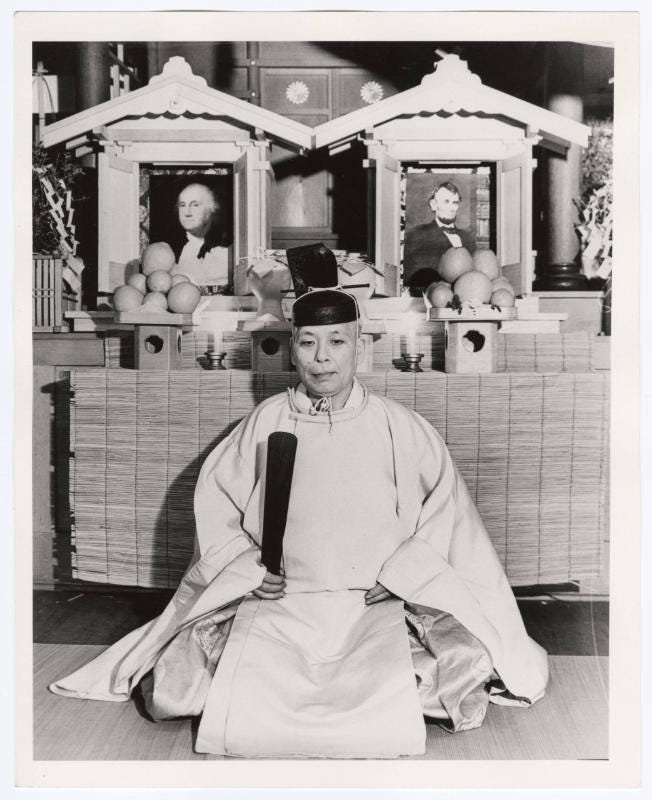
When the Japanese arrived at Hawaii as immigrants, they opened Shinto temples for their faithful. Shinto observance generally requires that shrines be consecrated to the local “Kami” (spirits, deities) and, in the case of the U.S., the newcomers settled on George Washington and Abraham Lincoln (as well as King Kamehameha and others for Hawaii specifically).
From the Daijingu Temple’s website:
The kami enshrined in the Hawaii Daijingu Temple are many; The Sun Goddess Amaterasu…the national father George Washington, the nation’s restorer Abraham Lincoln…King Kamehameha, King Kalakaua, and other men and women of great services to the state of Hawaii.
Obviously, give the contemporary breakdown of cultural consensuses, trying to identify national kami today would degenerate into endless debate, but the exercise is a fruitful one.
Not to worship, but to understand where we are: The story into which we have entered. “Kami,” whatever we mean by the word, shouldn’t be in the place of worship—the sacrum sanctorum is for the Absolute, the Divine Mystery, “The One”—but at its gates, slaying the gargoyles that adorn its exterior.
That’s how we should position the “pagan” in relation to “monotheism.”
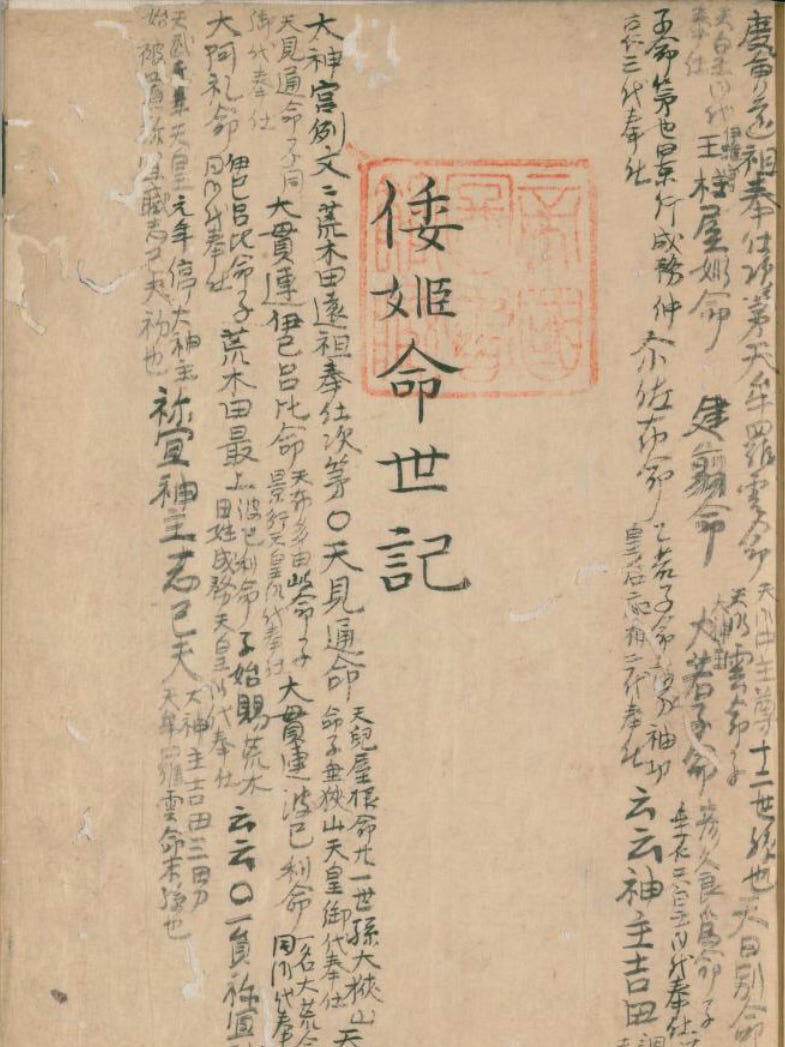
Nor is this isn’t alien to Shinto itself. The 13th century Shinto Gobusho records the words of Yamato-hime Mikoto Seiki, daughter of Emperor Suinin and establisher of the Ise shrine, as follows: “The consciousness-god is the fundamental basis of heaven and earth.” Shinto itself contains a current of monotheism, as Dr. Kegan Chandler has explored.
Kami against the Monoculture
Nations, like professions and orders of every sort, come about in the wake of founders. They exist under the aegis of certain ordering symbols. We could take up the work of myth-making and culture-creation in isolation, apart from our Kami, outside any tradition, but that deprives us of deep roots worth tapping, condemns us to shallow growth, to reinventing the wheel and, anyway, there’s more glory in taking up and giving fresh coherence to the past.
Just as we know who our father is and what household we belong to by virtue of our last name, we need to acknowledge the patriarchs. patrons and prophets who guided our piece of the human commonwealth—our jurisdiction within the earthly and cosmic harmony, “Church,” “Ecumene.” Recognising these falls under the “honour your father and your mother” species of piety.
One cannot, for example, govern Italy without tacitly taking the 5th/6th century Theodoric the Great and his Regnum Italiae for granted. But actually becoming conscious of this means governing as a steward of something specific, not as a denaturing, merely technocratic administrator.
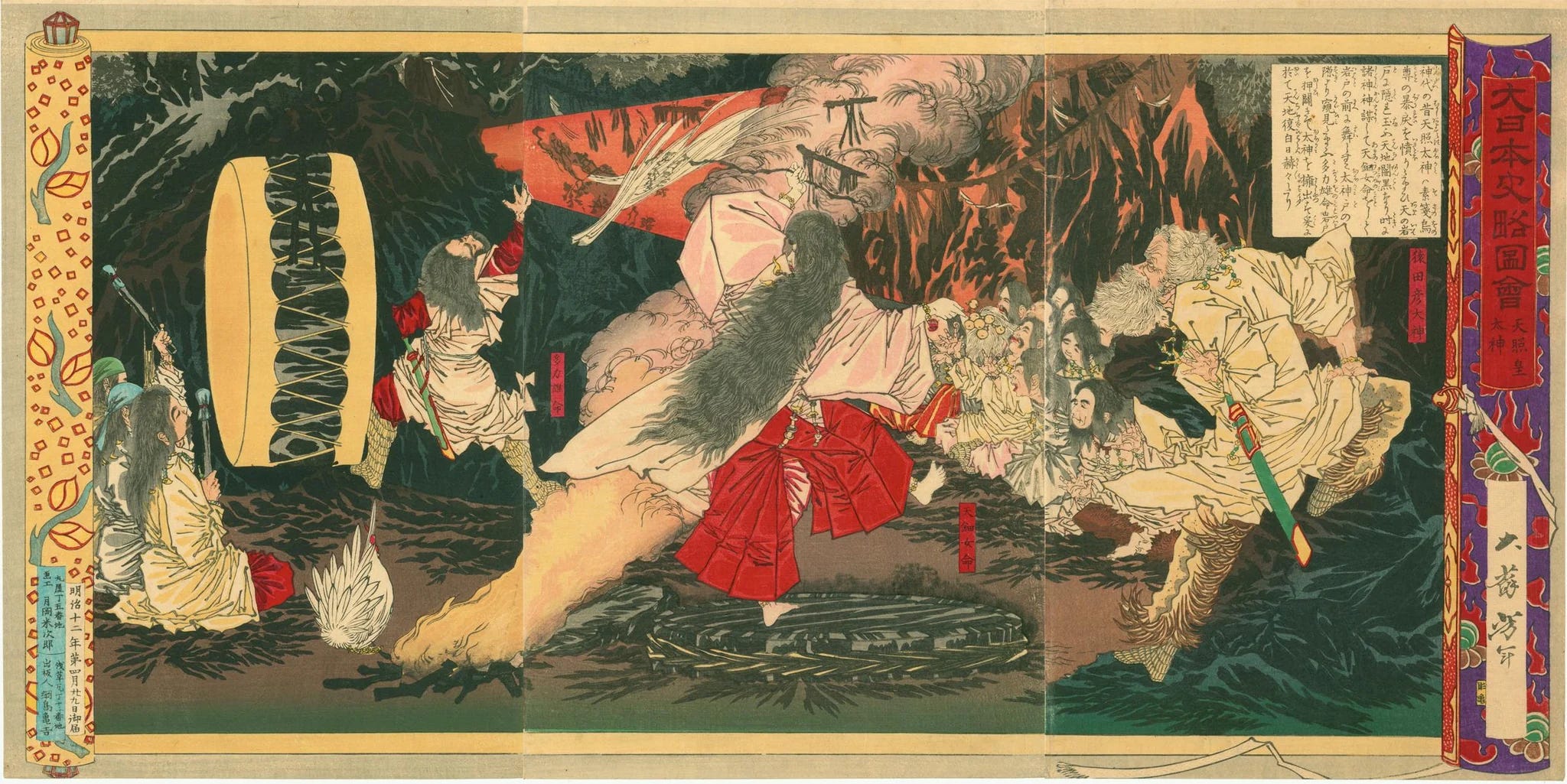
When Shinto priest Ogasawara Shōzō (1892–1970) advised the Japanese imperial government on how to administer occupied Korea’s religious affairs, he thought it natural that a grand Shrine be dedicated to Dangun, Korea’s mythical founder. The military government, however, opted for Amaterasu, sun-goddess and ancestor of the imperial family. The Japanese empire, alas, would go on to centralise and dominate, not reproduce its centre abroad to constitute a wider, encompassing harmony. Ogasawara might also have had other, not altogether flattering opinions about Koreans, but his approach to “ecclesiology,” at least, points to an alternative vision of empire, empire-as-ecumene rather than dominant state atop subordinate ones. (We might find something similar in the work of war-time Japanese anthropologist Torii Ryūzō.)
Apocalypse Kings
Concerning this idea of empire as ecumene, we encounter a blazing vision of ordered diversity in John’s Apocalypse when the nations are healed and their “kings” brought into the Heavenly City. These glorified kings, I suggest, are the true “kami” of the nations. Of course, historic Christianity did not always live up to this apocalyptic project. We have not always succeeded in healing and feeding the nations with the lead and fruit of the Tree of Life. Consider the semi-mythical person of Numa Pompilius, Rome’s early king, for example, who is so obviously holy that St. Augustine’s imputations against him (and general desire to condemn Roman origins) cannot but feel like slander, like a wanton amputation of sacred history.
We should be hiero-historians, looking for sacred patterns and persons in our past. We have examples such as Snorri Sturluson or Dante, especially when the latter places certain pagans in the same heavenly sphere as king David (only the Florentine does not go far enough). We have Christian histories of Mexico during the Spanish viceregency in which the pre-Columbian founder of the Aztec Triple-Alliance, prince Nezahualcoyotl, is identified as a righteous worshipper of the true God. This desire to produce something like a deutero-scripture encompassing the history of the nations was also present in the Romantics.
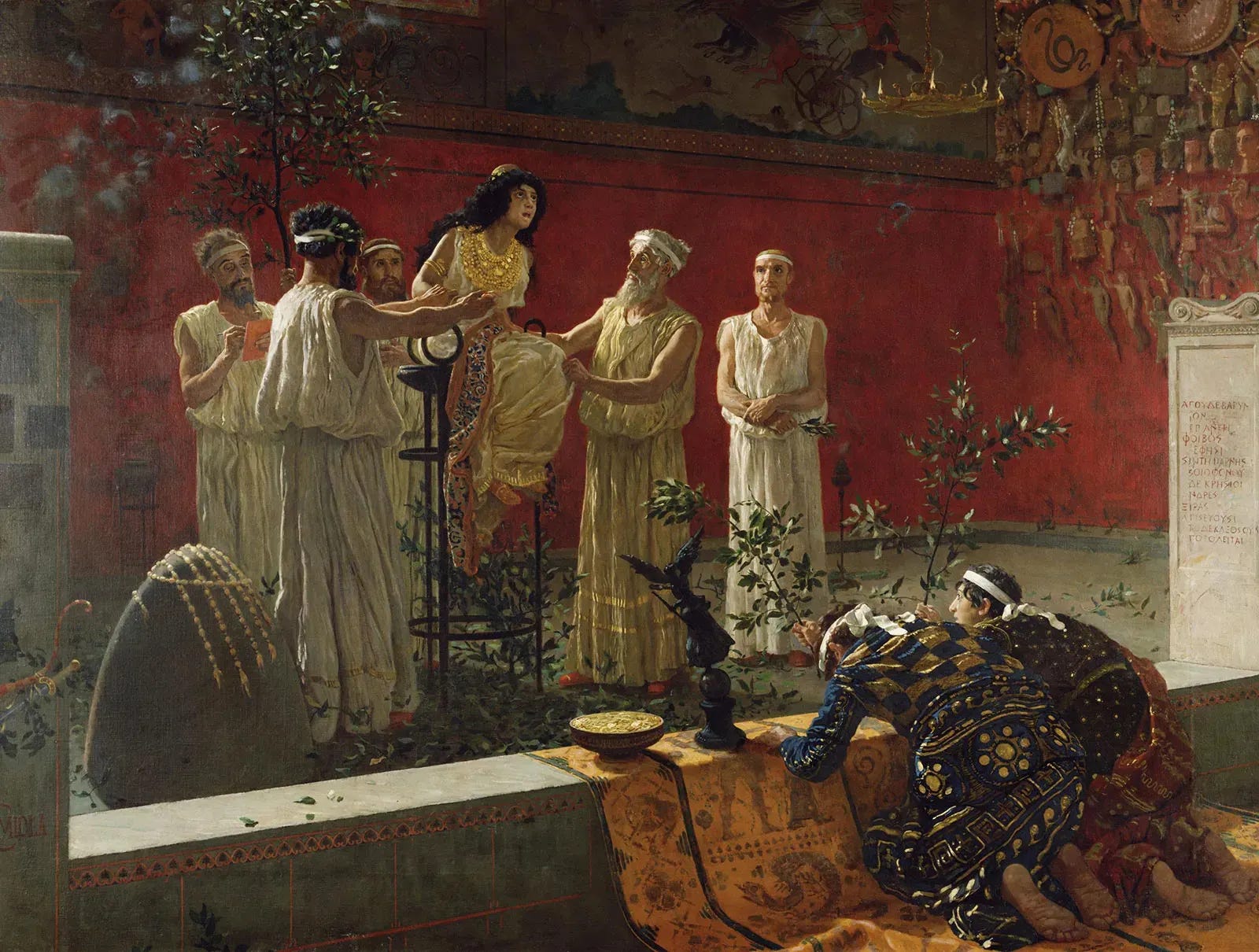
In general, the Christian view is that the gods of the nations were demons (Psalm 95:5). Those “sons of El” assigned to the nations and who became corrupt (Deuteronomy 32 according to the Qumran text). St. Pseudo-Dionysus, however, argues that the angels who steward the nations (whose characters the nations manifest, as I would put it) cannot truly fall. The nations must image something good if they are ultimately not abolished but glorified (as Isaiah 19 and Apocalypse 21 and 22 show us). The “demonic” gods are therefore the lower portion of the angelic ministry, “sub-lunary” (in traditional terms) agents subject to change. Indeed, to judge from Plutarch’s On The Failure of Oracles, the daemones who mediate between men and gods were faltering in his era (he presents this as one hypothesis for the phenomenon of increasingly scant or un-reliable oracular guidance).
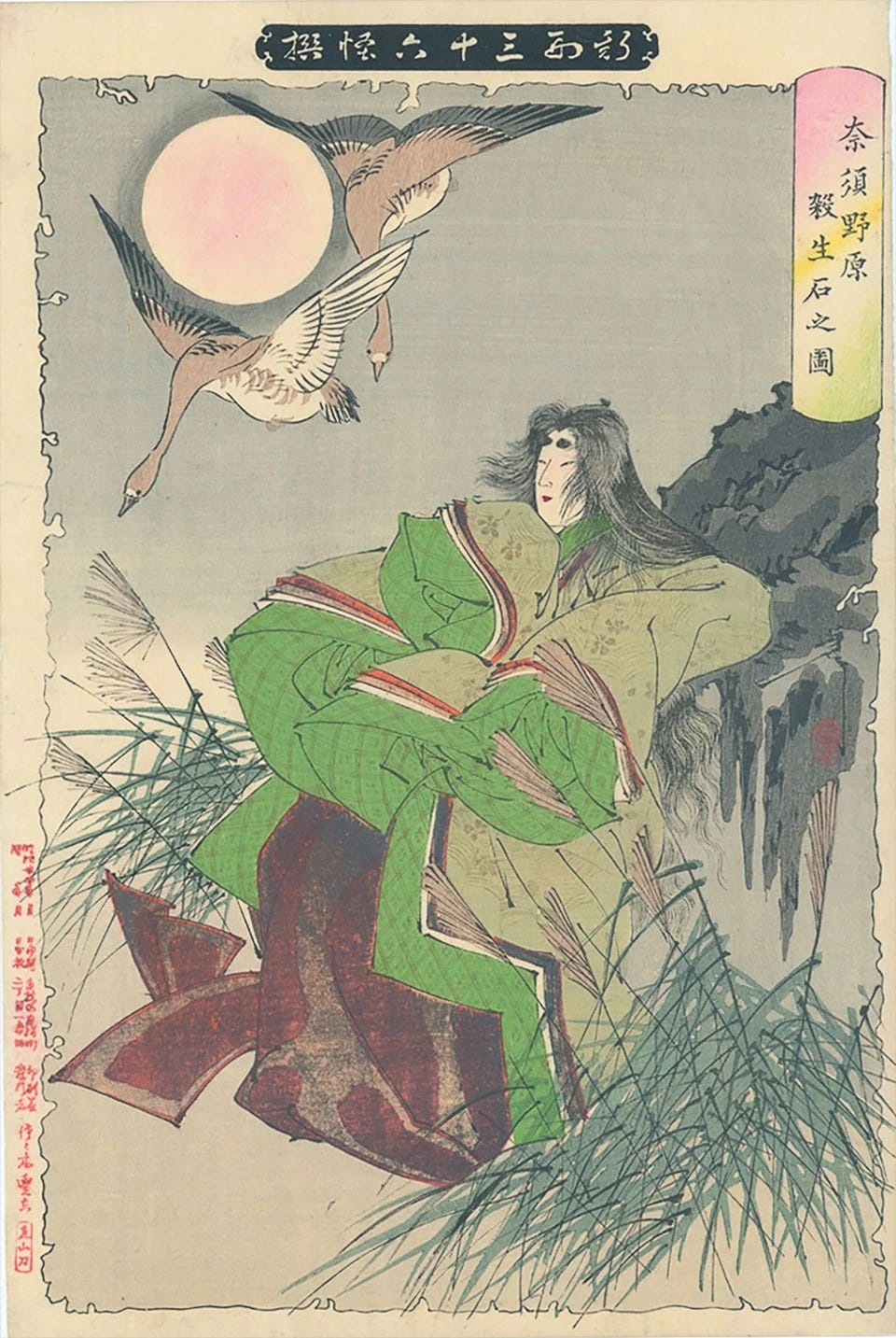
It is for us to fill in that daemonic, imaginal space between human and angelic, therefore, and to do it without corruption, that is, without idolatry (and not for the purpose of divination, so often condemned in scripture, but which was so often the purpose of ancient congress with daemons). The daemonic realm is a grosser rung of the angelic, and a subtler portion of the human. We might therefore participate in it. Correcting and weaving it back into the angelic hierarchy might precisely be what Japanese holy men intended when they went about “discovering” what Boddhisattva lay behind what kami. We have patron saints, of course, but there is much of folklore and secular history that is also covertly saintly, there to be discovered.
We should pray for Heaven to activate the forms we love as loci of theophany.

Great article. I make a similar point from a different perspective, and aimed at a very different audience, in this piece : https://substack.com/@curiositsclassiques727341/note/c-234731404
Great you would enjoy my little article here where show some research about the gestalt of the community as being. https://arianpleroma.substack.com/p/gods-and-angels-as-mirrors-of-community?utm_source=share&utm_medium=android&r=43k4a0