


By Brian Scarffe, Soothsayer Founder
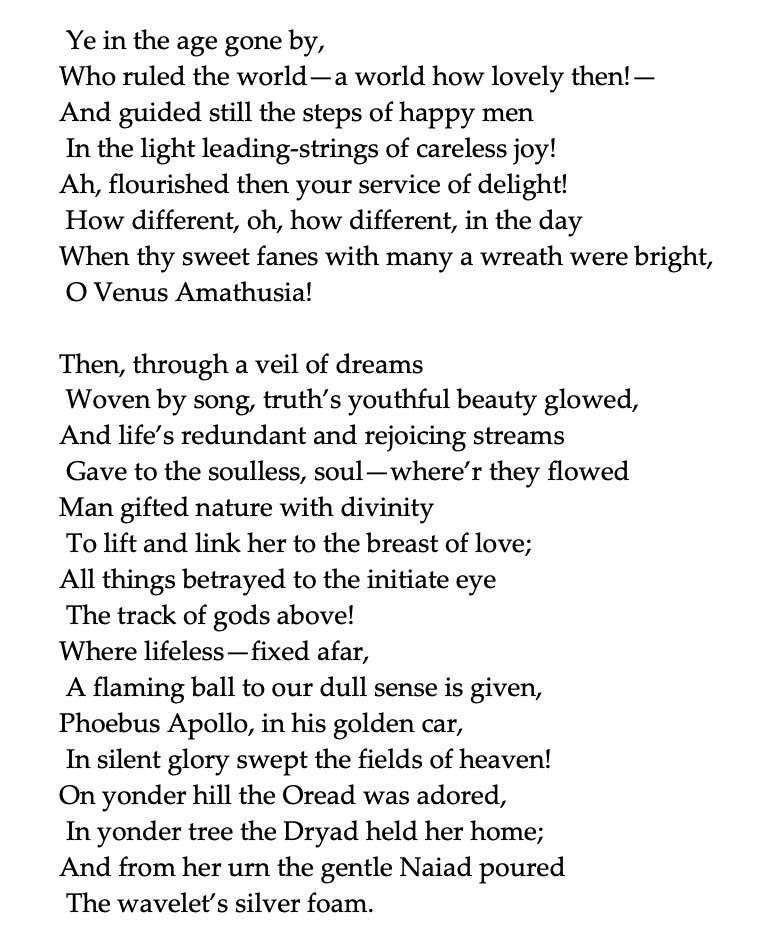
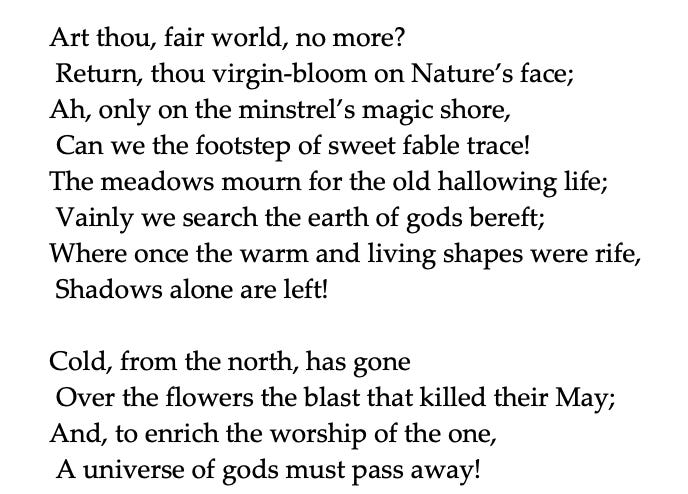
—Friedrich Schiller, extracts from “The Gods of Greece”, 1788
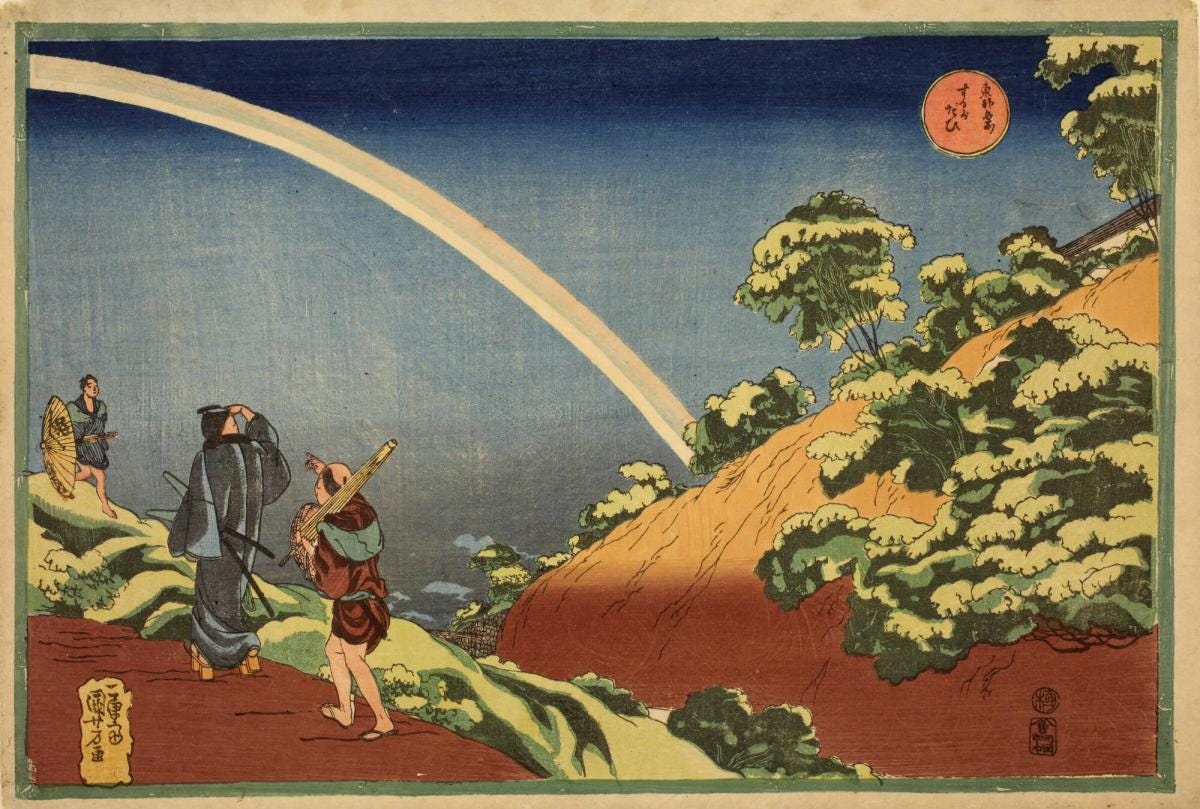
It has been a century since Max Weber published his premature eulogy for the enchanted cosmos. Yet, despite the supposed triumph of the mechanistic worldview, the universe that contemporary science is uncovering has become ever weirder: Newton the alchemist buries Newton the mechanist. Quantum physics, non-locality and exotic states of matter have captured the public’s attention and in recent years plasma physics has unveiled a truly strange cosmic vision—the vastness of space filled with giant life-like entities collectively performing a symphony of creation. Just as quantum theory resuscitated Aristotle’s causal paradigm, the study of plasma by astrophysicists increasingly lends weight to the idea that the Neoplatonic ‘great chain of being’ not only exists but that cutting-edge science has detected the lower rungs of its ascending ladder of subtlety, reasonably proposing a hierarchy of higher beings involved in creative and causal activities, which we can observe with scientific instruments, upon the gross matter in which we dwell (I shall pursue this in a future essay).
Despite the heady intellectual environment offered to us by the scientific priesthood, our institutional spiritual guides have firmly clung to their fading 17th century watchmaker analogies, thinking that if they impress museum piece science popularisers like Richard Dawkins, they may be given respectable invitations to society parties and unwatched regime propaganda ‘Science and Religion’ trivia on television. Recently, however, the winds of change stirred amongst the Christian intellectuals of the West, and terms such as ‘reenchantment’ have captured the churchgoing imaginary. Yet, careful steps have been taken to avoid association with those who never fell for the dead universe theory in the first place, particularly New-Agers and Perennialists.
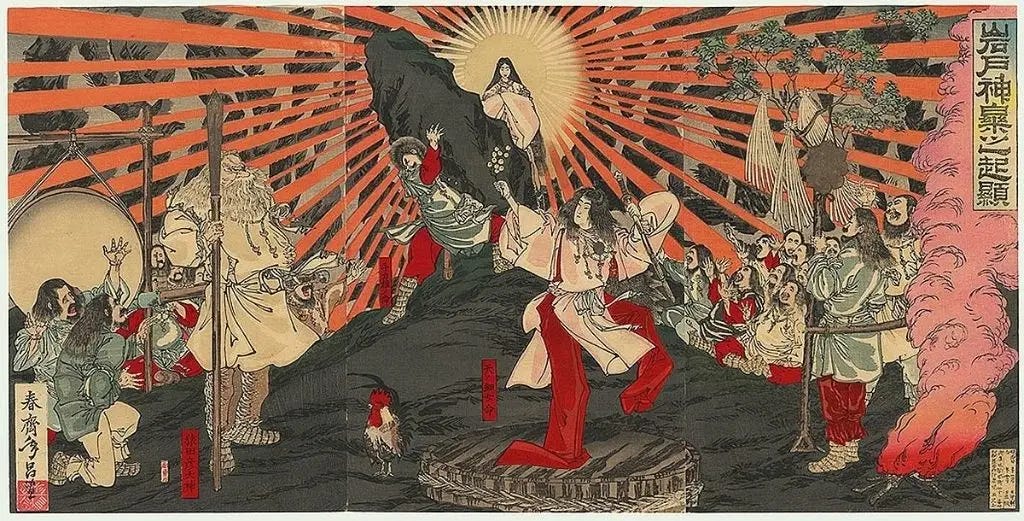
Rarely does reenchantment offer a practical program beyond a charming back-to-the-land, hobbit aesthetic but to me it seems there needs to be a more radical set of proposals to really bring the celestial Fire back to our dead Earth. The longer I contemplate what this might look like the more I have come under the spell of the Japanese exception. What I mean by this is that Japan seems to have maintained a natural mysticism through its modernisation, and that despite having developed a cutting-edge technological aspect to its society, at heart the animistic attitude of Shinto prevails. From earliest times, the Japanese nation has worshipped Kami. Kami can be the spirits of a particular place or they can be natural forces like wind, rivers, and mountains. In their pre-Buddhist form they had no anthropomorphic qualities nor were they simply the embodiment of moral principles.
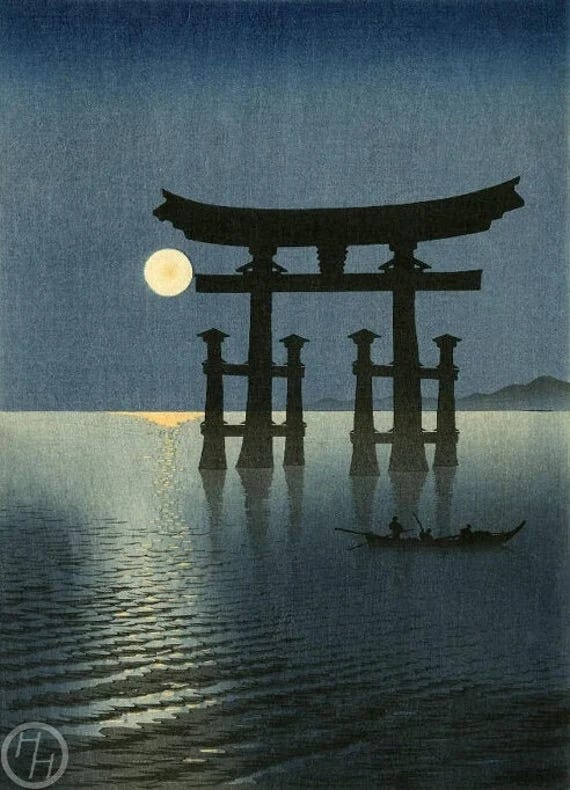
I remember traveling through the country a decade ago and being enormously impressed by the natural inclination to the sacred which the Japanese people have maintained from time immemorial. Purification gates guard the entrance to towns and villages, and shrines to the local kami adorn forest and hillside alike. The spirits of the water too are not forgotten, with the great torii gate of Miyajima, the Itsukushima Shrine, where kami and humans pass from mundane to sacred space.
When asked if they are religious, most Japanese people say no, which would seem to be a counterpoint to my belief that they are the most religious people I’ve ever met. But I suspect that the word religion is a flat and crude instrument with which to analyse this question. And even seasoned Japanologists report that there is a curious wall of silence around discussing Shinto with foreigners.
Ritual and ceremony are everywhere in Japan, there is of course the famous Japanese tea ceremony, in order for which one must study for three years at one of the specialist colleges in order to be able to perform properly. I was able to witness this firsthand, the extraordinary attention and intention to which this otherwise simple process was subject. To be in the presence of a ritual which elevates something otherwise normal has a transformative effect. Attention, intention and ritual are of course deeply magical qualities, sacramental qualities one might add, and in setting aside utilitarian and efficient concerns, foregrounding devotion in such a small thing, the common priesthood of mankind is illuminated. All things can be given their share in glory, glimpses of the light transcendent emerge in the smallest act. The Japanese have held onto these truths from a long past golden age.
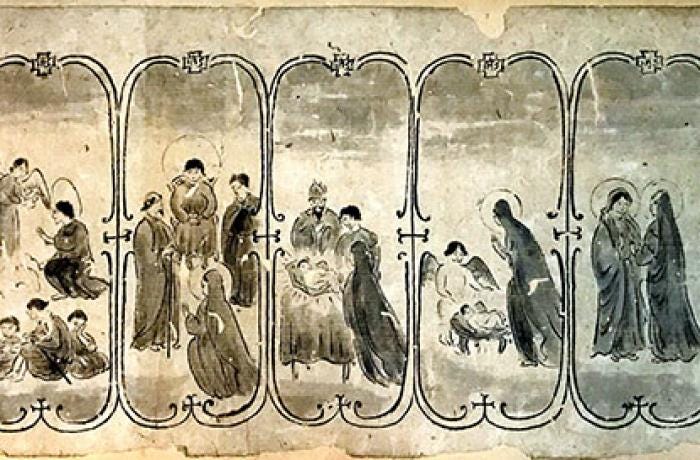
The reality is that the revelation which we in the West were given through the incarnated Logos does not share categorical space with the structured, ritual reverence for nature found in Shinto.
If we imagine Christian civilisation as a pyramid, with Christ and his cult as the great medicine for mankind, the golden capstone, the base of this structure is formed by philosophy and the reverent love for the harmonies of the cosmos, a reality that every great people has intuited. And it is this base which I believe we once had and are now missing.
As we contemplate Japan, with its many shrines and purifying architectures, what occurs to us? It offers us, perhaps, a model for recognising the sacrality of the natural world, not the anti-civilisational despair of men like Paul Kingsnorth and Theodore Kaczynski, but instead a truly re-enchanted Anglo-Celtic Catholicism, that restores the principle of harmony to the great endeavour of civilisation building.
So what can the West learn from Shinto, its opacities notwithstanding? That the very architecture we erect must be built in harmony with the natural energies of the earth, and that correctly ordering our artifice of stone and wood is as important for keeping away evil spirits as the exorcisms of priests and holy water.
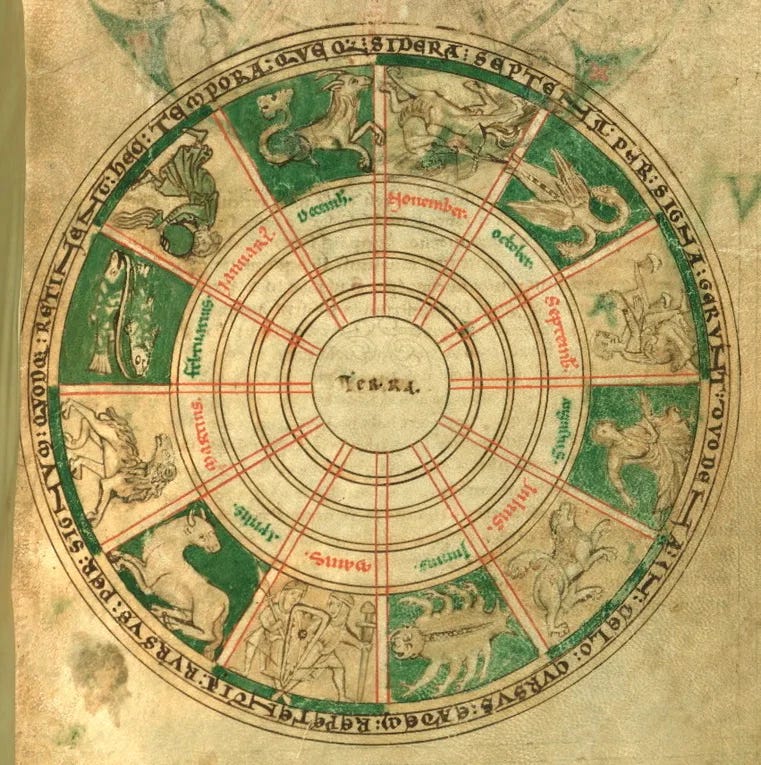
For this, we must restore our own tradition of Christian animism, the great tradition of Chartres, the insights of the Doctors of the Church like St John Henry Newman. We begin by recalling that the cosmos is a great animal animated by a soul, as we are told by the great 12th century theologian Bernardus Sylvestris:
The life and well-being of the universe depend on sovereign and ancient causes: spirit, sentience, a source of motivation, and a source of order. Noys [nous] and the divine exemplars live eternal; without their life the visible creation would not live everlastingly. Hyle was in existence before it, preexistent in the substance and in the spirit of an eternal vitality. For it is not to be believed that the wise creator of insensate matter did not first establish a basis for it in a living source. The universe is an animal, and one may not detect the substance of animal life apart from the soul. Moreover, many things spring from the earth, but without the stimulus of a principle of growth neither tree nor shoot nor anything else would thrive. Thus from the life of the divine mind, from the spirit of Silva [hyle], from the world soul, from the growth-principle of created life, the eternity of the universe has its rise.
And so in this great animal understanding and awareness thrive, and draw nourishment from their antecedent principles. The firmament learns from the divine mind, the stars from the firmament and the universe from the stars, whence their life derives and how they may discern the course of existence. For the universe is a continuum, a chain in which nothing is out of order or broken off.1
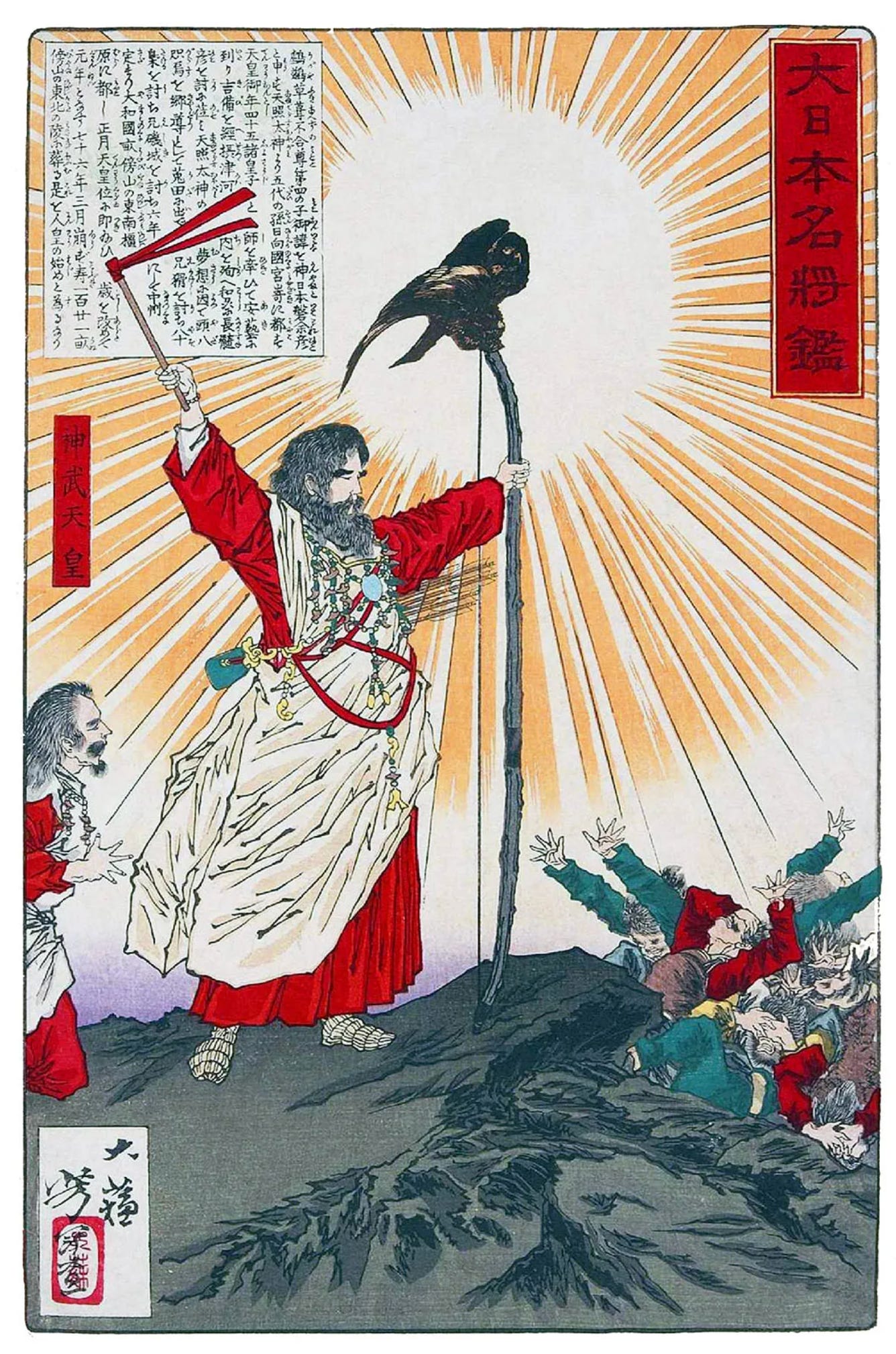
Sylvestris goes on to describe the details of this great chain of beings which span the infinite distance between our lowly sublunar world and the highest Heaven. He explains through the voice of Urania, the celestial principal, that even at the lowest parts of the chain, in the nature within which we dwell, there are also spirits:
The first rank of spirits I call the guardians, those intermediary the interpreters, and the lowest the renegade angels. Consider now those earthly beings who inhabit the world. Wherever earth is most delightful, rejoicing in green hill, flowery mountainside, and river, or clothed in woodland greenery, there Silvans, Pans, and Nerei, who know only innocence, draw out the term of their long life. Their bodies are of elemental purity: yet these too succumb at last, in the season of their dissolution.
Sylvesteris is speaking in the tradition of the School of Alexandria, infused with Neoplatonism and hermetic doctrines, a tradition that continued until the time of the great illuminate of the 19th century, St John Henry Newman. In his autobiography Newman explicitly cites the school as having a profound influence on his own metaphysics and so the Doctor, already living in the devastation visited by the enlightenment, tried to remind his congregation of the spirits of the natural world, which science was desecrating:
But if such a one proceeds to imagine that, because he knows something of this world’s wonderful order, he therefore knows how things really go on, if he treats the miracles of Nature (so to call them) as mere mechanical processes, continuing their course by themselves,—as works of man’s contriving (a clock, for instance) are set in motion, and go on, as it were, of themselves,—if in consequence he is, what may be called, irreverent in his conduct towards Nature, thinking (if I may so speak) that it does not hear him, and see how he is bearing himself towards it; and if, moreover, he conceives that the Order of Nature, which he partially discerns, will stand in the place of the God who made it, and that all things continue and move on, not by His will and power, and the agency of the thousands and ten thousands of His unseen Servants, but by fixed laws, self-caused and self-sustained, what a poor weak worm and miserable sinner he becomes! Yet such, I fear, is the condition of many men nowadays, who talk loudly, and appear to themselves and others to be oracles of science, and, as far as the detail of facts goes, do know much more about the operations of Nature than any of us.
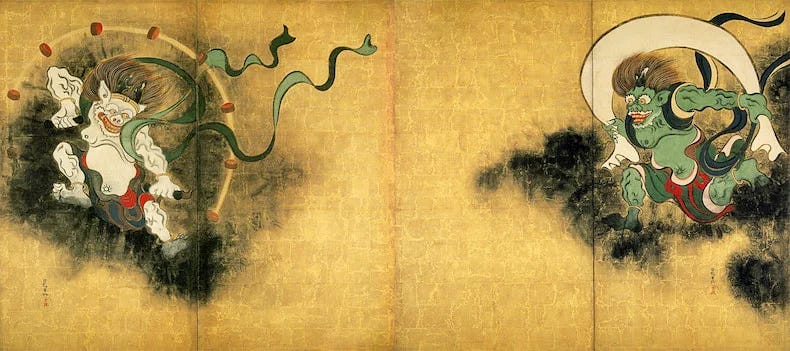
He wished to turn our minds back to a state of reverence and awe in the face of Nature, to become religiously disposed to its sacred currents:
Now let us consider what the real state of the case is. Supposing the inquirer I have been describing, when examining a flower, or a herb, or a pebble, or a ray of light, which he treats as something so beneath him in the scale of existence, suddenly discovered that he was in the presence of some powerful being who was hidden behind the visible things he was inspecting, who, though concealing his wise hand, was giving them their beauty, grace, and perfection, as being God’s instrument for the purpose, nay whose robe and ornaments those wondrous objects were, which he was so eager to analyse, what would be his thoughts? Should we but accidentally show a rudeness of manner towards our fellow-man, tread on the hem of his garment, or brush roughly against him, are we not vexed, not as if we had hurt him, but from the fear we may have been disrespectful?
…
When then we walk abroad, and “meditate in the field at the even-tide,” how much has every herb and flower in it to surprise and overwhelm us! For, even did we know as much about them as the wisest of men, yet there are those around us, though unseen, to whom our greatest knowledge is as ignorance; and, when we converse on subjects of Nature scientifically, repeating the names of plants and earths, and describing their properties, we should do so religiously, as in the hearing of the great Servants of God, with the sort of diffidence which we always feel when speaking before the learned and wise of our own mortal race, as poor beginners in intellectual knowledge, as well as in moral attainments.2
This degree of sensitivity to the spiritual landscape is what we must recover, and would be deeply harmonious with the view of the world expressed in Shinto culture. Christianity risks, at times, holding an overly simplistic black and white binary vision of the cosmos and its spirits, those which are wholly good and those which are wholly evil, which does not fit quite so well in a landscape of Kami capable of mischief and ambiguous goodness, but St John Henry Newman reminds us that there are also many spirits which are partially fallen but still partially good and whom govern so much of this world:
Also, besides the hosts of evil spirits, I considered there was a middle race, neither in heaven, nor in hell ; partially fallen, capricious, wayward ; noble or crafty, benevolent or malicious, as the case might be. They gave a sort of inspiration or intelligence to races, nations, and classes of men. Hence the action of bodies politic and associations, which is so different often from that of the individuals who compose them. Hence the character and the instinct of states and governments, of religious communities and communions. I thought they were inhabited by unseen intelligences.3
If therefore the world is filled with good spirits and other spirits which are good but flawed why can we not honour them? We honour the good angels of course but we also honour our nations which are governed by flawed spirits, we put up statues and shrines to complex men like Napoleon and Caesar it seems to me no great leap to put up a shrine to the great and difficult spirit of the Thames, of Nottingham Forest or Snowden. It would be no offense to the Christian religion to perform rituals of blessing and exorcism at these shrines in order that the spiritual landscape too partakes in the blessing and Sacramental order over which Man has been placed as governor. It would likewise be no bad thing for our civic and cultural life to be reintegrated with sacral practice just as the Shinto practice of sumo maintains.
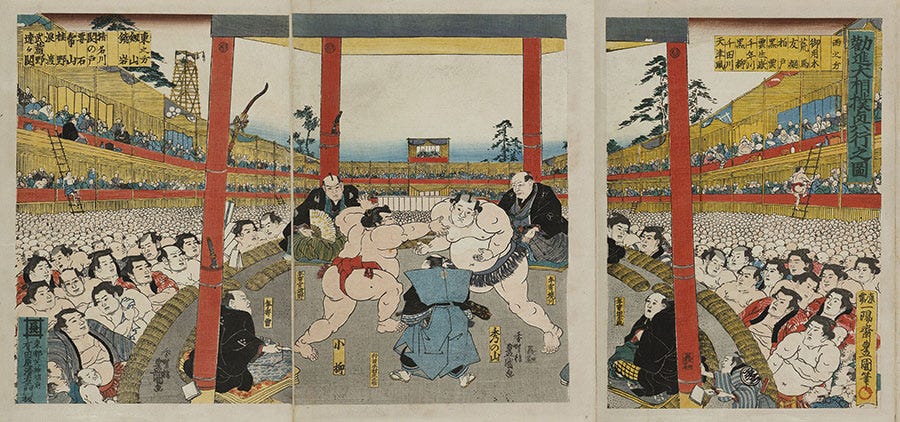
In 2025, for only the second time ever, the official sumo wrestling league held a tournament outside of Japan. Held at the Royal Albert Hall, just as it had been twenty-five years ago, I was fortunate enough to spectate at one of Japan’s great cultural expressions. I was not prepared, however, for the fact that I would also be participating in a religious ceremony, for sumo wrestling is not a simply sporting competition but rather an ancient Shinto ritual.
For at least three and a half thousand years, warriors have been engaging in ritual combat in order to bring about peace, prosperity and for the abundance of food harvests. As I sat in the hall I became drawn in to the rituals of exorcism which our little part of London underwent, with priests and holy salt. Each fighter before each bout would throw blessed salt onto the platform before him in order to scare away evil spirits, likewise the ritual stamping. By the end of the evening’s competition—repeated for a week—London had undergone more exorcisms than it perhaps any other time in its history! Every element of the competition was expressed with ceremonial elegance and precision and though the wrestling itself was greatly exciting I was overwhelmed by the sense of seeing a truly integrated socio-religious event. Here we had the cleansing of the land of bad spirits and the blessing of the harvest, competition between Warriors, the bringing of peace to the polity, the recognition of a sacred cosmos and the sacramental nature of the embodied world. All of this was performed with deep sobriety and sincerity.
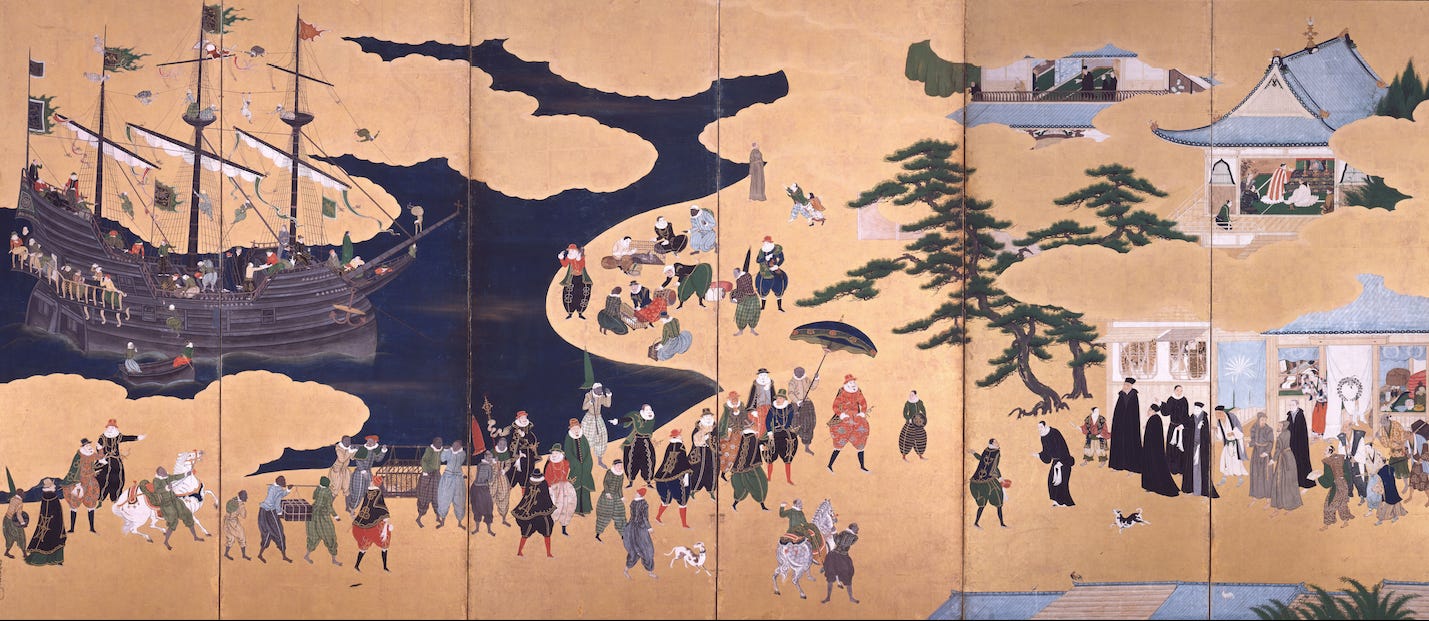
How would we go about recovering our own spiritually rich cosmic vision, our animist Christianity? I am not proposing some gauche appropriation of Japanese practices and aesthetics, neither the building of Follies in imitation of the Victorian aristocrats. Shinto is precisely the complete and organic expression of total Japaneseness throughout every sphere of society, and so it rightfully belongs to them alone. What I wish to discover is what our own natural spiritual genius analogous to Shinto is as Anglo-celts. Of course this would be Christian. Christianity is the capstone and purifying agent of the natural genius which has almost disappeared, replaced by the corrupting structures of scientism, liberal democracy and capitalism—none of which of the expressions of natural spiritual genius. This does not mean that there cannot be an incorporation or synthesis of foreign elements of genius.
Japan itself exhibits this at its best, whether it’s its own form of Confucianism, or feng shui adapted to its own insights or perhaps most telling for our current exercise the tea ceremony itself. It is long-believed that the tea ceremony was originally developed as a response to the Roman Catholic mass which the Japanese observed and adapted its modes and rituals to an act of simple hospitality which is both thoroughly Japanese but built on partaking in a genius not originally its own. This ritual offers us the template for how we can again, in turn, learn and adapt the spiritual insights of this great and ancient animist civilisation as we turn to the task of restoring and inventing a new our own veneration of and reintegration with the Nature which God has given us to serve and to guard.
Bernardus Silvestris. Poetic Works, edited and translated by Winthrop Wetherbee, Dumbarton Oaks Medieval Library 38 (Cambridge, MA: Harvard University Press, 2015).
John Henry Newman, “Sermon 29: The Powers of Nature” in Parochial and Plain Sermons, vol. 2 (London: Longmans, Green & Co., 1908).
John Henry Newman, Apologia Pro Vita Sua: Being a History of His Religious Opinions (London: Longman, Green, Longman, Roberts & Green, 1864).
Welcoming the full experience of Life Force in all its forms seems best.
Wonderful. This will reward re-reading. We should meet!