


by Fr. Robert Nixon, OSB, Abbey of the Most Holy Trinity, New Norcia, Western Australia.
(Donations to the Benedictine community at New Norcia can be made here.)
Among modern Christians, it is often assumed without much critical reflection that “Jesus was a Jew”. This position, indeed, is very frequently asserted emphatically by scholars, pedagogues and pastors—presumably often intended to reverse or apologise for the Church’s historical attitude towards the “perfidious Jews” (a term which continued to appear in the official texts of Roman Catholic liturgies until the mid-20th century.) Yet was Jesus really a Jew at all? This article looks at the question objectively, endeavouring to evaluate the evidence which is available. It is not the intention of the author to arrive at anything like a definitive or conclusive answer, but merely to indicate the ambiguities surrounding this complex issue.
Galilea versus Judea
The Gospels clearly and specifically identify Christ as Galilean (Mt 4:18-22; Mk 1:16-20, Lk 4:16-30, etc.). So strong was this identification that even in the 4th century, the Roman emperor, Julian the Philosopher, wrote a polemical work against Christianity with the title Contra Galilaeos (‘Against the Galileans’). The region of Galilea lies well to the north of Jerusalem (at least a week’s journey in the 1st century), with large portions of it in what is now Lebanon and occupied Syria. Shortly before His death, He predicted to His apostles, who were also Galileans, “After I have been raised from the dead, I will go ahead of you to Galilee and meet you there” (Mt 26:32).
There is incontrovertible evidence within the Gospels that the Jews during the time of Christ considered the Galileans to be non-Jews (goyim) and that they viewed them as inferiors and outsiders. Galilee itself is referred to in the Old Testament (Is 9:1) and the New (Matt 4: 15) as ‘Galilee of the Nations’ (or ‘Galilee of the Gentiles’). The Hebrew word found in Isaiah, rendered as ‘nations’ or ‘gentiles,’ is גויים (goyim), a term which served then (as it does now) as a derogatory appellation for non-Jews, emphasising cultural and ethnic alterity.
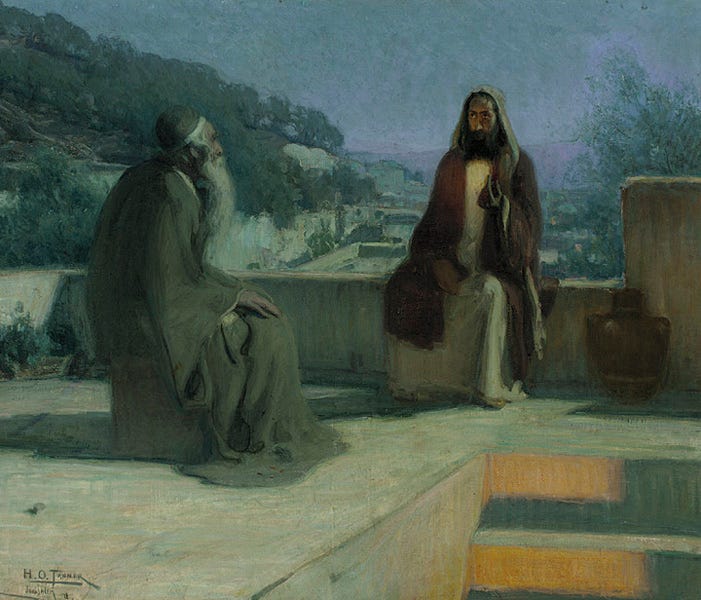
At one point in the Gospel, when Nicodemus, described as a leader among the Jews and a secret believer in Christ, defends the right of Jesus to a fair hearing and trial, the Jews reply to him: “Are you also from Galilee? Search and see that no prophet arises from Galilee” (Jn 7:52). Clearly, the Jews knew Nicodemus and his origins well, so the question of whether he was also from Galilee can only be understood as derisory.
We see an instance in which certain Jews accuse Christ of being a Samaritan, another group, who, though also monotheistic, were similarly regarded as goyim. Whether this was a genuine mistake or an intended insult, the comment manifests the fact the Jesus was identified as a non-Jew by the Jews themselves.
An objective reading of the Gospels (particularly that of John) show that Jesus is consistently framed in the dynamic of the narration as an outsider to the Jews. In John 5:15-18, one reads: The man [who had been cured of blindness] departed, and told the Jews that it was Jesus who had healed. And so the Jews persecuted Jesus and sought to slay him, because he had done these things on the sabbath day. But Jesus answered them, “My Father keeps on working, and so I work”. Because of this the Jews sought all the more to kill him, because he not only had broken the sabbath, but said also that God was his Father, thus making himself equal with God.
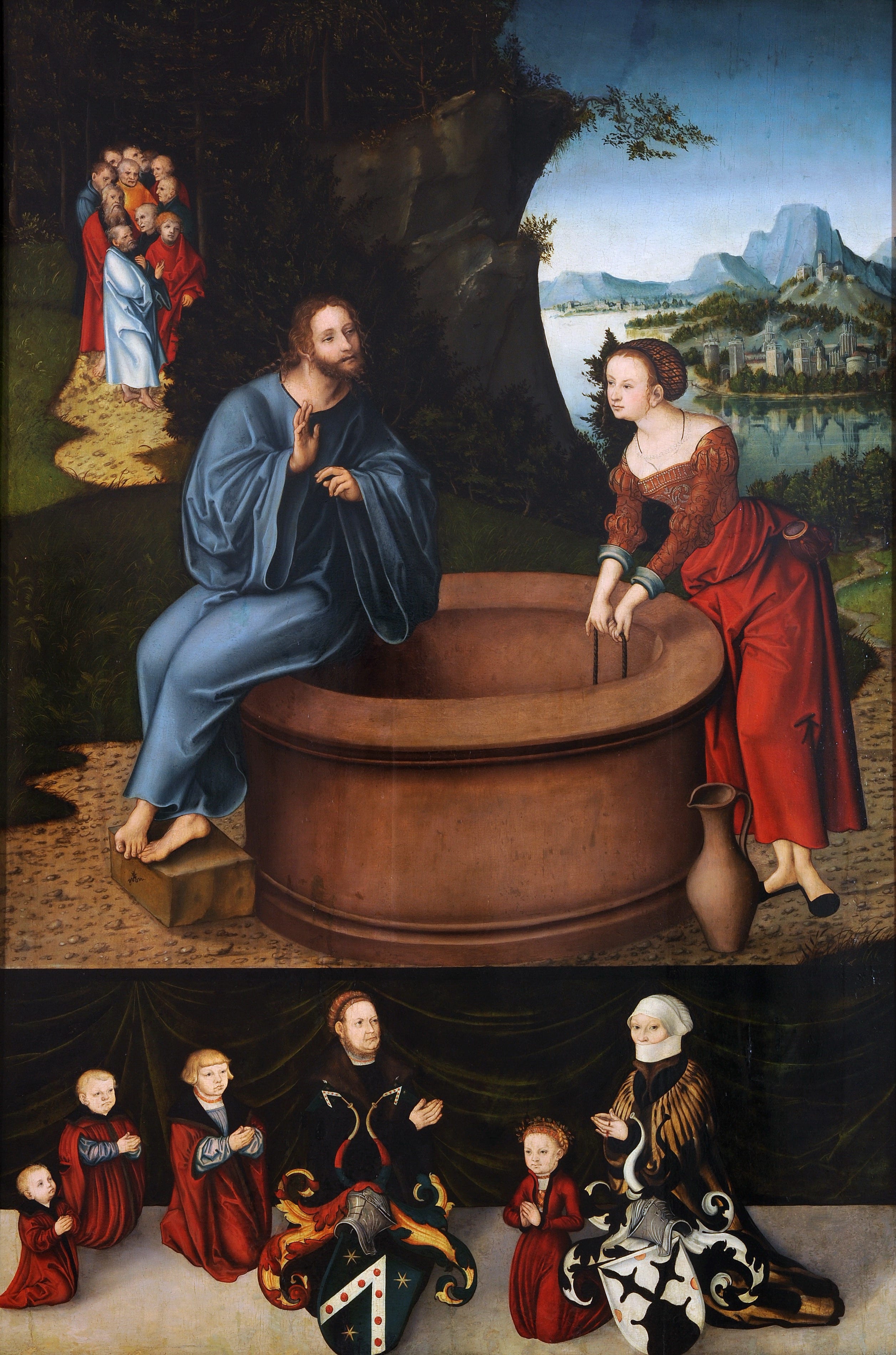
Consistently throughout the Gospels, Christ, along with His Galilean apostles, are shown from differing from the Jews in many customs and observances. They mixed freely with the Samaritans, travelling through their villages and teaching them (Jn 4:4-42); but the Gospels state explicitly that “Jews do not mix with Samaritans” (Jn 4:9). Moreover, Jesus and his original disciples are reproached by the Jews on multiple occasions for their non-observances of Jewish customs regarding the Sabbath and washing of hands, etc.
So was Jesus really Jewish at all? The answer to this question depends upon how the term ‘Jewish’ is defined. At least as far as the authors of the Gospels were concerned, the Jews were a quite separate group of people to Christ and his original band of followers, and generally hostile towards them. Christ and His followers indeed believed in one, supreme God. But most of the goyim, who included Samaritans and Galileans, also believed in one Supreme God. For that matter, most educated Romans and Greeks had adopted a position that, ultimately, there was ultimately One Supreme Deity (the Platonic ‘Form of the Good’), the so-called “philosophical monotheism” expressed so beautifully by Plutarch:
But God is, we must declare; and is with reference to no time, but with reference to the eternal, the immovable, timeless, and indeclinable; that which there is nothing before nor after, nor more, nor past, nor older nor younger, but He being One with the one ‘Now,’ hath filled up the ‘Ever;’ and that which really is, alone is with reference to Him; neither born, nor about to be, nor growing, nor to have an end. In this way, therefore, ought we, when worshipping, to salute Him, and to address Him, or even, truly, as some of the ancients did, ‘Thou art One!’1
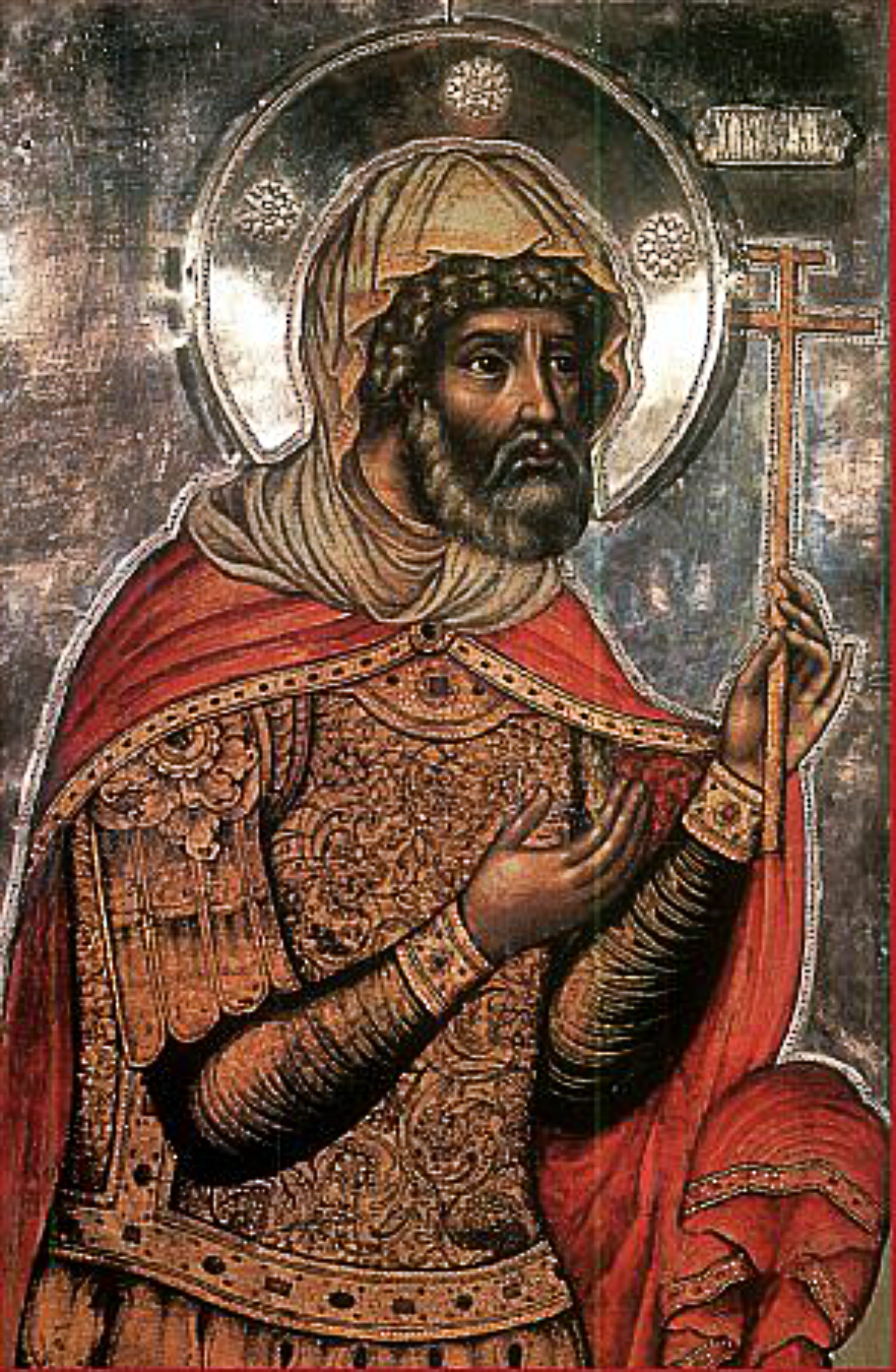
And it is highly significant that it was a Roman centurion (St. Longinus, according to tradition) who, upon witnessing Christ’s heroism in the face of the crucifixion, declared, “Truly, this man is a Son of God” (Mt 27:54).
The so-called goyim (including the Galileans), like almost all civilized cultures, believed in a system of ethical dealings congruent with the Golden Rule, “Do unto others as you would want them do to you,” which included, naturally, prohibitions of murder, theft, violence, etc., and also imperatives or exhortations to mutual charity, justice, and mercy—in short, the “essence of the law and the prophets” (Mt 7:12). Certainly, Jesus was ‘Jewish’ if the definition of Jewishness to extended to the point of simply believing in one God and teaching a system of ethics broadly congruent with this. But if the definition of Jewishness is to be broadened so far, then all Muslims, Christians, and, indeed, most philosophical Greeks and Romans, would have to be classed as ‘Jewish’—a position which is more than patently absurd.
What Language(s) did Jesus Speak?
In the ancient Mediterranean world, the ability to speak several languages was commonplace. Countless languages and dialects were in circulation, but the lingua franca, at the time of Christ, was Greek. Hence it is that all of the New Testament texts were originally written in Greek.
Did Jesus Himself speak Greek? Many contemporary scholars assume a negative answer to this question, but the evidence that He did is well-nigh overwhelming. He conversed with Pontius Pilate and Roman soldiers. The version of the Scripture he cites are all from the Septuagint, or Greek version of the Old Testament. He spent his childhood in Roman Egypt, (Mt 2:13–23) where the standard language, and especially the language of education and business, was Greek.
It is true that occasionally in the New Testament, specific words which Christ spoke are cited in Aramaic (e.g. Mk 5:41 & 14:36). But if this was the norm rather than the exception for him, why then would the Evangelists feel it necessary to cite and quote specific instances in the manner in which they do?
Is there a Conflict Between the Christian and Jewish Weltanschauungen?
This is an undeniably complex and, at present, sensitive question. While it is not readily answered, it is useful to reflect deeply upon it. Certain writers have portrayed or imaged Christ as simply a continuation or extension of a typically Judaic world-view and system of values. This position is exemplified in the early writings of Julius Evola:
The spread of Semitic influences in the Graeco-Roman, and later Nordic, world [was] largely due to Christianity. [….] The spirit of Israel, which had already instilled a collective sense of ‘guilt’ and ‘atonement’, became more prominent after the defeat and enslavement of the ‘chosen people.’[….] These forces, which acted in early Christianity, destroyed the European spirit.2
From this perspective, Christianity is generally portrayed as a ‘slave morality’, advocating conformism, collectivism, legalism, and surrender. Yet, the present author would argue, an examination of the actual life and teachings of Christ reveal the very opposite to be the case.
Such a position, i.e. that Christianity is not a ‘slave morality’ at all but its diametrical antithesis, was expressed by Richard Wagner, who also cites the ‘otherness’ of Christ, as a Galilean, to the Jews.
It is more than doubtful if Jesus himself was of Jewish extraction, since the dwellers of Galilee were despised by the Jews on express account of their impure origin, we may leave this point [……] to the historian. For us, it is sufficient to derive the ruin of the Christian religion from its drawing upon Judaism.3
Houston Steward Chamberlain likewise described Christianity, in its true and original form, as “a negation of Judaism,” and characterised the mission of Christ, who “transformed Judaism into its antithesis,” as:
To plant the flag of idealism on this ancient consecrated seat of the most obstinate materialism! To transform, as if by magic, the God of vengeance and war into a God of love and peace.4
Conclusion
It is the hope of the author that this short exploration of this question will offer the reader new and thought-provoking material for reflection and further reading. Whether or not one accepts the Christian faith and Christ as the perfect expression and incarnation of the eternal Logos, he must be acknowledged as an immense force, perhaps the greatest force of all, in the formation of our Western culture. At this point in history, the question of who Christ really has arguably never been more important and more critical for determining the future of humanity—and especially in recapturing of the inner Divinity of our nature, in and through which all that is good, noble, strong and free, exemplified par excellence in the person of Christ, subsists.
Plutarch, “On the E at Delphi,” in Plutarch’s Morals: Theosophical Essays trans. C.W. King (George Bell, 1889), 192.
Julius Evola, Pagan Imperialism, trans H. Matterhorn (Arktos, 2024), 12.
Richard Wagner, Religion and Art, trans. W. A. Ellis (Trubner, 1897), 233.
Houston Steward Chamberlain, The Foundations of the 19th Century, trans. J. Lees (John Lane, 1911), 237.
I’m going to be blunt: The idea that Jesus may not have been Jewish isn’t a serious position in modern scholarship. It relies on misreading sources, flattening obvious distinctions, and recycling arguments that have already been dismantled.
So I’m trying to understand what you think you’re overturning here.
On what basis are you claiming that Galilean identity made someone non-Jewish in the first century? Galilee had been thoroughly integrated into Jewish life for generations by this point. Archaeology and historical sources are not ambiguous on that.
You also lean heavily on the Gospel of John to frame Jesus as an outsider to “the Jews.” But John is the most theologically stylized of the four gospels and shares only a small fraction of material with the Synoptics (often estimated at around 8–10% overlap.)
Its language is doing something very different.Its use of “the Jews” is widely understood as rhetorical and tied to internal conflict.
So why privilege John’s language in that way while ignoring the broader context of Second Temple Judaism?
If disagreements over Sabbath observance or ritual practice make someone “non-Jewish,” how are you accounting for the well-documented diversity within Judaism at the time? Pharisees, Sadducees, Essenes, and other groups disagreed constantly.
When Jesus is called a Samaritan, why treat that as evidence of identity rather than what it clearly is….an insult?
And more broadly, why collapse Jewish identity into vague monotheism? Judaism in this period isn’t defined by belief in “one God” in the abstract. It’s covenant, law, lineage, and shared practice. By your definition, you end up erasing the very distinctions you’re trying to analyze.
I’ll also ask directly: what is the justification for relying on figures like Evola, Wagner, and Chamberlain here? These aren’t neutral voices. They’re part of a long tradition that tried to detach Jesus from Judaism for ideological reasons, not historical ones.
So what primary sources or modern historians are you actually relying on that support your claim?
Because as it stands, this doesn’t read like a serious reexamination. It reads like a selective argument built on misunderstandings the field moved past a long time ago.
It’s funny how in one breath Modern people define ethnicity only through DNA, but when it comes to Jesus, it suddenly includes culture. 🤔
Jesus is a 1st Century Jew.