


By Soothsayer founder, Brian Scarffe
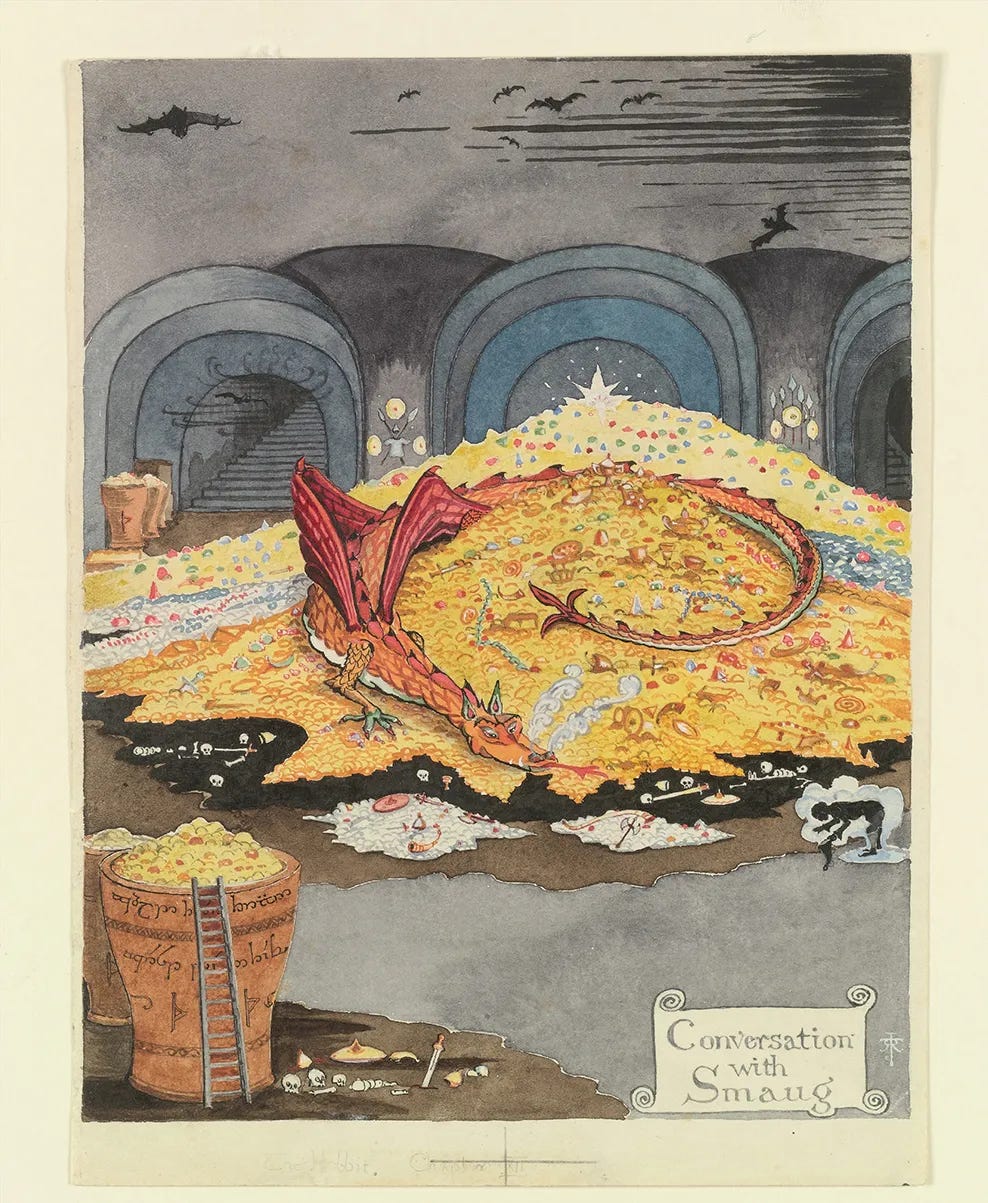
J.R.R. Tolkien’s Lord of the Rings trilogy is a cultural superpower. In the last three decades it has been adapted into one of the highest-grossing and critically acclaimed series of movies, followed by spin-offs of both television and film adaptations of other parts of the Legendarium. Whatever one thinks of these interpretations, its cultural dominance is undeniable. Fantasy as a literary genre owes almost all of its tropes to the great work; you would be hard pressed to find any other literature which has had more reach across culture or age as the work of the great Professor.
It may be that cultural historians will one day consider Lord of the Rings to be the last of the great civilisational works. Its appeal is so broad and deep that its influence can be felt in the hearts of men as well as unexpected places such as the defence industry and cutting-edge cyber-systems such as Palantir and Anduril, for example.
Yet before Peter Jackson’s film treatment, these stories had a rather different cultural impact. If we contrast the early decades of the work’s reception against Tolkien’s fellow Inkling C. S. Lewis’s fantasy offering, The Chronicles of Narnia, we find that where Lewis very quickly became the darling of Christian and, in particular, evangelical childhoods—his obvious allegorical themes being lauded and appreciated wherever mere Christianity could be found—Tolkien’s work, on the other hand, made its way unexpectedly into 60s counterculture.
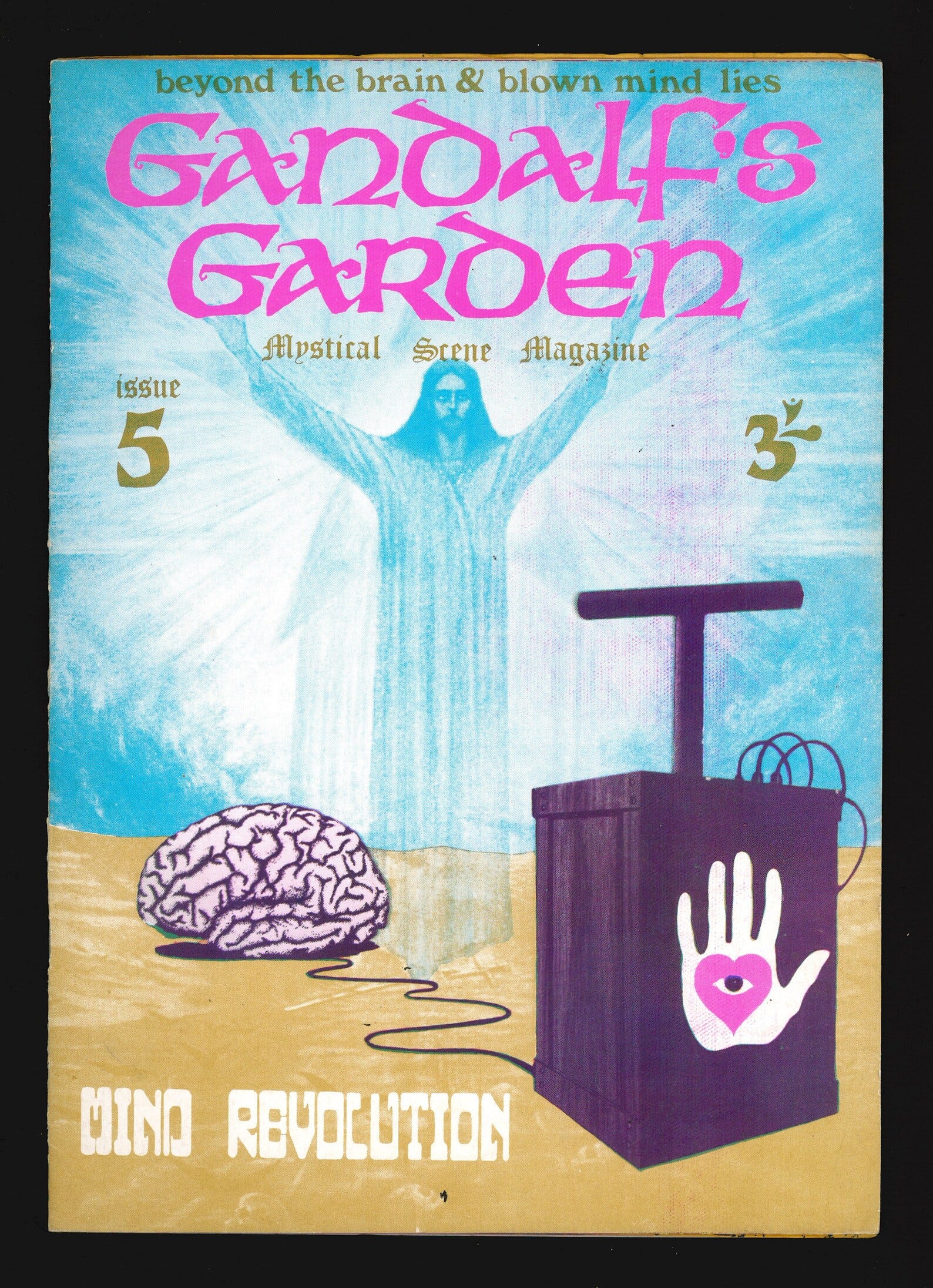
On US campuses where anti-establishment movements such as the hippies were emerging, something akin to Beatles mania surrounded the radical appropriation of Middle-earth. The London underground magazine Gandalf’s Garden, run from a shop in World’s End, Chelsea, is one of the best examples of this. Gandalf’s Garden alchemically combined old Catholic and Anglo-Saxon mythopoesis with psychedelia, esotericism, eastern religion and free-wheeling spiritual experimentation.
Issue one of Gandalf’s Garden by Muz Murray introduced readers to a syncretic world of inspiration, peace, enchantment and ecology:
Gandalf's Garden is the magical garden of our inner worlds, overgrowing into the world of manifestation. Gandalf's Garden is soul-flow from the pens of creators— mystics, writers, artists, diggers, delvers and poets, a wellspring of love and anguish that those with searching thirsts may drink thereof. As in the Stone Gardens of the Orient, where Soul Wizards sit within the stimulus of their own silences, contemplating the smoothness of the million pebbles, so should we seek to stimulate our own inner gardens if we are to save our Earth and ourselves from engulfment.
Soon the influence of Tolkien’s work made its way into the counter-cultural music scene. Led Zeppelin referenced Tolkien in “Ramble On” (“T’was in the darkest depths of Mordor/I met a girl so fair/But Gollum and the evil one/Crept up and slipped away with her”), and “The Battle of Evermore” (“The Ringwraiths ride in black” among other lines) and “Misty Mountain Hop” (“So I’m packing my bags for the Misty Mountains”).
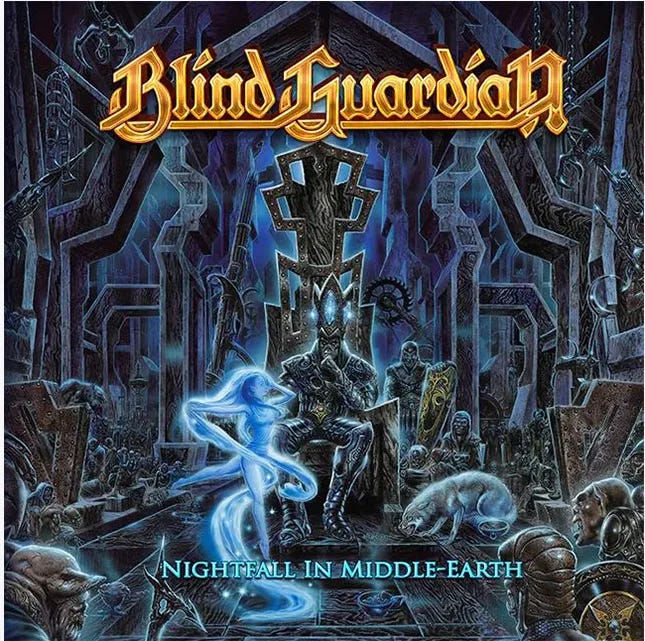
In the 1970s, quasi-underground rock bands such as the Californian Cirith Ungol (named after the mountain pass in Lord of the Rings), the German bands Blind Guardian and Morgoth, the latter named after the epithet of the original Dark Lord Melkor in the Legendarium, drew heavily on Tolkien lore. The progressive rock band Marillion originally named themselves Silmarillion before shortening. Tolkien’s work refused to be tamed and mainstreamed. By the 1990s, the extreme heavy metal scene known for its theatrics on stage, offstage church burnings and bizarre behavioural antics also became deeply indebted to these works of fantasy. These fringe musicians took inspiration not from the hobbits or the Shire or the warriors of Gondor but from Tolkien’s depiction of the forces of darkness. The audio experience one engages with when encountering their music is that of “the storm”.
“En Ring Til Aa Herske” by Burzum, from Det som engang var, released 1993: Norwegian black metal at its peak
Norwegian bands Isengard and Gorgoroth took their inspiration from the opponents of the traditional images that had been used to inspire counterculture. Though the lyrical content often did not directly reference Tolkien, the nomenclature of both band and band members signalled Tolkien and in particular the Antagonists. How did this Catholic-infused literature become the darling of a counterculture famous not only for church burnings but for explicitly Satanic and anti-Christian imagery? There is perhaps no simple answer to this question. Though many of the proponents of the scene such as the musician, murderer and online eccentric Varg Vikernes, the face of the Tolkien-inspired Burzum, reject the idea of a Catholic Middle-earth instead emphasising the North’s and Anglo-Saxon mythological themes.
The adherence of Varg and his fellow extreme metallers to the dark forces within the tale suggests to us that they intuitively recognise the Shire and the grand warrior culture of Mordor as being representative of Western Christian culture and that the opposition forces, maligned as they are, are the true resistance to oppressive and imperialist foreign religion of Christianity. That the mythos does not explicitly contain any religion or use simple allegories which can draw easy correspondences to beliefs in the real world offers a reader the opportunity to interpret the work in a broader framework than The Chronicles of Narnia, for instance. Narratives and civilisations do not so easily map one-to-one with our experience of the world or history.
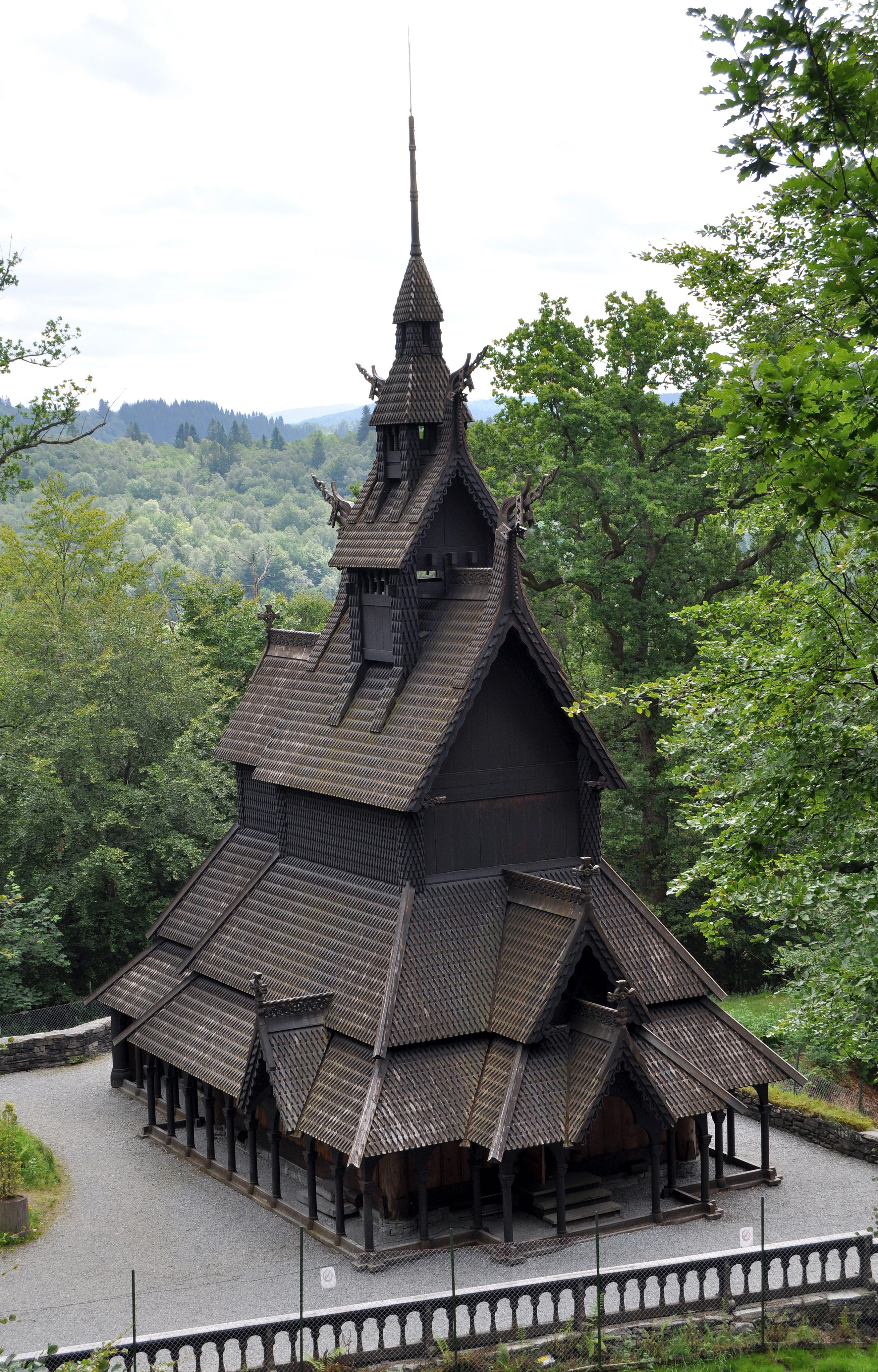
Lest it be thought that I am exaggerating the connection or the degree to which Satanism became married with Christian mythology in the extreme metal scene in the late 80s and 90s, the story of Varg Vikernes will be instructive. He rose to prominence as part of the black metal band Mayhem whose preeminence can be attributed to the purity of their adherence to the vision of rebellion at the heart of extreme metal. Unlike the vast majority of self-proclaimed Satanists in the music industry who consider themselves to be atheistic, perhaps even materialists, and utilise the symbolism of Satanism as a juvenile middle finger to the ambient Christian culture, Mayhem were true theistic Satanists; that is, they believed in the God of Abraham, Isaac, and Jacob and in the great rebellion of the angels and intentionally sided with the rebels. Alongside a small group of like-minded bands, the members of Mayhem—and Varg in particular—spent the early ‘90s burning down some of the most beautiful churches that Norway had to offer. The chaotic and discordant music they played likewise rebelled against the very foundations of music itself: every rule in the musical canon had to be violated and fury, rage, despair and destruction was funnelled through their ‘art’.
Lest they be considered mere poseurs, life offstage followed the same pattern when one of the band members (Per Yngve “Pelle” Ohlin, aka “Dead”) took his own life with a shotgun. The others collected fragments of his skull and made necklaces, and band member Euronymous took photos of his fresh corpse for the artwork on one of their future albums, causing friends to break with him over his callous behaviour. Another of the band members Varg murdered another member, Aarseth, in a vicious attack leading to a lengthy prison sentence during which he would continue to develop and explore his fascination with Tolkien’s mythology. Before his association with Mayhem he had already established a band with the name Uruk Hai followed by a solo project named Burzum, the word for darkness inscribed on the one ring in The Black Speech.
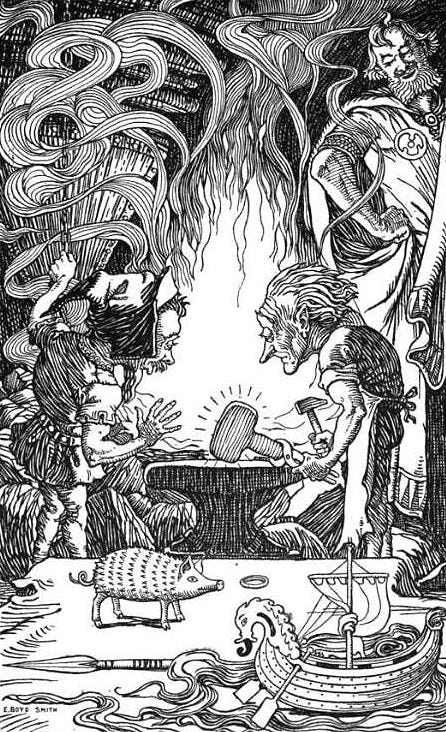
As these names suggest, Varg had identified himself with Sauron’s forces and began developing an esoteric reading of Tolkien in which Sauron’s eye and the one ring were really symbols of Odin’s eye and Draupnir. In his Straussian reading, the Orc armies were envisioned as great pagan warriors destroying and pillaging Christian societies. In prison he continued to develop his eccentric brand of right-wing Neo-Pagan Philosophy in a major theological reinterpretation of The Lord Of The Rings. In a 2005 essay “Paganism Part Three: The One Ring” Varg explores the way that the ring actually represents time which is the final corrupter of life eventually bringing all to death. Gandalf’s transformation from Gandalf the Grey into the White is seen through an alchemical lens of purification through fire and spiritual rebirth. The fall of Saruman becomes a warning against race mixing, whilst Frodo’s journey also takes on alchemical allegorical signification as the journey towards overcoming mortality. These later theological speculations on Tolkien’s oeuvre demonstrate quite significant developments of thought from his earlier positions: where once he identified simply with the forces of darkness his later work shows an appropriation of the force’s light to his vision of the world. Yet in all this he categorically rejects both Tolkien’s Catholicism and the suggestion that his Catholicism informed the mythology of Middle-earth which he saw as being exclusively a re-presentation of Anglo-Saxon and Norse paganism.
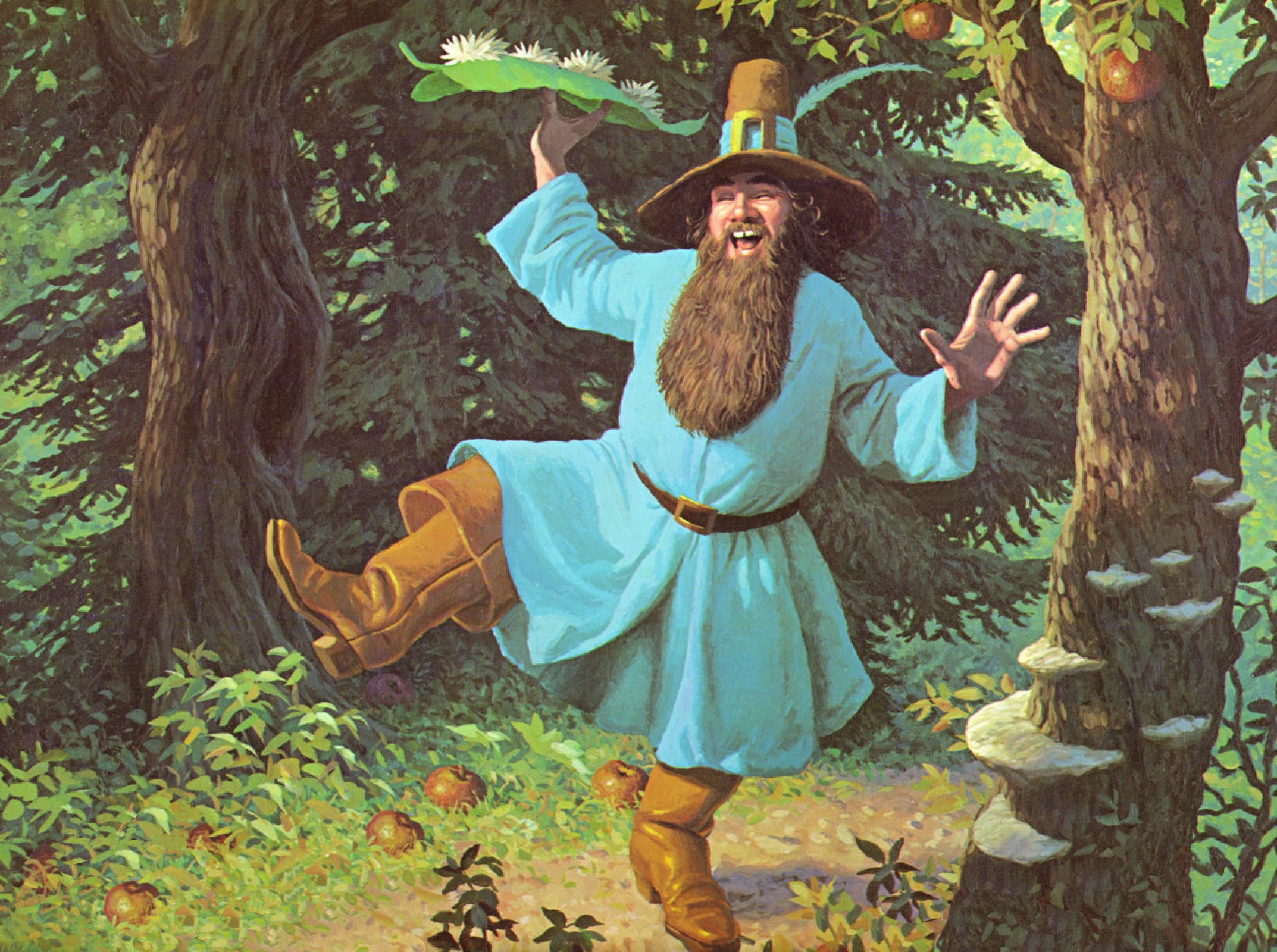
However, I think there is something else underlying the surface analysis we have just offered. Peter Jackson’s trilogy, wonderful (in part) as it is, excises certain important themes and subplots from the original work. Tom Bombadil and his mysterious presence in Middle-earth is one such example, but another, more fundamental, is that of the scouring of the Shire, in which Saruman, after having been defeated, makes his way in a disguised manner to the Shire, where he sets up a new regime of industry in opposition to nature. Tolkien’s own view of the modern world finds itself clarified in this plot, perhaps more than anywhere else, that the beauty and simplicity of rural life and of English life in general had been corrupted and destroyed by industrialisation and the coming of machines. Through the prism of this final and little-explored part of the Lord of the Rings, we are also reminded of just how the orcs came about.
Tolkien, as a good Platonist, believed that all being was good and that evil had no power to create, only to corrupt. The orcs then within this scheme were a corruption of the elves, a great, noble and long-lived race, some of whom had been enticed. Their nature had been twisted by the original Dark Lord Morgoth, long before the coming of Sauron, into a race of bitter, cruel, and violent beings which hated nature and wished to see darkness and destruction spread across all of Middle-earth. Consider then that the final story within The Lord of the Rings trilogy is the corruption of the Shire by its industrialisation. The narrative, of course, shows us how this corruption is defeated and Saruman overthrown before his dominion can take proper root, but Tolkien knew that reality was quite different. Blake’s dark satanic mills had become so ingrained into the life of the Englishman that even Christian man could no longer see them as being alien or foreign. Conservative Christian culture had slowly conceded ground to, and then increasingly embraced, the industrial revolution and its fruits.
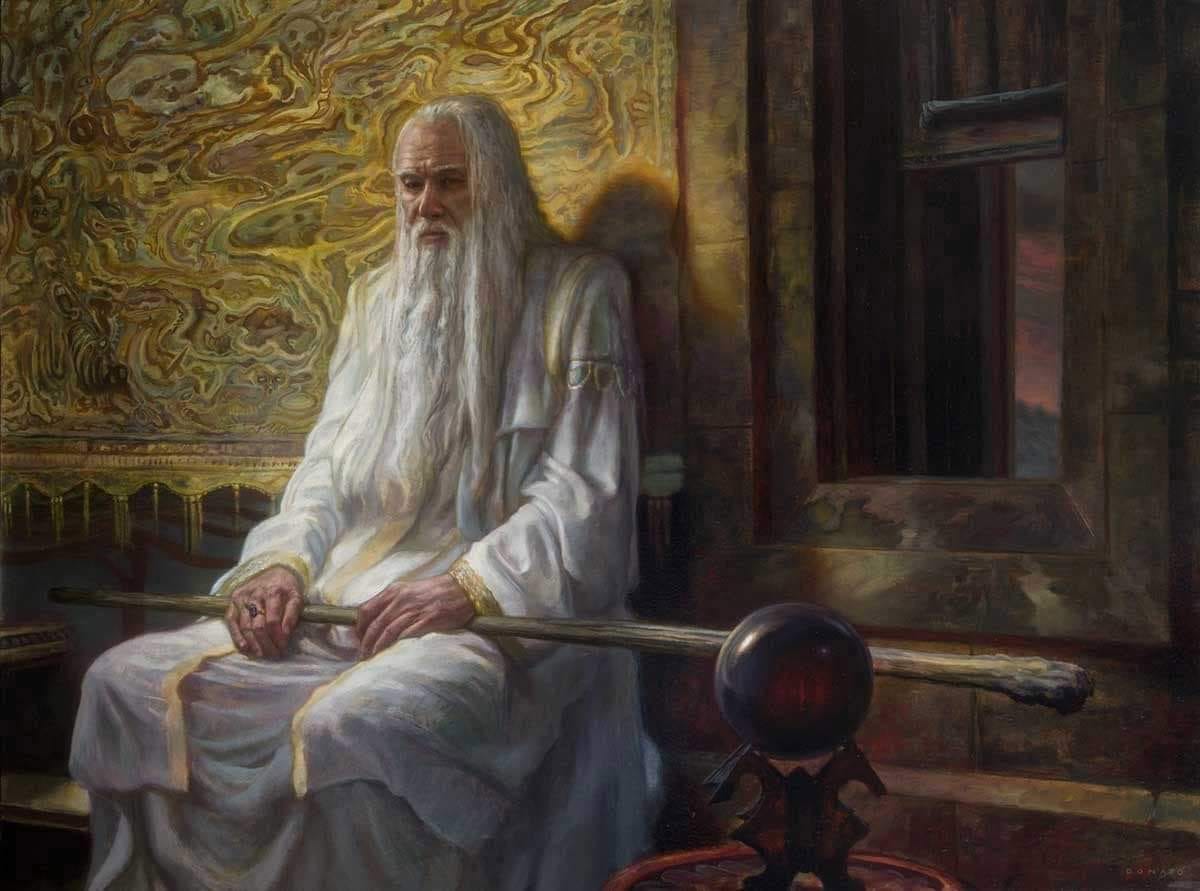
In this context perhaps we can see the extreme metal movement as a prophetic and radically honest self-appraisal of what Western man had become. Westerners were no longer hobbits nor chivalrous knights but, instead, twisted by Saruman’s industry. Christian civilisation had become orclike, and each of us, no matter how much we hate the idea, have more in common now with the orcs than we do with the hobbits. Many of the dark creatures of Middle-earth in fact hated their masters. Perhaps an inner voice called them to something greater and nobler. And yet in the filth and the muck they had little power to turn back to what they once were: the glorious noble beings which Eru Ilúvatar had originally created.
“Ungolianth” by Austrian band Summoning from their 1995 album, Minas Morgul. The sonic atmosphere perfectly compliments the creeping approach of the great demonic spider Shelob after whom the track is named, and about whom the lyrics tell
Black metal, though perhaps unconsciously, offers a mirror to Western society— stripping away the fantasy that we are shire folk or citizens of Rohan. We have become twisted to such a degree that we are no longer aware of what we have lost. The Church, which should exist as a repository for the good, the true, and the beautiful from all of human history, has become a defender of the industrial landscape. Where criticisms can be found, they are cautious and measured so as not to take aim at the Saromanic Powers which enforce the continued desecration of the shire and the defacing of the great Gondoric Cities which have been passed down to us as an inheritance. The West has waged wars which make Sauron’s attempts to conquer the the free people of Middle-earth seem quaint and uncynical. All the while Christian civilisation has had at least one foot in the capitalist industrial imperium.
“Nimrodel/The Procession/The White Rider” by British prog band Camel from their 1974 album, Mirage. The record, one of the best progressive rock albums ever made, harks back to a mistier, gentler Tolkien
People look away from black metal because of its extreme shock tactics, its ugliness and its borderline unlistenable audio landscapes, but no one wants to ask why was this mirror being held up adorned with Christian runes. If we look at Tolkien’s work with a deep self-reflective honesty, we will realise that we are not returning to the Shire, nor are we going to stand tall like the ancient men of Númenor. In our twisted and corrupted form we dig for redemption in the soot and dirt. We are all orcs now.
Soothsayer is looking for writers who can make provocative contributions in the area of Christian tradition, re-enchantment, perennialist philosophy and the western esoteric tradition. If you would like to make a contribution to these conversations please submit to ninapower@gmail.com or scarffe.brian@gmail.com
Very interesting post Brian. Much appreciated. I'm one of those who have read the Lord of the Rings going on 15-20 times over the years, but haven't explored the cultural spill as you have. Should you have time, it would be an interesting project to formulate a subsequent article exploring the equally fringe but alternatively benign or wholesome response to Tolkien's Legendarium.
It is also important to consider the later development of black metal into atmospheric black metal, which took the aesthetic, developed the paganism and dropped the “Mordorism”. I see is as a dark romanticism, a return to the romantic visions of the 18th and 19th century, though bleaker, expressing nature’s powerful screaming indifference instead of her transcendental might. One might say that instead capturing the lingering embers of Faustian summer, late black metal expresses the turn into the cold Faustian winter.