


By Noah Rymer
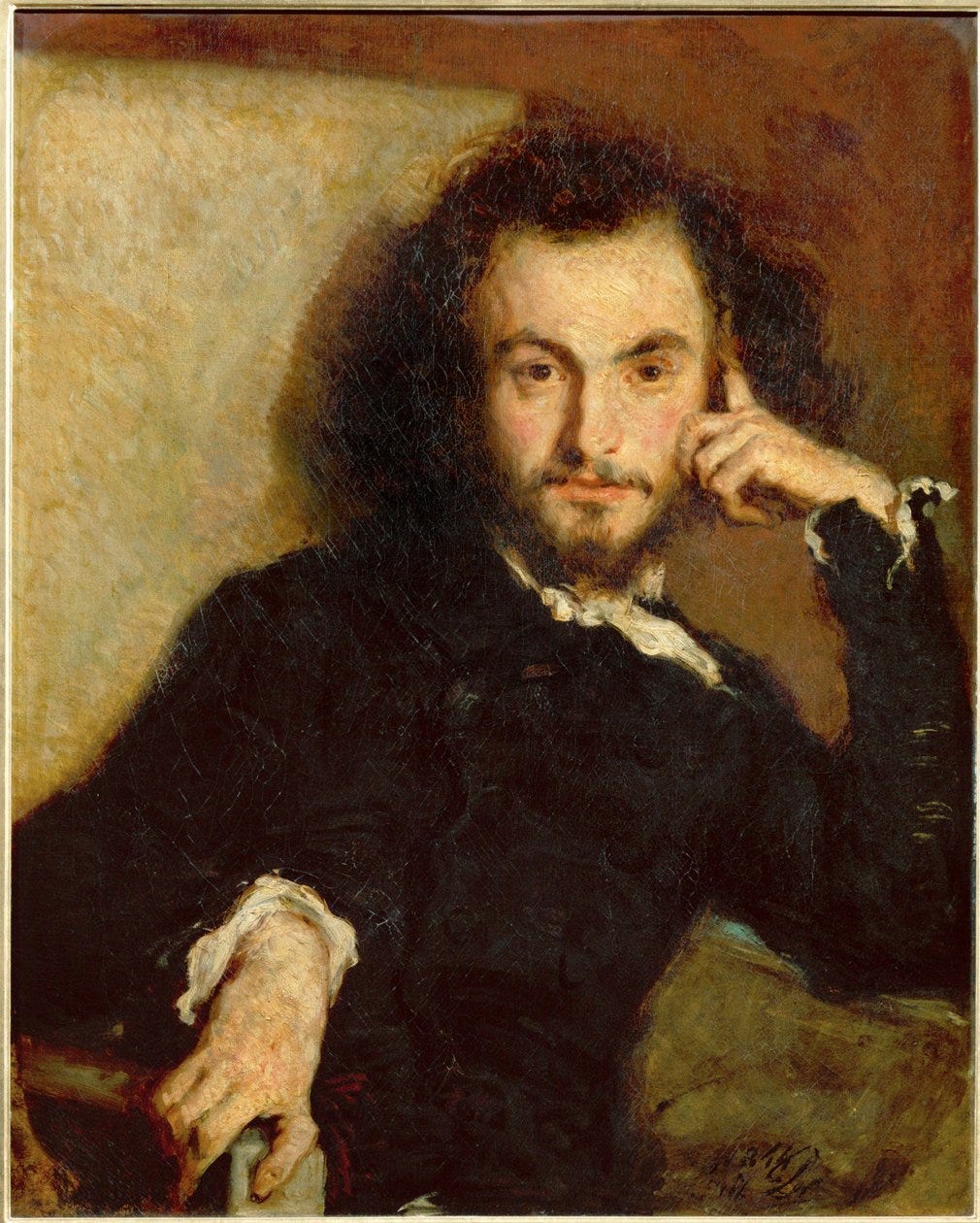
Of all the men and women of letters interred within the canon of Christianity, none have been so controversial as Charles Baudelaire.1 No man has garnered as much infamy and intrigue as “the Catholic Satanist”; “the defrocked monk”; “the bastard child of the Catholic Church”.
To decadence and decay he cast out the didacticism of the satirist’s eye as well as the cold, dissective quality of the surgeon’s and instead built up a new lyrical framework in which damnation was treated with as much reverence as divinity, where evil was praised while good was denied. His bouquet was one in which a rotting carcass could hold aesthetic conversation with a beautiful girl, blooming with a language that was serious and sensuous and sublime. For this, Baudelaire has been rightly canonised as an architect of modernity, a cornerstone of 19th C. poetics, and one of the most influential writers of all time.
But mention his name in most Catholic circles, and you’ll be met with strange looks. Uneasy silences. Quiet judgment. Not only did Baudelaire lead a highly sinful life; not only did he forgo the traditional deathbed repentance that was the hallmark of artists during his century; but his own art is marked with blasphemies and damnations and execrations against the faith. He certainly does not make for cozy reading at your local church’s coffee club.
At least with a comparable artist such as Wilde, we can easily forgive his early deviancy because of his later conversion; or with J.K. Huysmans’s dabbling in Satanism because of what a profound negative theology Là-Bas offers to the faithful. But in Baudelaire there is nothing as easy as a line in a biography or a line in a poem that absolves him of all prior wrongdoing.
And it is this difficulty, perhaps, that allows me to adore him.
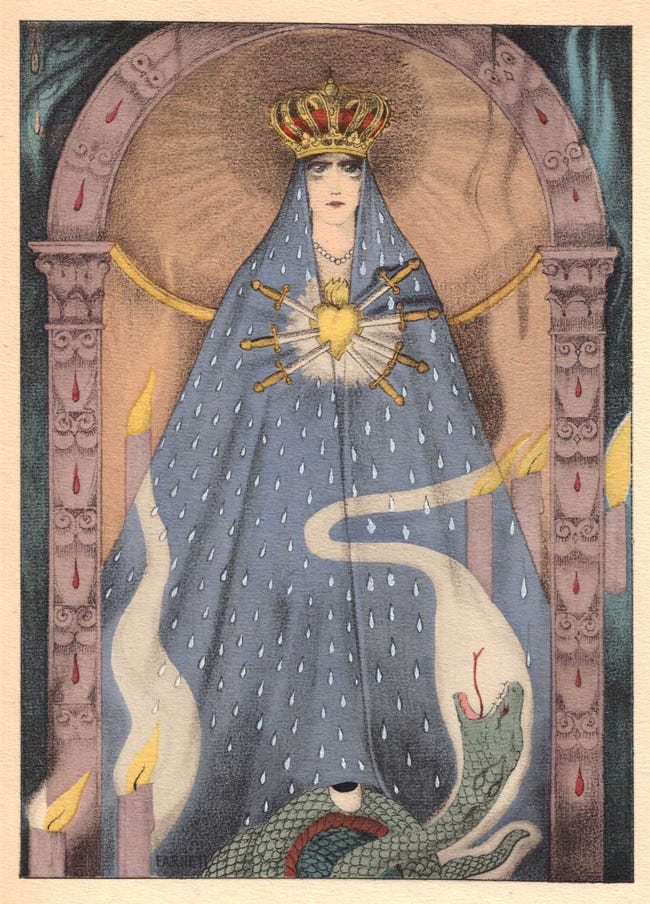
I discovered Baudelaire, rather perversely, in seminary. Adrift both spiritually and vocationally after two tumultuous years in college on the verge of failing out, I’d decided to live in a Spanish monastery before my junior year. Living out my bohemian fantasies in a foreign country rekindled a forgotten passion for literature; I thirsted for expression. I wrote poorly but voraciously, seeking to carve out my ancestry through reading, and found myself, almost instinctively, ordering a copy of Les Fleurs Du Mal.
It gasped with all the rot and aristocracy of an ancient tomb, but with the delirious sensuousness of the parfum noir his “adorable sorceresses” were cloaked in. Its paradoxes, metaphors, metaphysicalities—like serpents of the ouroboros, jewel-encrusted and of gold, glimmering in their abyss. Like some sable flambeaux it engulfed me, became my wicked breviary.
Within those pages I felt that most potent aphrodisiac: a glimmer of recognition. Here was a man who felt all the strangeness and the contradiction of his own Catholicism as I have felt mine, expressing it in a language that had thus far eluded me. Baudelaire became my spiritual brother.
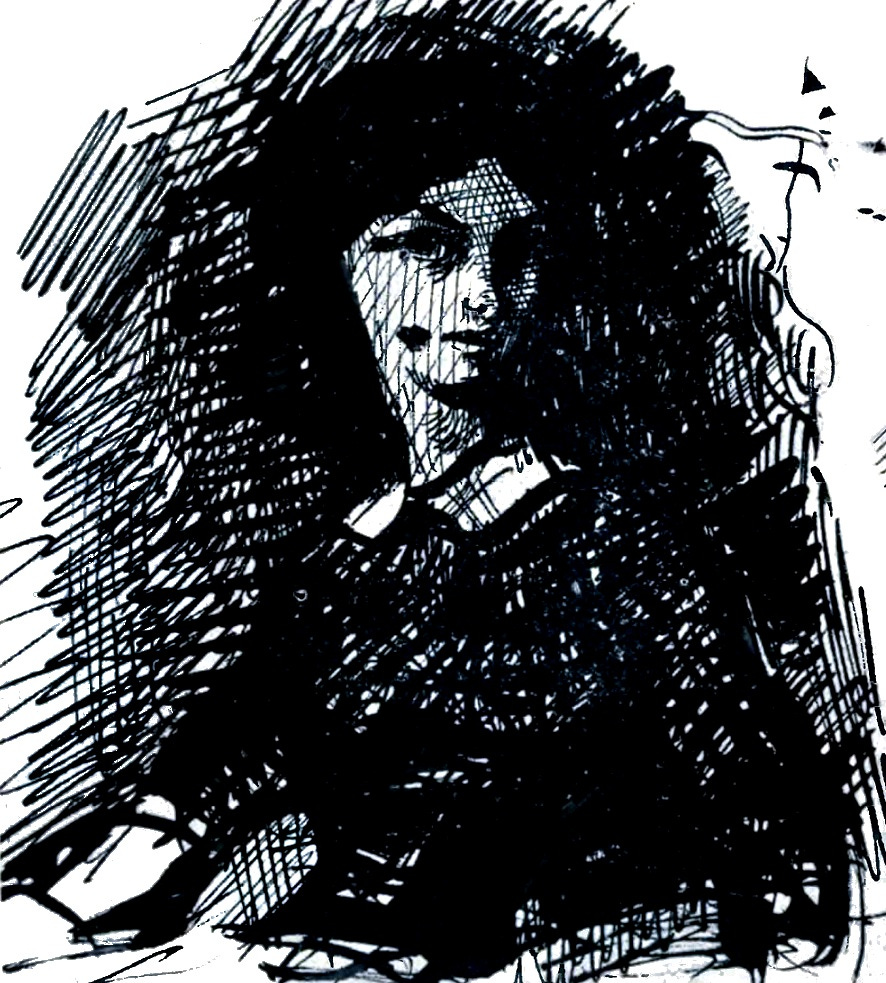
While other, more traditional Christian authors might focus on their sinfulness with an eye towards redemption, Baudelaire autopsies his condition with unnerving leer; the crowning madness of that syphilitic dandy is, paradoxically, his greatest clarity . . . luxuriating in sordidness with one line while sorrowing of it the next.
The very archetype of the poète maudit understood Original Sin and concupiscence with such startling clarity that it’s scandalous how complete his conception is of it. “Our sins are stubborn, our repentance is cowardly,” he tells us in the opening poem, “To The Reader. “In repulsive objects we find enticing lures . . . / Each day we go down one more step toward Hell / Without horror”. Yet, in “The Blessing” Baudelaire speaks of suffering as “a divine remedy for our impurities”, as the young poet described in the poem “revels in the way of the cross”.2
Baudelaire constructs his oeuvre through this continual foil: a constant volta between salvation and damnation. He has seen the glories of heaven yet cannot help being entranced by the temptations of hell. He is, then, like all the rest of us—only he is brave enough to show himself as nakedly, as hideously.
The tortured spirituality of Baudelaire from not only his theology but his sense of aesthetics. The classic theological-aesthetic criterion of the true, the good, and the beautiful finds itself, interrogated, warped: “Do you come from deep heaven or do you come from / hell”, he demands in “Hymn To Beauty”, before reconciling that it makes no difference to him whether beauty be “from Satan or God”. This morally rotted sense of pulchritude marks a radical departure of what Christian artists before or after Baudelaire recognised as The Good. He describes a rotting corpse “like a flower blossoming”; with a beheaded body over a bed a river surging forth, depositing into a meadow; “the lovers of prostitutes” are “happy, free and satisfied”.
The language is occasionally marked by the sacerdotal, owing not only to Baudelaire’s background as a French Catholic, but having a former priest as his stepfather. The clerical langue weaves itself finely into the texture of his poetry: “The last sacraments”; “exhales like a censer”; “a great altar of rest”; “shines in me like a monstrance”; “rolls like incense”. The sacred and the profane become not foils for the other but partners in Baudelaire’s grand danse macabre, and here what is true is neither good nor beautiful, and what is beautiful is neither true nor good.
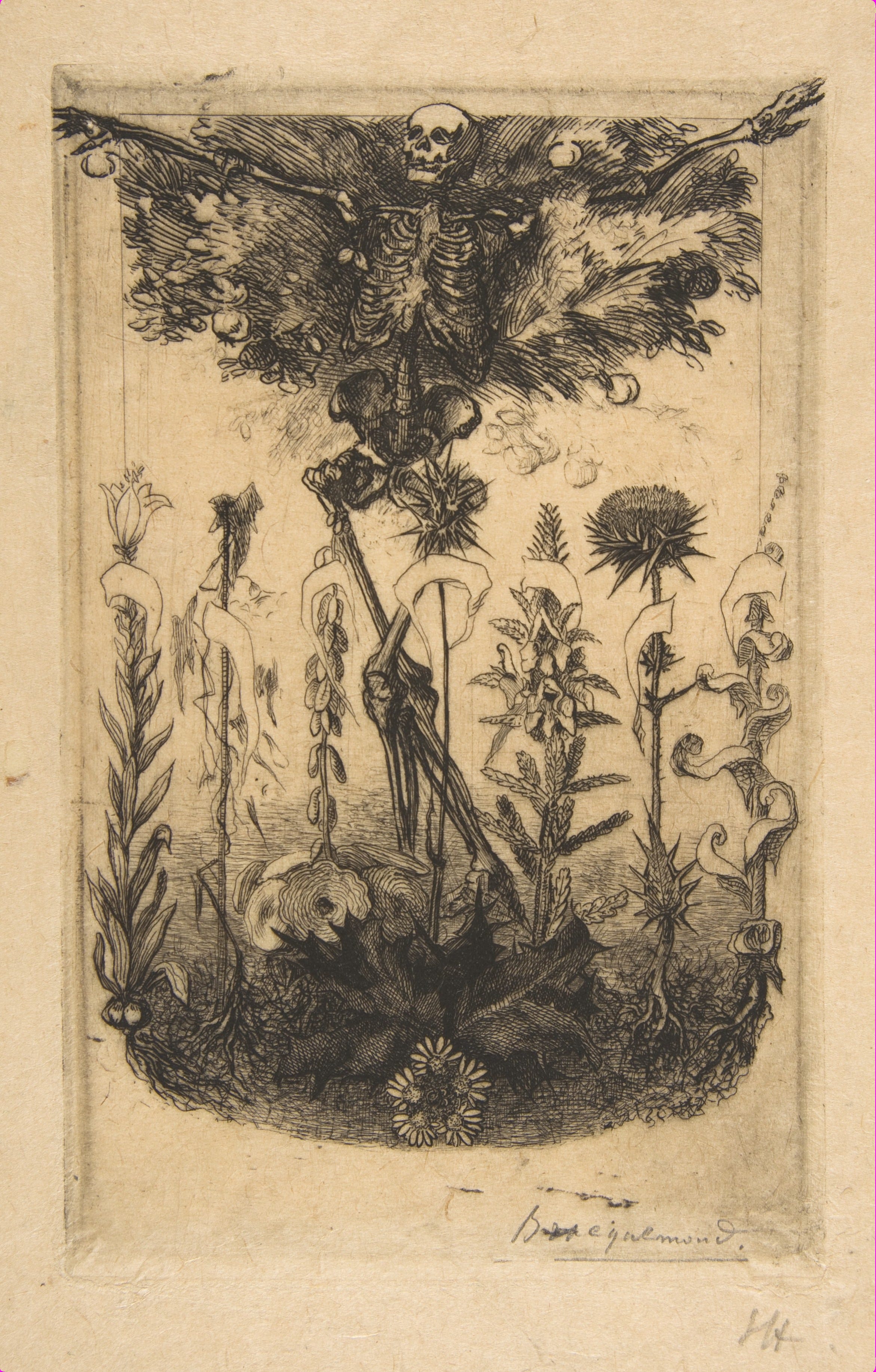
Yet within this firmament of decadence lies an instinctive decay, illustrated no better than in “I Worship You”, wherein the speaker of the poem describes the sexual act as “a chorus of worms climb[ing] over a corpse”. And if there is any moral instruction to be found within The Flowers Of Evil, it is in passages such as this: that death is recognised by and inflicted through the hedonism of the poem’s narrator. His sins never go unpunished. Damnation carries a corporeal presence. Even sin itself is stripped away of its ornamentation like a prostitute of her makeup, is shown to be a “boring spectacle”; pleasure is “that merciless torturer”.
The ‘artificial paradise’ the French poet constructed from liquor, from opium, from the caresses of the ladies of the night, all shatter gloriously and horrifically like the “crystal palace” in “The Wicked Maker Of Window Glass”, revealing the putrefaction beyond the illusion of transcendence and beauty. In “Destruction” Baudelaire unfurls a perfect jeremiad, lamenting of Satan bringing him “far from the sight of God”, filling the poet with “an everlasting guilty desire”. In another poem he cries to the Lord to “give [him] the strength and the courage / To contemplate without disgust [his] heart and [his] body”.
And with this, one begins to notice that while there are numerous invocations to the Father, as well as some to the Holy Ghost, there is not a single one for the Son. Here the tragedy of Baudelaire starts more fully to develop; his remains a Catholicism without Christ. In this absence of the Son he witnesses a barren cross, bereft of salvation history. As one whom thinks of himself as one afflicted with a grievous spiritual malady beyond sanctification, how can Baudelaire’s sins be washed away if there was no Christ to be crucified for them? This is the essential paradox which lies within the lyrical desecration of the work, crux and crown of Les Fleurs Du Mal. Am I not a false chord/In the divine symphony?” he demands, denying himself the hope of reconcile with God.
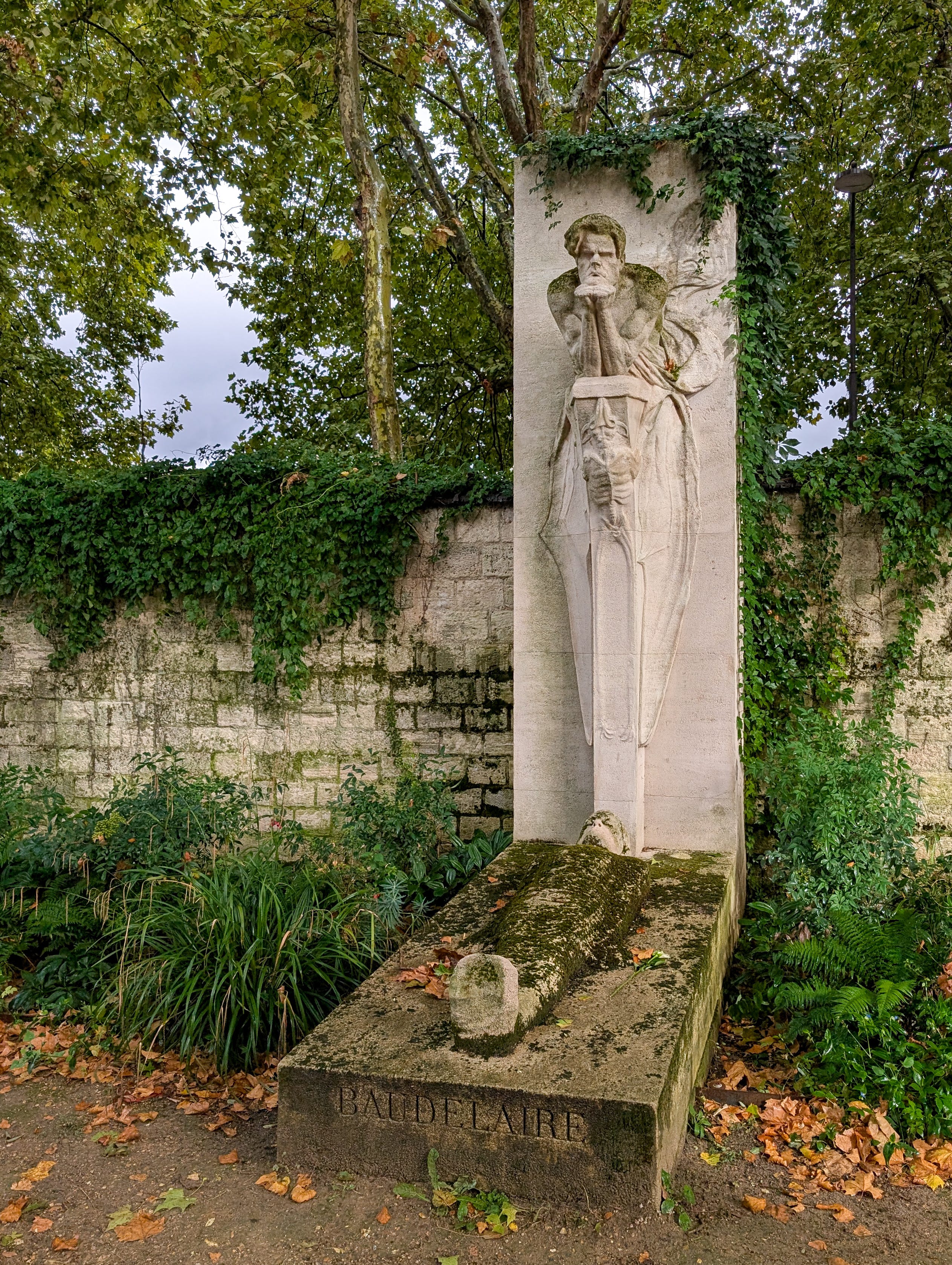
I am not here to defend Baudelaire the man, nor necessarily Baudelaire the artist. What he has done reads like the early life of a saint before renouncing the bacchanalia of their youth, and what he has written their subsequent confession. But even in the strangest of artists, in the most sordid of lives, there exists a connection to the divine, some spark within the tenebrosity of their darkest night. Even if Baudelaire refused to believe in the person of Christ, still He remained. And if there had never been that relationship to the Creator, no matter how strained, the Fleurs would simply wilt. There is no play of shadow when there remains no light.
I am here, however, to draw out the nuance, the chiaroscuro, of Baudelaire’s art. To simply excommunicate him from the canon of the faithful is to banish the richness of his readings, and to devalue the faith in doing so, for Charles Baudelaire, like the rest of us, was a paradox, a man who wished to glorify God yet remained in wickedness, that Lucifer in a constant volta between heaven and hell, eternally viewing the heavens from the gutter, his every word and every action sacred or blasphemous.
Drowned with liquor, clouded in opium, tortured by beauty—his torment baroque, his brow marbled, his every sigh gasping of incense . . . Baudelaire’s spiritual agony was at one with his form. An agony that demands further autopsy.
One can easily decry Gilles de Rais as much more horrific in his actions than Charles Baudelaire, and certainly more sacrilegious in nature—but as Huysmans remarks in Là-Bas he did eventually convert, repenting for his crimes against God.
These and all subsequent quotations are and will be taken from Wallace Fowlie’s translation of the text.