


By Brian Scarffe, Soothsayer Founder
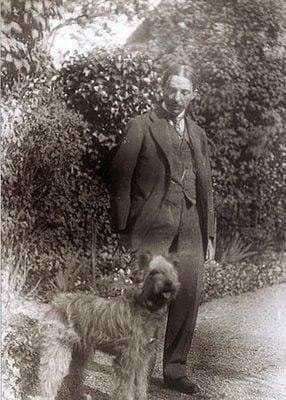
While Valentin Tomberg (*1900, St. Petersburg; †1973, Mallorca) is an increasingly familiar name in Catholic circles, the name Paul Sédir is, as yet, less so. Tomberg, an obscure and self-effacing figure whose works originally circulated among an inner circle of friends and Initiates, is best-known as the author of Meditations on the Tarot.1 This work, his crowning achievement, eventually reached the papal desk and received an afterword from Hans Urs von Balthasar, much to the consternation of the True Trads™ (Balthasar died in June 1988, two days before his appointment to cardinal by John Paul II). Since then, many of Tomberg’s other works have been translated by Angelico Press, bringing a formidable repertoire of learning to the most generous minds of the Anglosphere.
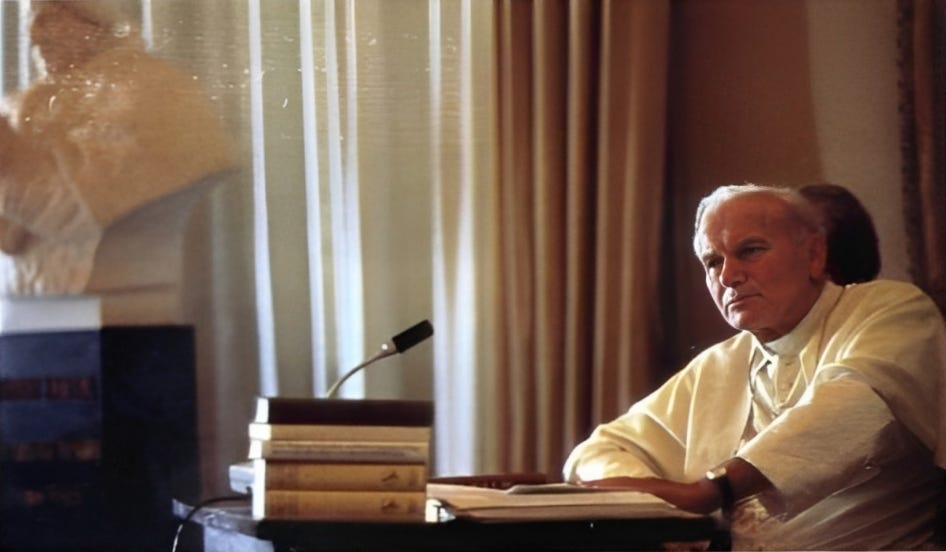
Just as thirty years ago, the name Valentin Tomberg would have been completely unknown in wider Catholic circles, so today the name Paul Sédir is similarly quite obscure. One day, however, and hopefully not in the too distant future, Sédir will find himself as well-known and as held in as high esteem, among those who continue to dig for ways out of our modern burial ground, as Tomberg.
To understand who Paul Sédir was, we need to understand something of the milieu from which he sprung, namely nineteenth-century France. For most of the century, France found itself in a civilizational emergency: revolution and counter-revolution, the Napoleonic, and the emerging secular Leviathan seeking to destroy the power of the clerical estate. The church itself was gripped by the manualist tradition which choked the Christian spiritual landscape and which, contrary to modern Thomist assertions, created real deserts of spirituality within the seminary systems and led to a massive diminution in the spiritual powers of Europe’s Christian peoples.
In this environment, many aristocrats and men of learning turned to esoteric and occult traditions and scholarship to try and break free of the stranglehold of the particular flavour of poisonous modernity which had gripped France. What were the hidden powers of nature? What was the spiritual architecture of the cosmos? How does the spiritual pilgrim navigate the hidden environment which is all around, though the eye of the spirit has become blinded? These pioneers of the spirit sought to try and rediscover and reconquer lands which once were the home of their ancestors, but which now had become overgrown, the habitat of monstrous creatures.
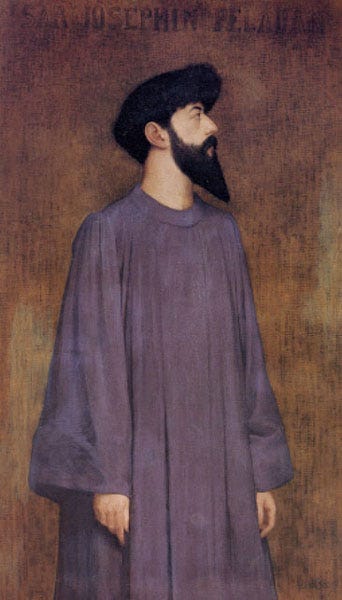
This environment produced extraordinary men, eccentrics like Joséphin Péladan (who styled himself Sâr Mérodack). Claiming lineage from an ancient royal line, he cultivated an Assyrian style, beard oiled with cedar, long hair, wore theatrical dress made of blue velvet, threaded with camel hair and gold, and applied perfumes governed by the seven planetary spheres. In 1891 he wrote Comment on devient mage (How to Be a Mage), in which he marries devotion to St. Thomas Aquinas, St. Joseph of Arimathea, and Chaldean occultism in a way that had not been seen since the extraordinary binding of Chaldean wisdom and Christian spirituality in the great twelth-century school of Chartres.
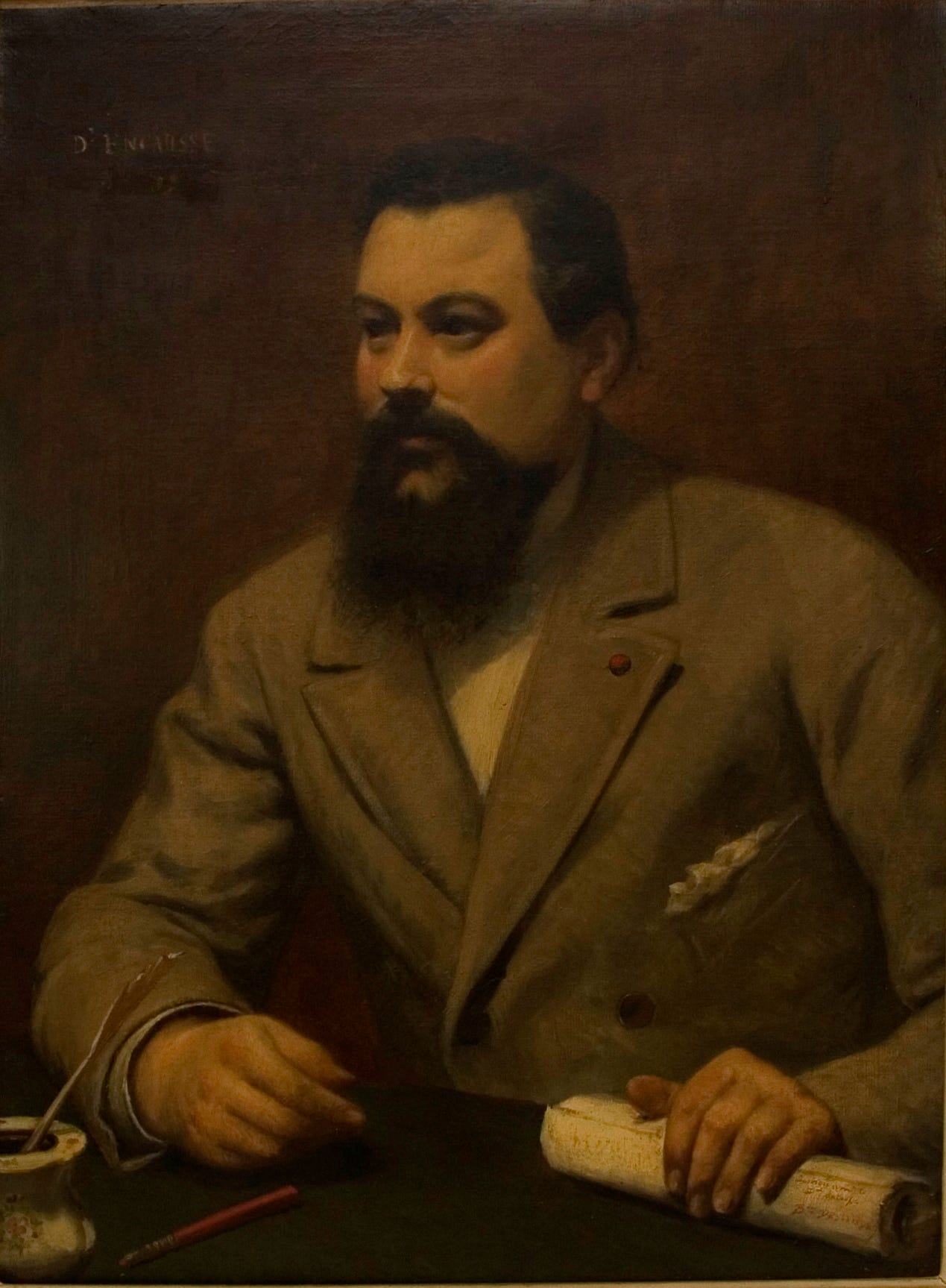
Another fascinating figure from this scene was Gérard Anaclet Vincent Encausse (*1865 –†1916), aka Papus, a central organiser of many of the initiatic organizations which were found in Paris and the wider French social scene in the late 19th century. It was through Papus that Paul Sédir entered the scene as his protégé, rising through various initiatic groups to become the Paris scene’s quiet star. That is, until one day, when, after a meeting with the Christian teacher and healer Master Philippe of Lyon, he resigned from all of his Masonic and initiatic stations and devoted himself to the evangelical path of charity and the kingdom.
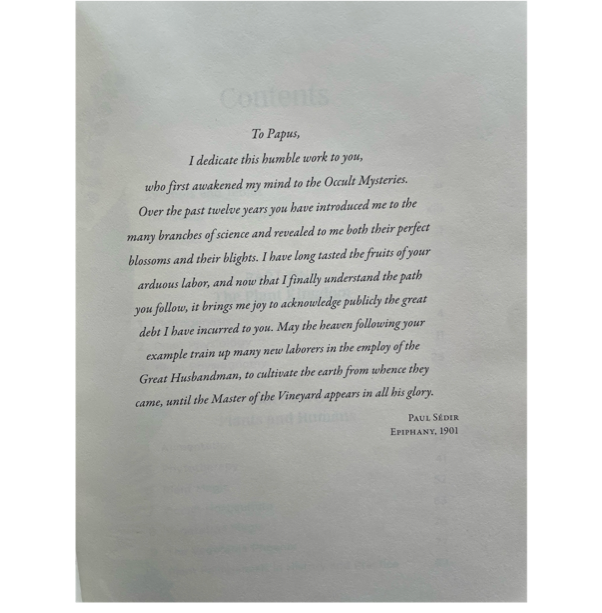
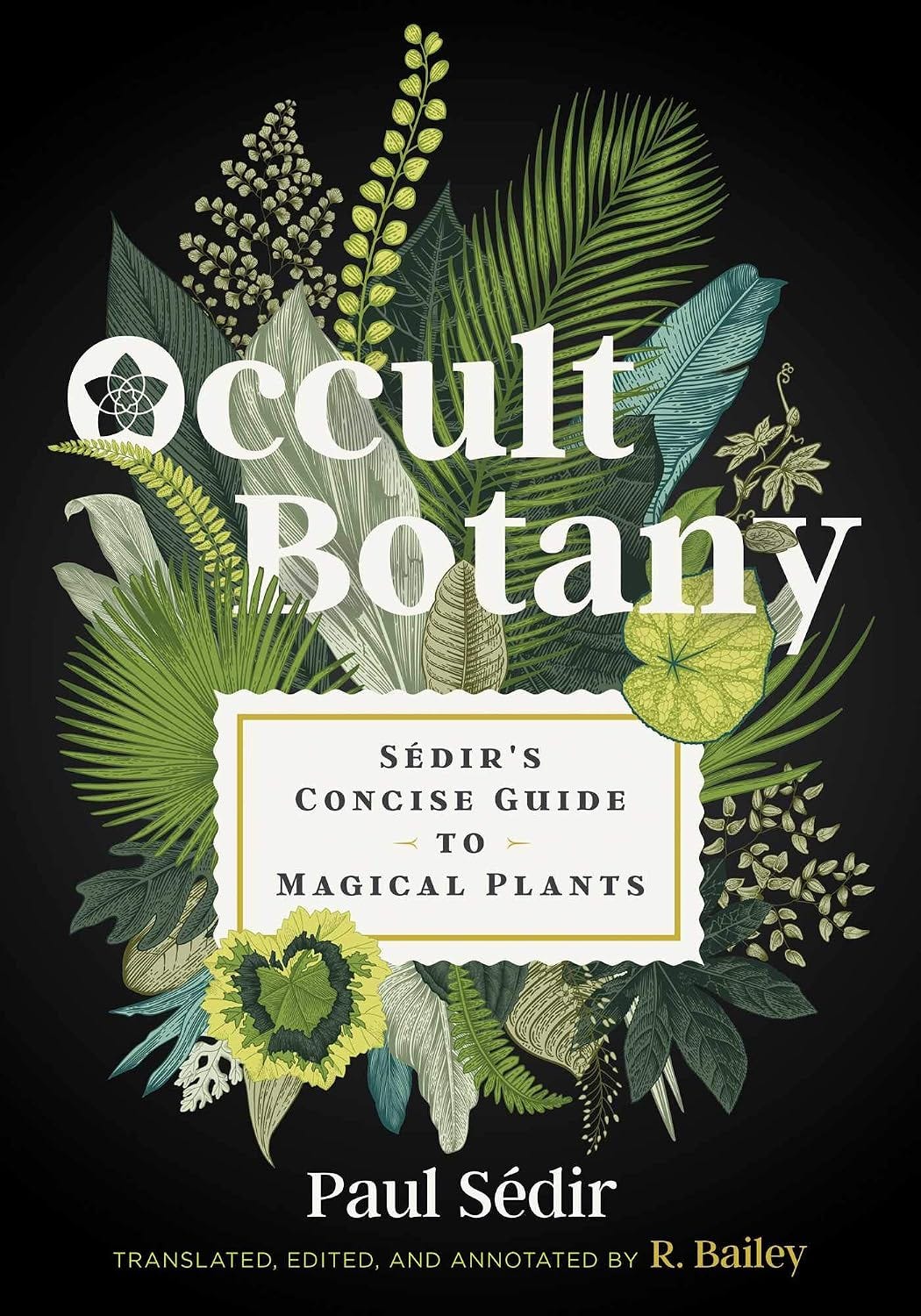
My first encounter with Sédir’s work was a chance purchase of his magisterial work on esoteric gardening, Occult Botany. As fascinating a text as this is, and one which I highly recommend to all who are engaged in cultivating the green Mysteries, it was his dedication to Papus that really stuck with me. In this short text, the author brings together the biblical analogies of the vineyard and directs all esoteric learning towards cultivation until the Master of all things returns to restore them to himself. Since reading this short text. I have felt a very powerful connection to Sédir. A couple of years ago, this manifested in a strange incident in which I felt a sudden, powerful urge to investigate whether any new texts of his had been published into English. This led me to discover that one week earlier, no less than seven books had been released all at the same time with absolutely no fanfare, by a book publisher called Friends In Spirit, an organisation so obscure it had (and still has) no online footprint at all. And, to the best of my understanding, have never published anything else. Without such an impulse, I would have perhaps never become aware that Sédir’s late evangelical works had all been translated under the auspices of James Wetmore, one of the founders of Angelico Press. It is not clear to me why such a publishing decision was made, almost ensuring that these works would be unlikely to receive any wide readership. However, I’m very pleased that they came to my attention and that I can now share them with you.
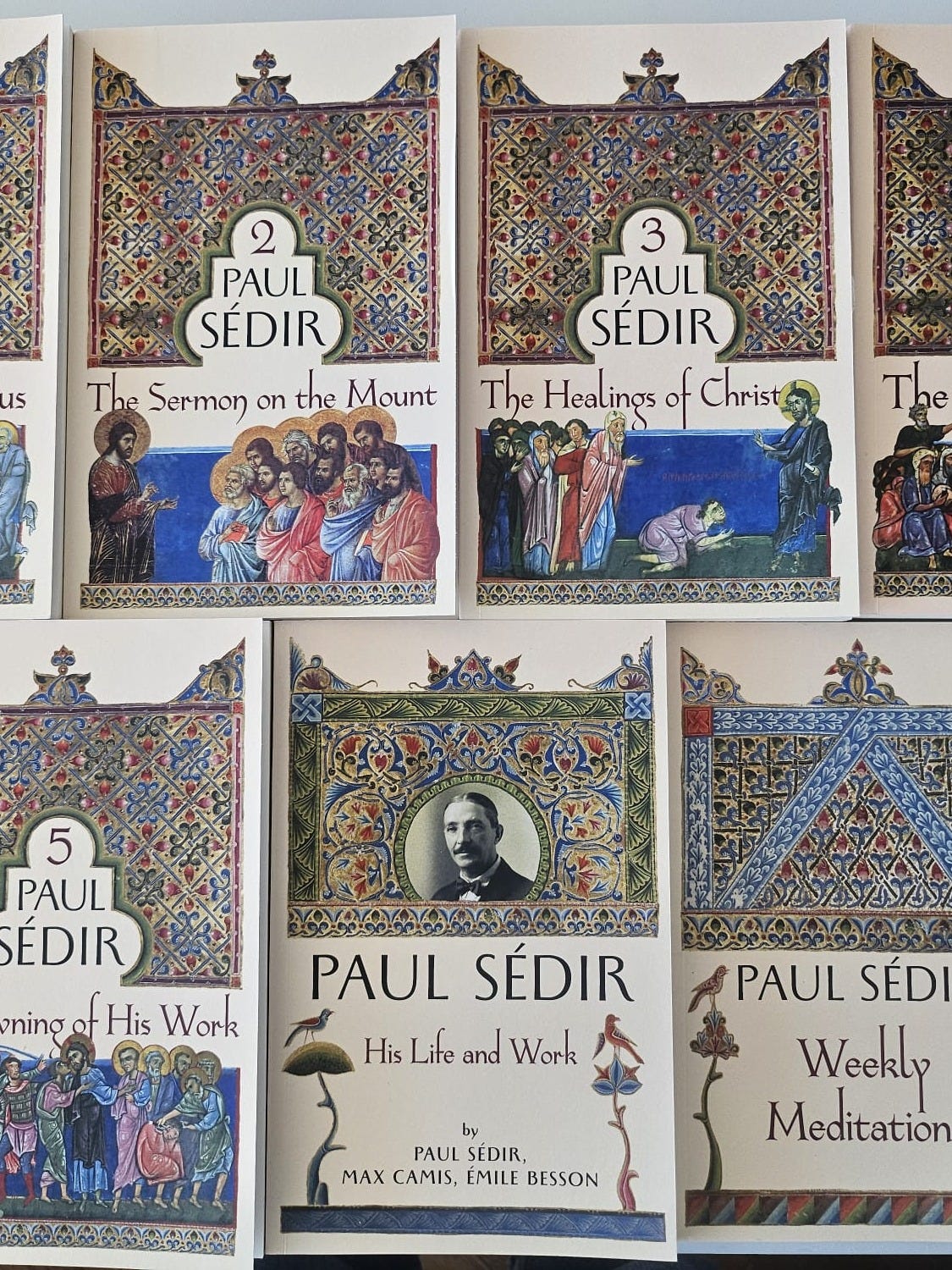
As well as the five central texts examining five main aspects of the life of Christ, there is a biographical work, and a collection of meditations. The structure of the works follows a non-systematic and contemplative framework. Metaphysics, philosophy and spiritual insight into the life of the incarnate Savior are bound together in a truly unique way and via a framework that foregrounds the process of spiritual transformation rather than obsesses over academic convention. Clearly the translations are a labor of love and the prose flows naturally, aiding the ease with which the reader can engage with the ideas.
Occasionally, one will encounter in these works a passage so jarring, so earth-shattering that the book must simply be put down, and one sits perhaps for hours marveling at the light which has just crashed through the materialist construct which imprisons us. Throughout the works, tidbits of forgotten folklore or profound occult learning are bound in such a way that those who already have a deep understanding of Hermeticism and medieval and ancient philosophy have an entirely new series of spiritual corridors opened to them to explore. What we have now, for the first time in the English language, is access to a work whose humility is matched by its extraordinary breadth of learning in areas truly unusual for works of Christian spirituality. For this reasons, I thoroughly commend all five volumes, as well as the two auxiliary works, to the readership of Soothsayer. Whilst they clearly draw from the same wellspring, the flavor of Paul Sédir’s spirituality is definitely distinct from that of Valentin Tomberg. And I believe that in the coming decades, as Tomberg’s star continues to rise, it can only experience further enrichment by being joined by the perhaps even richer light of this forgotten mystic. These works can be found for sale in all good bookstores, almost nowhere.
Completed in 1967, but published posthumously and anonymously in 1980 as Méditations sur les 22 arcanes majeurs du Tarot by Éditions Aubier-Montaigne.
Very interesting thanks.
You’ve added to my reading list- again!🤦♀️
Thank you.🙏🏻