


By Brian Scarffe, Soothsayer Founder
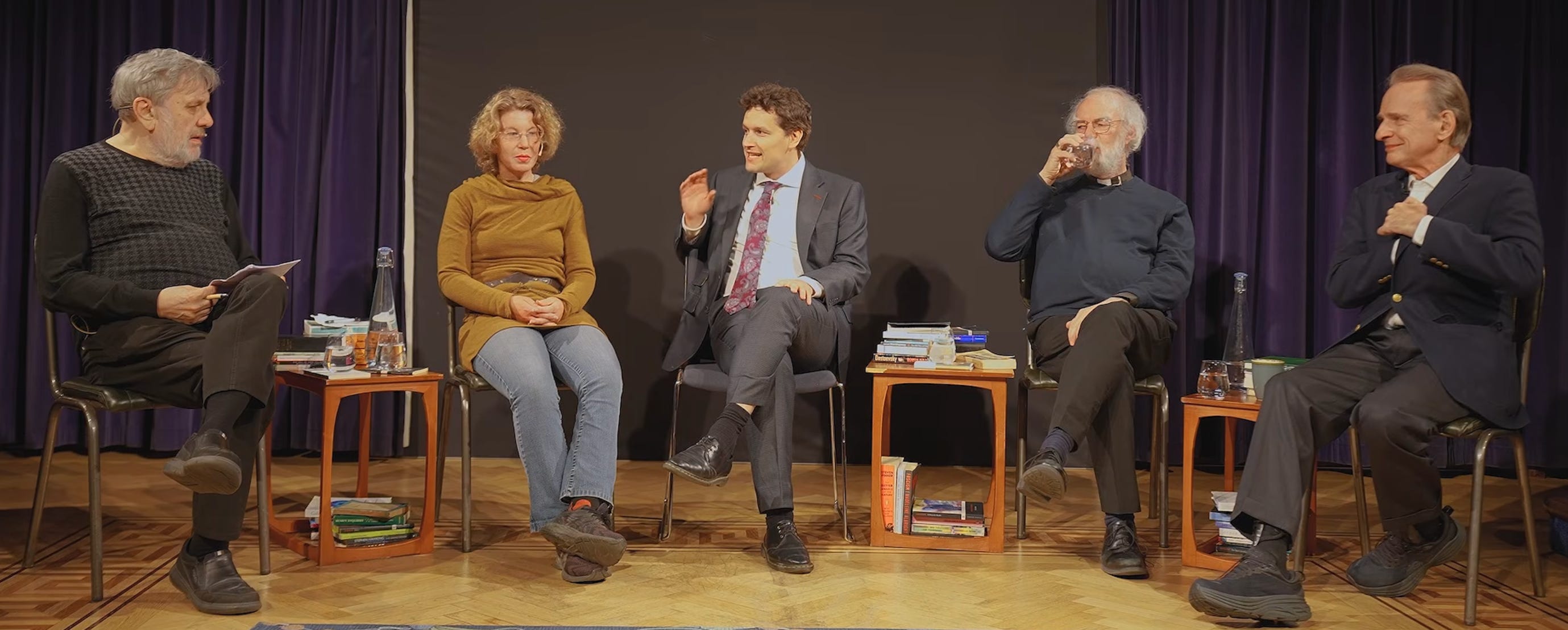
I recently stumbled across a recording of an in-person four-way conversation entitled “Does God Exist?” between Rowan Williams, Sabine Hossenfelder, William Lane Craig, and Slavoj Žižek, originally hosted by the Royal Institute and uploaded by Premier Unbelievable? who organise conversations between Christians and non-Christians. I wouldn’t normally pay too much attention to this kind of apologetics; however, seeing these particular four piqued my interest. The Right Reverend and Right Honourable The Lord Williams of Oystermouth is widely considered to be one of the British church’s towering intellects of the past century.
Next is Sabine Hossenfelder, a remarkable and slightly autistic woman who has taken a stand against the modern scientific posture which the scientific establishment has taken, part of which she recorded in her book Lost in Math (2018), in which she details how theoretical physics has now moved so far away from anything we might consider experimental science, that it cannot really be considered science at all. William Lane Craig barely needs an introduction to anybody familiar with Christian apologetics. His reputation precedes him, as both a sharp analytic philosopher who deals with religious subjects, and as a complete loose cannon when it comes to theological positions, managing to resuscitate completely forgotten forms of heresy that nobody had heard of in hundreds, if not thousands, of years and setting them up as if they were the most common-sense opinion.
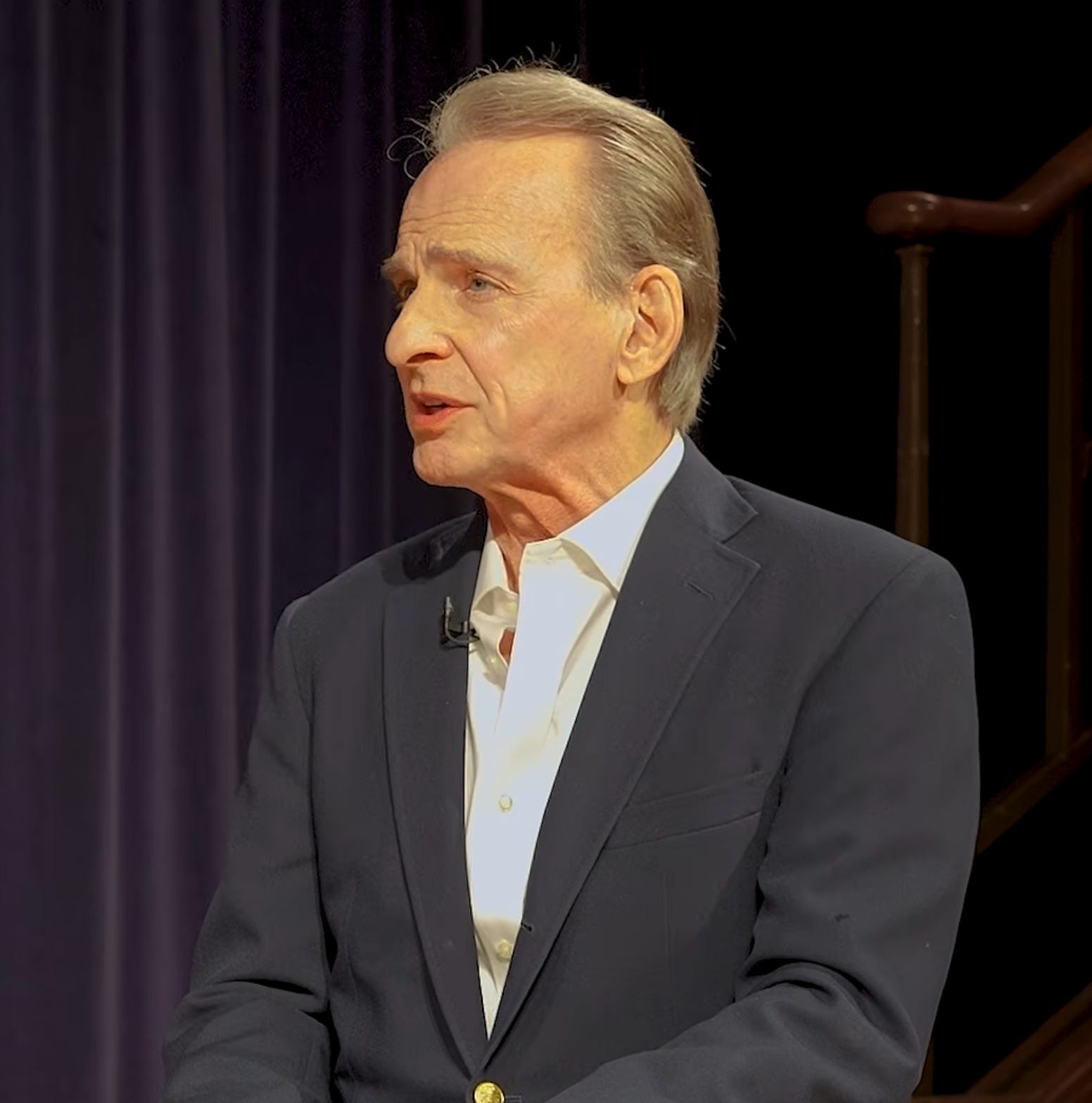
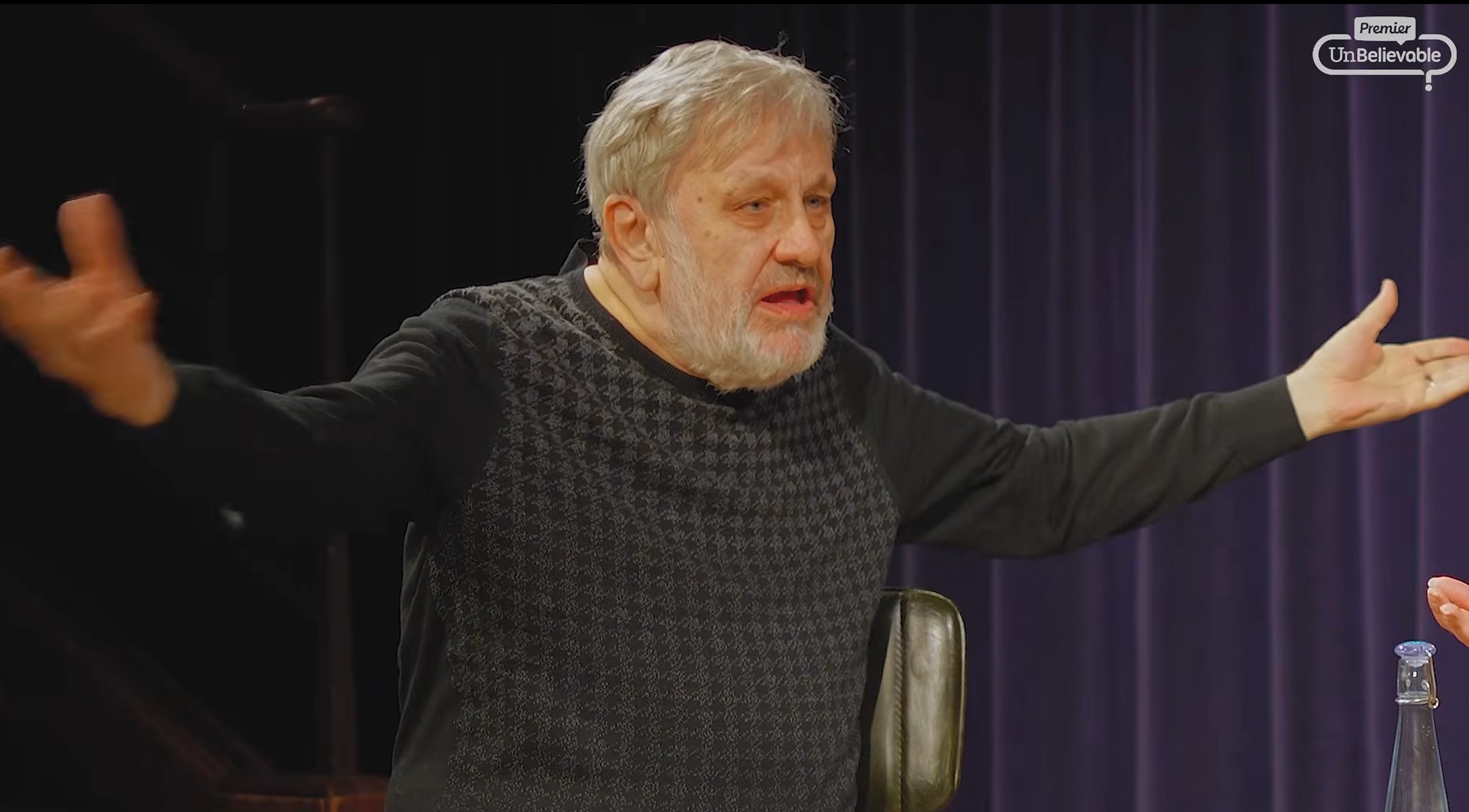
Finally, and this was the real clincher, is Slavoj Žižek, somewhat of a contrarian “Christian atheist” continental philosopher, whose eccentric mannerisms have made him the somewhat retarded but charming uncle of public philosophy and whose opinions are often unpredictable. But occasionally, he will say something so profound that it’s worth giving him the time of day. The central crux of the conversation occurs when Dr. Craig gives a well-rehearsed account of all of the scholarship and the scholars over the last 150 years, which support, in the academic sense, the facts surrounding the narrative of the resurrection in the New Testament. It’s a well-polished speech, but it is interesting to see how Sabine, as somebody who is truly unchurched and unbaptised, simply shrugs her shoulders and doesn’t seem to really care at all, is unmoved, clearly doesn’t think that the kind of facts he is dealing with are in any way comparable to the kind of facts that a scientist deals with, and even if he was right, so what? But the main point I wish to highlight comes immediately after this when Žižek is offered a chance to respond, and he immediately wants to question what is really meant by a fact. He expresses sincere doubt that one can establish quite so simply as Dr. Craig has attempted to do the reality of “historical facts”.
Žižek is right. Whilst the term fact has a deep history going back to the Latin factum and had widespread use in medieval English courts, the modern concept of an objectively verified truth in the modern sense only developed in the sixteenth and seventeenth centuries, in the context of a legal model which, through the prism of English common law, sought to establish an alleged human act through juries, eyewitnesses, sworn testimony, and attention to witness credibility. These descriptions of how we come to “a fact” are important because it’s these very same things which Dr. Craig appeals to in his establishment of the fact(s) of the resurrection. Eyewitness accounts, testimonies, and juries, though in this case not legal but academic, who have established whether this or that historical claim, a concept itself being projected back onto the gospel narratives, could be trusted and could be established as an unmovable object.
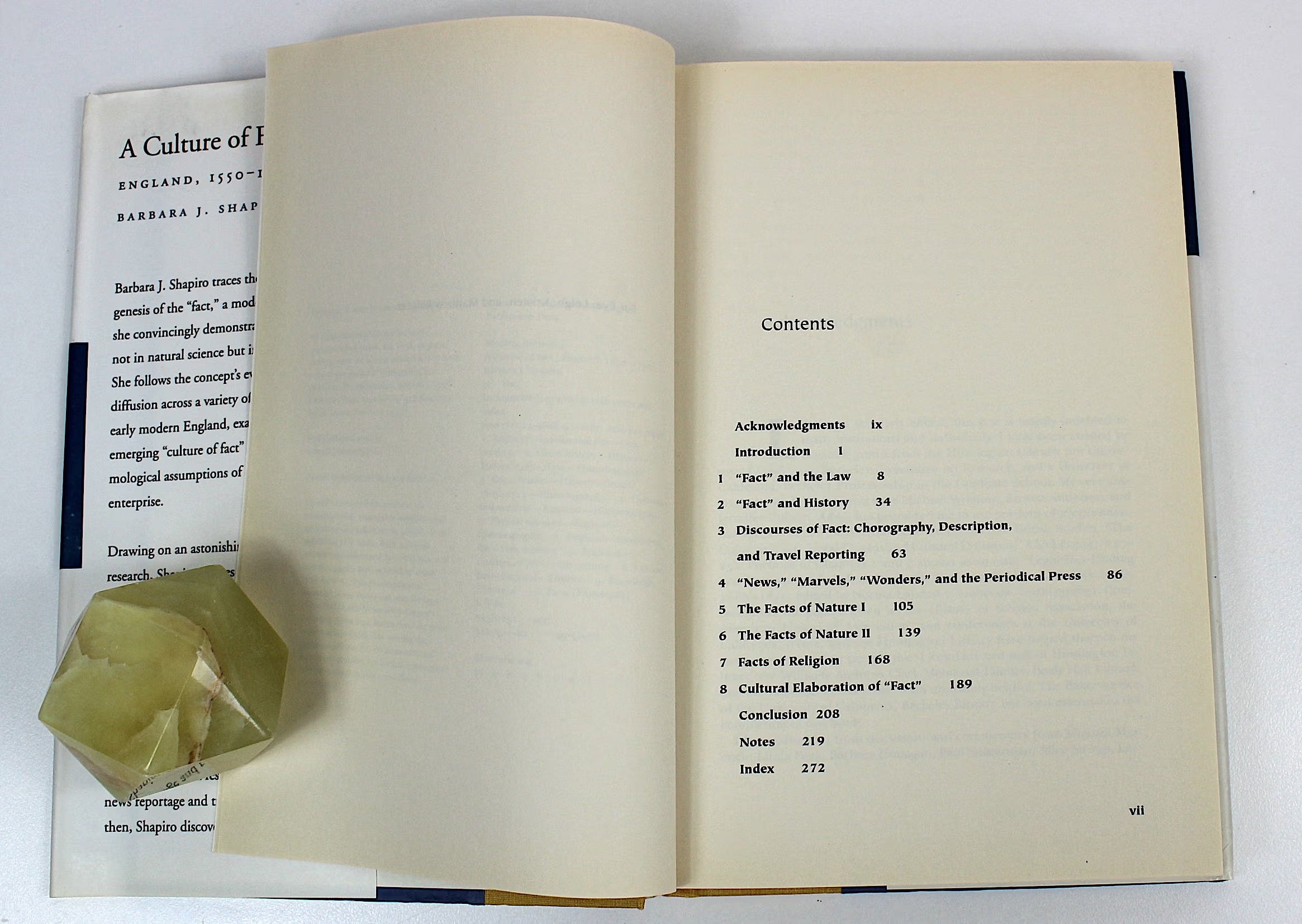
Barbara J. Shapiro’s work, A Culture of Fact: England 1550 to 1720 (2000) which documents this transformation in the concept and the emergence of our modern understanding of fact, is an important genealogical guideline for understanding how we now interpret the world around us and our religious philosophies through a prism of an Enlightenment concept highly contingent on one particular eccentric mode of thought by one particular ethnic group. I myself, of course, believe the resurrection to be a true and real historical event. So I had myself wondering: why does this rub me up the wrong way so much? On the one hand, this Enlightenment way of dealing with truths, replacing them with propositions and jury-established facts goes against my intuitive understanding of how truth expresses itself in reality and in its cosmic forms. But secondly, this problematic marriage of the Christian mystery to a set of agreeable or disagreeable propositions hides an even deeper problem.
Through the lens of certifiable history, the current situation for Christianity is comfortable. We are in possession of fragments of its central scriptures containing eyewitness accounts to the life of God incarnate. These include P52, a small fragment of John from the second century AD; P45, which includes portions of the four Gospels and the Book of Acts from the early third century; P46, which contains much of Paul’s letters; P66, which contains a significant proportion of the Gospel of John from around 200 AD and P75 from the early third century containing some of the Gospels of Luke and John. Powerful historical evidence linking the beliefs of contemporary Christians to a time very close to living memory. Yet consider how fragile the existence of these documents is. Housed in libraries across the UK, Ireland, Switzerland, Vatican City, and monasteries in Egypt, the existence of these documents is just one war or one natural disaster away from being extinguished. One needs only look at the destruction of the First and Second World Wars to see how close and how easy it would be for these tiny fragments of history to be eliminated entirely.
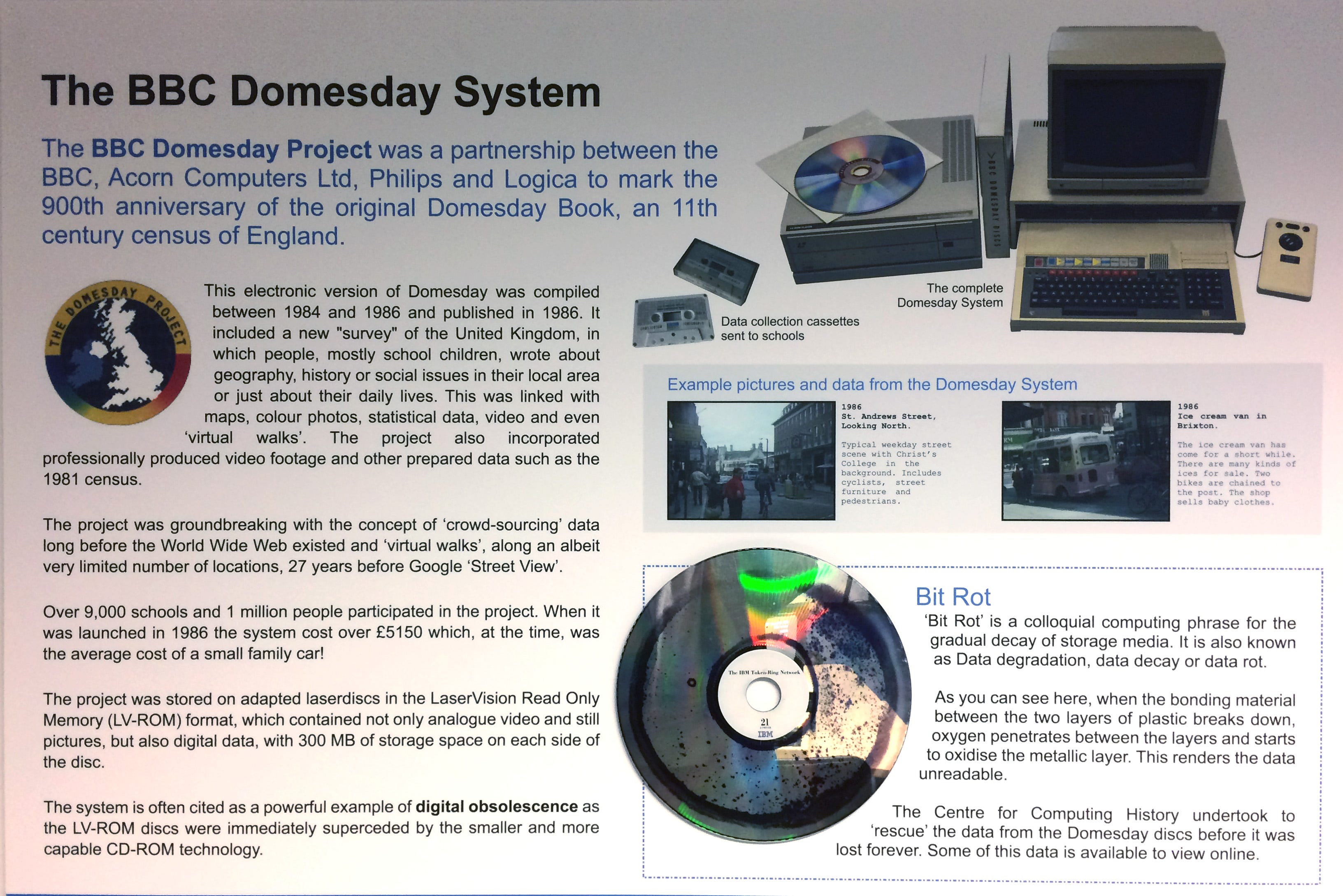
Digitisation doesn’t help, as we know that digital records themselves are extremely fragile. Consider the BBC Domesday Project. In 1986, the BBC created a grand digital snapshot of life across Britain, which took in contributions from across the social spectrum. It stored the texts, photographs, maps, and video on two interactive video discs. But this material depended on a highly specific and unusual combination of discs, specialist players, and proprietary BBC microcomputers. By the early 2000s, the hardware had become so rare and obsolete that the archive was widely reported as unreadable. The records haven’t vanished, but the equivalent no longer exists to read it. Recent digital archaeological excavation has restored much of this material through computer emulation, yet, it is illustrative of how fragile digital records are and with social and environmental upheavals, we will likely see a lot more of this vanishing of digital memory.
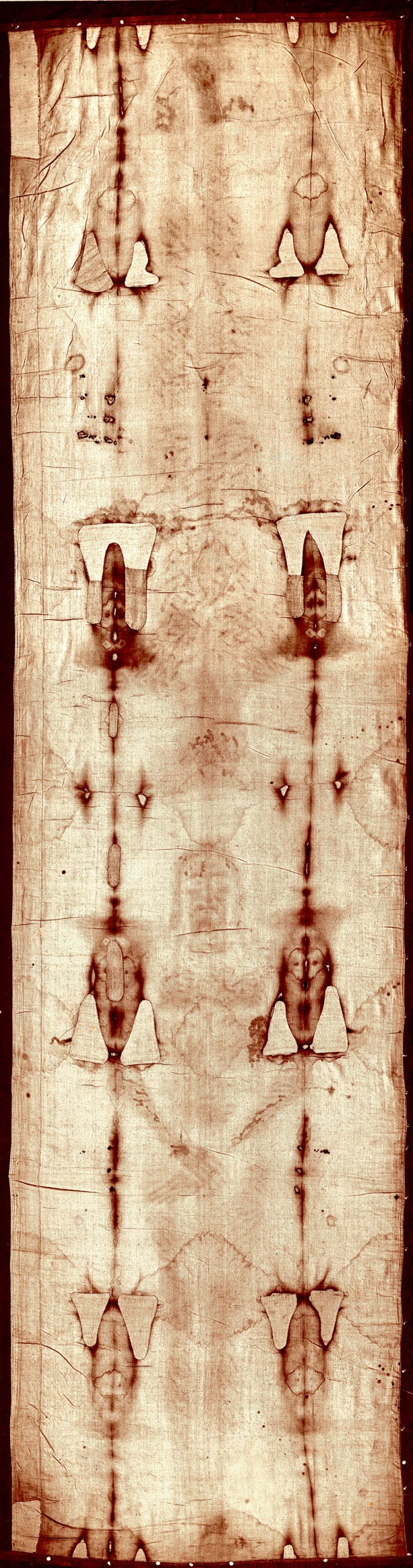
Consider also the Holy Land, which contains so many places tied to the life of Christ, his birth in Bethlehem, the locations of his preachings in Galilee and Judea, and his final great moments of the Passion marked throughout the holy city of Jerusalem, culminating in the known location of Golgotha and the Holy Sepulchre where his body was laid to rest before he underwent his resurrection. But all of this land is both inhabited by and surrounded by people whose taste for warfare is bottomless and to whom the tools of violence have grown beyond the imaginations of any pre-modern man. It is widely suspected that Israel has nuclear weapons capacity. It is also known that many of Israel’s enemies, such as Iran and others of ambiguous allegiance, such as Pakistan, either greatly desire or already have access to nuclear weapons. A single, short, concentrated nuclear exchange would remove all physical evidence of the life of Christ from the Middle East, turning the once holy land into a plain of glass. Likewise, the Shroud of Turin, though it has escaped a number of extraordinary disasters through what can only be described as providential intervention, it too is incredibly fragile and, with the passage of time, will become increasingly so. And this gets to the heart of the point, that even if all of these evidences of early Christianity survive without being destroyed in warfare or through other disasters, time itself will come calling and will take its pound of flesh.
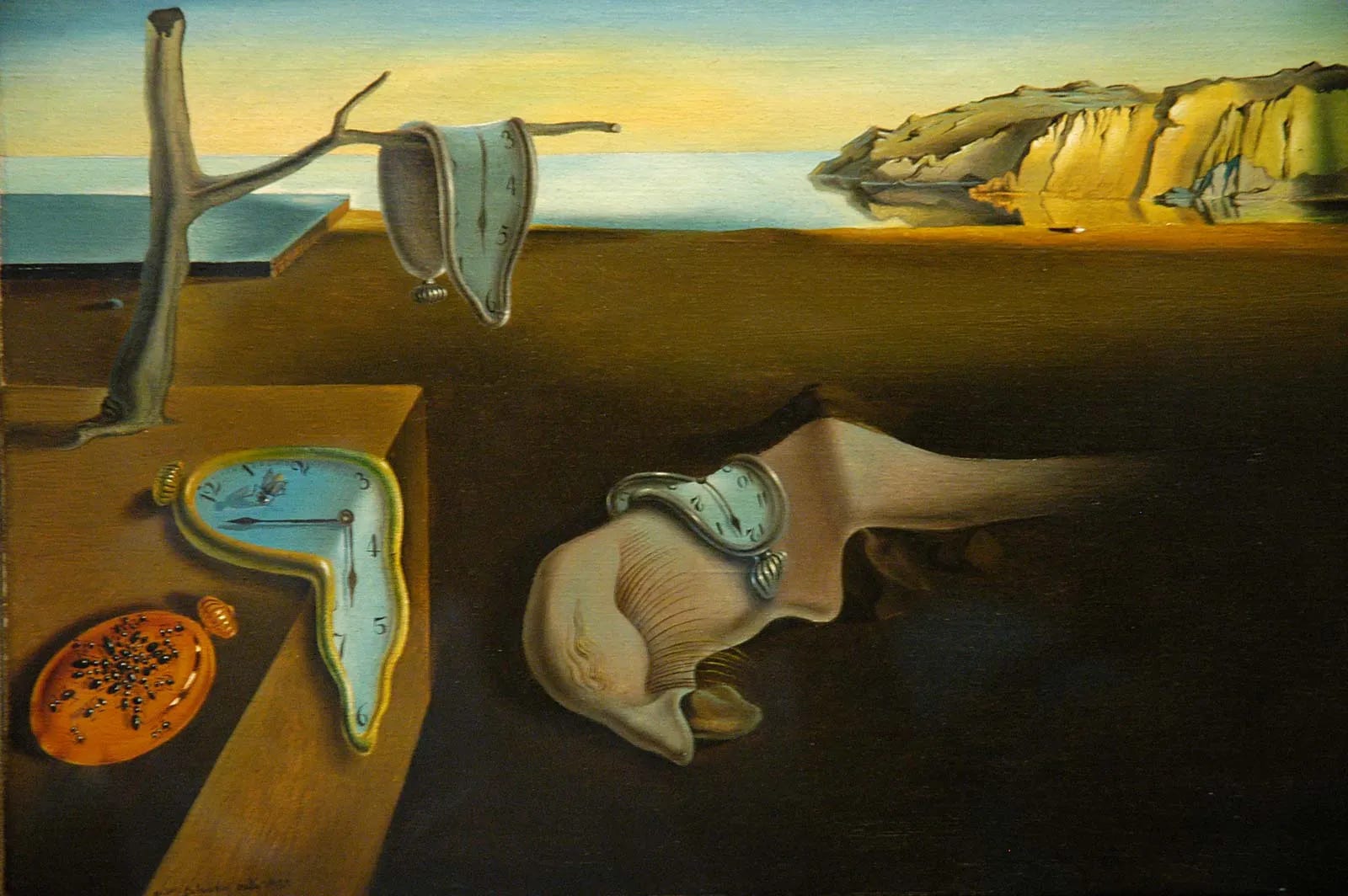
In 10,000 years, there is every likelihood that absolutely nothing we have just mentioned will still exist. And so Christians are faced with a choice. Is the Christian religion dependent upon these evidences for its historical claims to exist, in which case one must trust that the world will come to its eschatological conclusion before they all disappear? Or perhaps God becoming incarnate in history, as well as God’s design for the temporality of all historical events suggests that our approach to this question is simply too shallow.
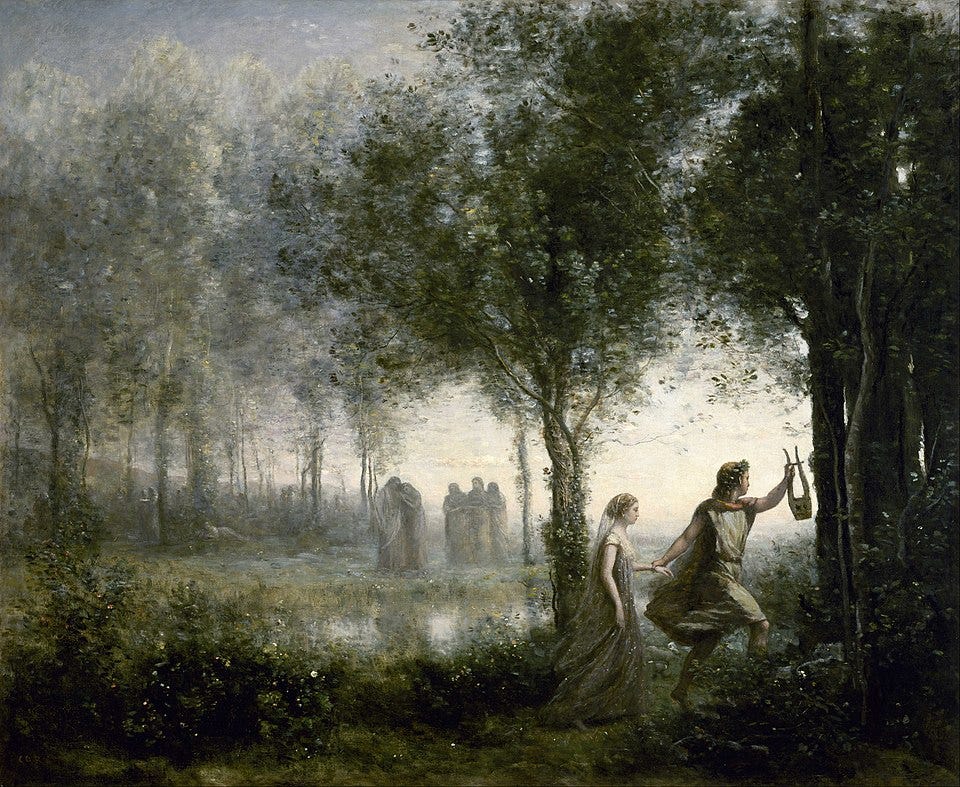
In the ancient world, religion, especially the mystery religions, was far less about propositional truth (or facts) than it was about the transformation of the initiate. And Christians have forgotten that this too was true of Christianity. Christianity’s rites were held in secret in the catacombs under Rome, in secret house churches. Neophytes would undergo a process of mystagogy in which they were slowly initiated into these secrets and before which prayers as common as the Our Father were not allowed to be known by outsiders and was only given as a precious treasure to those who had gone through the proper preparations.
A particularly striking example of this in ancient mystery religions is that of the mysteries of Mithras, an underground cult which attracted and was primarily practiced by members of the Roman army officer corps, in which they held underground ceremonies celebrating the slaughtering of the great bull in a way that drew together concepts of light, salvation, cosmic order, divine aid. This religious cult would not have conceived of its mysteries as being efficacious based on any kind of historical assertion or propositional truth. It just was an engagement with the deep grammar of the cosmos in such a way that those who partook gained alignment with these vast cosmic powers and sought the blessings of the gods for the great ends of human endeavor.
Christianity likewise sat in a similar category, so much so that the second-century Christian writer Justin Martyr explicitly compared the two. In his First Apology, Justin writes of how the Christian Eucharist, with its bread and wine mixed with water, had an almost exact initiatic imitation in the Mithraic mysteries, though he attributes this to wicked demons. Similarly, other aspects of the Mithraic beliefs, such as Mithras born from a rock, and the initiatic elements inside caves, having parallels to the prophetic visions of Daniel, in which a stone cut from a mountain without hands becomes seen as a prophecy of Christ and the caves similarly play initiatic roles in the Christian religion. All this is to say that Christianity has to be understood as both being in the category of and superseding the ancient mystery religions, rather than some kind of assertion of facts and propositions. And yet, despite everything that I have said, there is still, precisely because of the incarnation itself, a claim to a relationship with the material world and material history, its constant fading notwithstanding. And unlike the exclusive nature of many of the ancient mystery rites, such as those of Eleusis, Orpheus, or Mithras, the Christian mystery religion has a public position and a call to the wider human community, which goes beyond the previous rites. How are we to overcome this impasse?
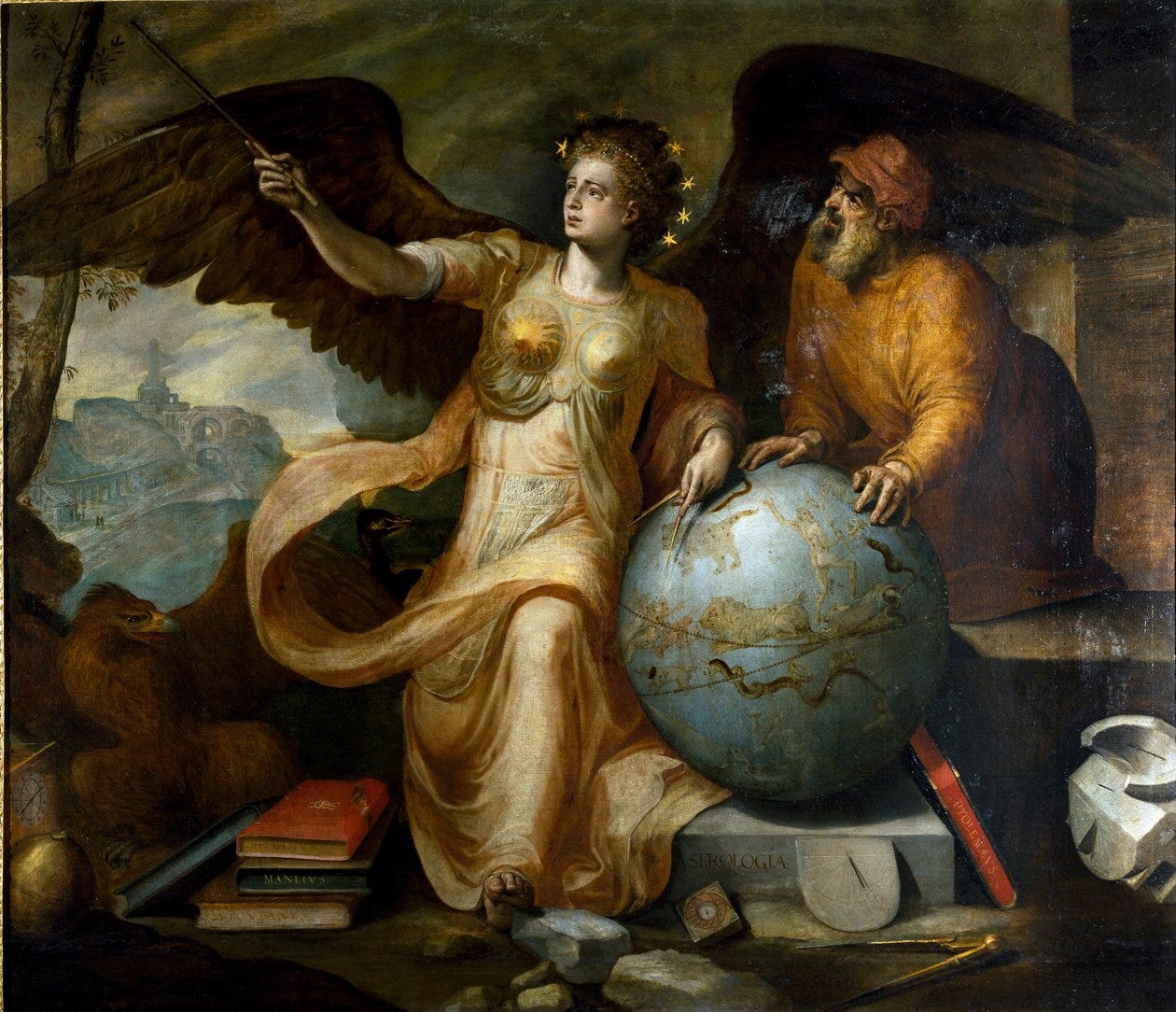
In order to come up with a satisfying solution, we must consider what public time has been throughout history. Before time became imprisoned by mechanism and the tyranny of clocks, it was judged by the relationship between the planets and the earth, where the sun is in the sky, and on the grander scale, the king on the throne. Histories of antiquity would record this or that event in the year of such and such a king or emperor. You find this in the record of the Hebrews in the Old Testament. You find it in the annals of Rome and elsewhere. Except for the rare exceptions of the great metaphysical calendars found in Mesoamerica, in the Yuga cycle of the Hindus, and in the great Platonic year brought down to us through the Platonist tradition, the calendar was closely tied to the reign of a king. In many places when a king died, a new king would initiate a new era count to establish his rule, demonstrating the harmony between his personal rulership and the cosmic dance of time. In Imperial China, when a new dynasty took power, they would reform the calendar in order to demonstrate their receipt of the mandate of heaven. Those who adopted the emperor’s calendar expressed submission to his authority. And successors to an emperor who changed the calendar for these reasons, in retaining his calendar, would assert continuity. In Japan, a system introduced in 1868 introduced a new era for every change of reign, a system which continues to this day. With the accession of the new Emperor in 2019, a new era count began, changing from Heisei 31 to Reiwa 1.
But in some sense, each of these kings, emperors, and their personal calendar establishments are just expressions of small and ephemeral locality. Only one change in the calendar has made any significant impact in recent millennia: the establishment of the Reign of Christ. In the centuries following Christ’s life on earth, a calendar began to emerge which measured itself not from the reign of any local king or emperor, but from the establishment of the reign of Christ at his nativity. As the Christian religion spread through Asia, Africa, and particularly Europe, the Gospel and the lives of the saints began to organise themselves according to a great cosmic dance through the 365 days of the year. The mandate of heaven was expressing itself in a final kingdom, a kingdom whose public expression was not some historical fact in the distant past, but was an immanent rulership in the present, establishing itself as the governing measure of the cosmic forces of time itself and organising human social endeavours under its auspices. Winter, spring, summer, and autumn, and all the folk intuitions about the nature of time and season became bound together under the new era of God Incarnate. The pre-Christian peoples understood that Mother Nature and the cosmos were speaking to them through the movements of the seasons. But the clarifying work of Christ’s light perfected their account. Christ being born on December the 25th connected his coming to the winter solstice, a time when darkness would begin to recede and the coming of the return of warmth, light and the viriditas of nature.
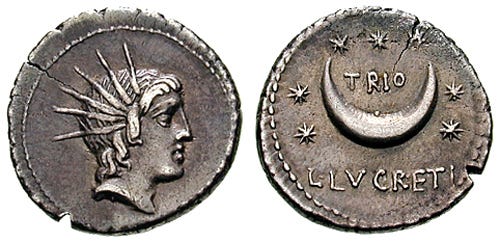
But more importantly, the Imperial Roman solar cult associated December the 25th specifically with Sol Invictus, the unconquered sun. A symbolic meaning so pregnant that I need go no further down this avenue. Christ was depicted as Sol Invictus in the Roman catacombs. This is not simply coincidence nor a perennialist attempt to blur the lines between cults and religions. St. Augustine himself would say “Christ was born when the days were just beginning to lengthen; John was born when they began to shorten.”1 The greatest of all feasts in the Christian calendar, Easter, was built on the ancient Jewish Passover festival, taking its typologies and the kernels of meaning within, and revealing the rulership of Christ, particularly his passion and the reestablishment of the tree of life through this work. But it is also no coincidence that it takes place around the spring equinox which is the European date encoding the cosmic fertility cult both fertility on earth and in heaven, because this was also, if Christ was born on December 25th, around the time that Christ was conceived, an important marriage of Christ’s conception and of his going down into the death. The symbology of the womb and the tomb was not lost on the fathers.
St. Augustine specifically writes of the theological importance of this symbolism and mirroring. “For He is believed to have been conceived on the 25th of March, upon which day also He suffered; so the womb of the Virgin, in which He was conceived, where no one of mortals was begotten, corresponds to the new grave in which He was buried, wherein was never man laid, neither before nor since. But He was born, according to tradition, upon December the 25th.”2 The fact that this greatest of all Christian festivals, the one which binds together the whole sacrificial theme of the Old Testament with the highest work of Christ in the New Testament, goes by the name of an ancient pagan festival simply isn’t a problem to the fathers. St. Bede provides testimony demonstrating that this was not only intentional but perfectly acceptable, baptizing the ancient cults of the Anglo-Saxons, cleansing them and reformulating them in the light of Christ. “calling the joys of the new rite by the time-honoured name of the old observance.”3
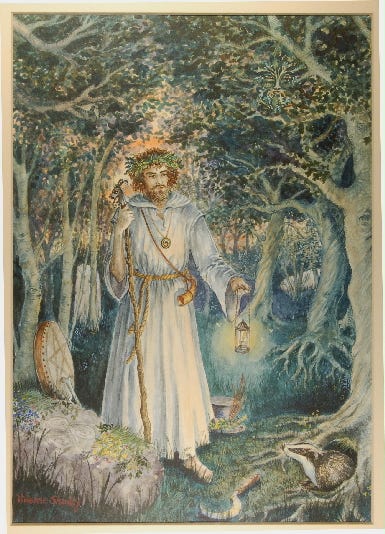
That Bede uses the authority of time itself only supports the greater contention that time and the calendar are where the real rulership lies. Beltane, which was the great mark of summer’s beginning, with all of its customs regarding flowers, fires, livestock and dairy production, was readily accepted, not only into the Christian calendar, but into the Marian and divine feminine elements of that calendar. Thus, we have May Day and all of the wonderful folk customs and traditions surrounding it.4 Finally, as the darkness of the year comes, we have the old Celtic Festival of the Dead at Samhain, when the people recognised the veil between the worlds as especially thin. The Church supplied a great set of feasts for this part of the Gaelic calendar too: All Saints on November 1st, with All Hallows’ Eve becoming Halloween the day before, and All Souls on November 2nd.5
These were mysterious providential convergences, not acts of subjugation. From this, we should understand that Christianity is not based on some distant historical fact which requires argumentation from evidences based on constructions of history which are contingent on academic opinion or fashion and ultimately go beyond a kind of temporal horizon which allows skepticism and doubt to always dominate. But the reign of Christ and the life of the Gospels live through the calendar in the here and now. The immanence of the Gospel narrative is in the liturgy as celebrated throughout the year and as married to the perennial insights of all peoples who contemplated the great cosmic timepiece of the planets. That in the 6th century the monk Dionysius Exiguus, perhaps the first to introduce an incarnation-based numbering system into his Easter tables, replacing that of the dominant system dating from the Emperor Diocletian, likely got his dating wrong by up to six years is irrelevant, and had you been able to show it to him, would have been irrelevant to him also, because that would be to mistake some kind of historical precision for the immediate present reign of Christ, which the Easter tables he was working on were the concrete expression of.6 With this in mind, it does not matter that our most ancient gospel fragments will one day disappear. Our faith is not contingent on the ongoing existence of the Holy Land. And despite how tragic it would be to lose the Shroud of Turin, none of Christ’s reign in any way depends on its existence. But the proper life of the liturgy is where his reign is found: public, concrete, and immanently involved in the lives of all those living in Christian civilisation.
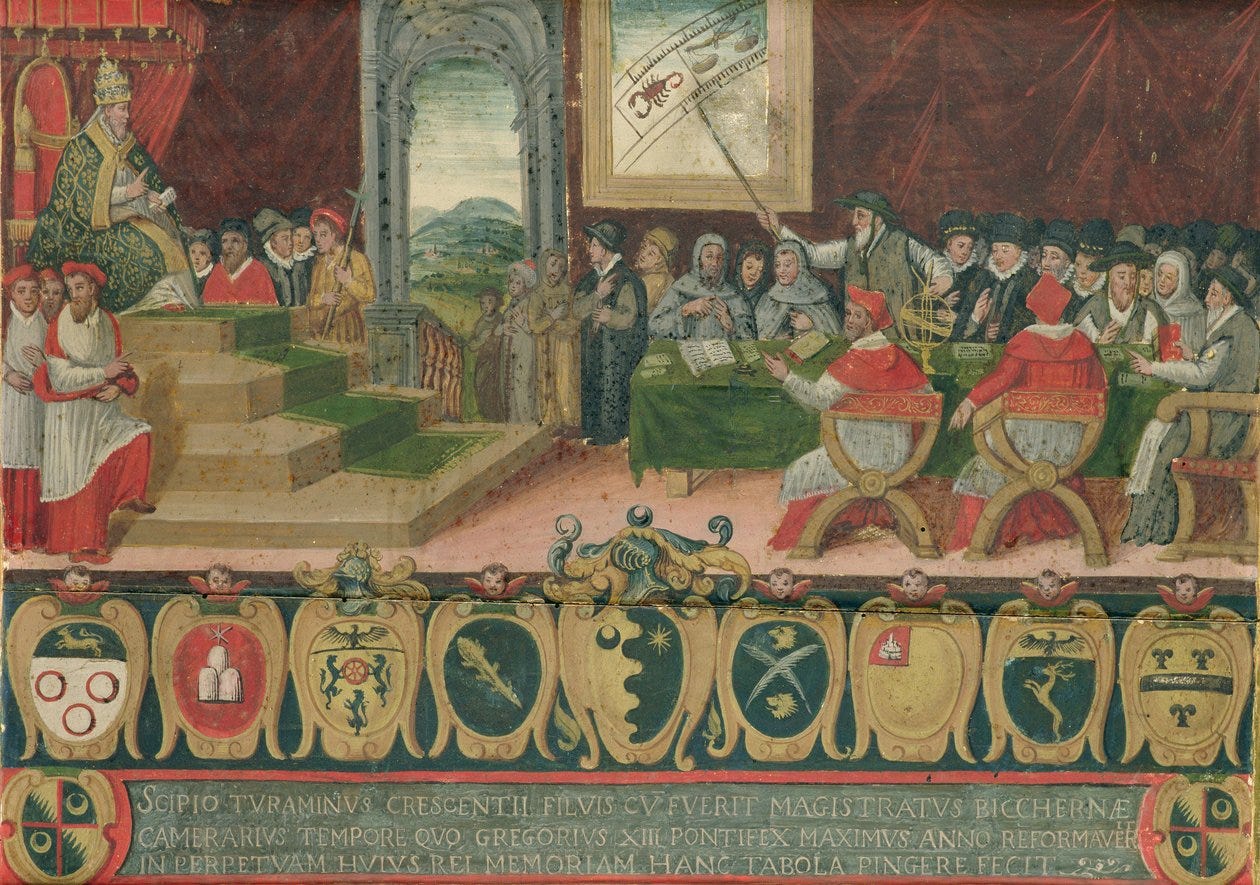
Of course, the enemies of Christ have known this for some time. When French revolutionaries overthrew the old Christian order and established their republic, not only did they desecrate the churches, slaughter monks and nuns, and commit genocides in the Vendée, perhaps the most subversive of all their actions was to declare a new calendar, attempting a usurpation not in the petty affairs of local dioceses, but in the cosmic region of time itself. Year one of the Republic begins on the 22nd September, 1792, and further reforms to this calendar were adopted in October, 1793. Intuiting just how deep a transformation was required, and that nothing could be kept of Christ’s reign, attempts were made to change the number of days in the month and the number of days in the week from seven to ten. Saints’ days were replaced by the names of plants, animals, and tools in an attempt to replace even the minutiae of the liturgical year. Deep down, the religious spirit of the French people understood what was at stake, and through quiet resistance, the Gregorian dating and the Christian calendar made a slow return in 1806.7 The modern, enlightened, liberal system has continued this revolutionary project in less extreme and more subversive ways. Academia has attempted to replace the BC and AD denotations of the establishment of the reign of Christ with Before the Common Era and Common Era. A seemingly small change in an attempt to demonstrate the true neutrality of academia from religious partisanship in reality is one of the most insidious attacks on the reign of Christ through his dominion in time that one can imagine.
Likewise, the removal of holy days from the calendar throughout the West in order to make way for the working week and a standard weekend, makes it impossible for feasts to be observed and ingrained into the life of communities, leaving only enthusiasts and those with unusual levels of religious conviction to try and maintain the old ways. The Church herself, infiltrated by bad actors and helplessly at the mercy of spiritually dead slave bishops, has seen her own liturgical calendar destroyed. Saints have been removed from their feast days due to being unable to meet the criteria of historical fact veracity in an uncomfortable mirroring to the future loss of historical fact veracity to the life of Christ Himself. Other saints have been eclipsed, and times and dates separated from the cohesive and harmonious system which had organically developed over millennia.8 The most egregious of these changes can be seen in those of Holy Week, in which a spiritual managerial elite made decisions about the nature of the festival at the very heart of history itself, which have caused massive spiritual harm to the lives of the faithful.
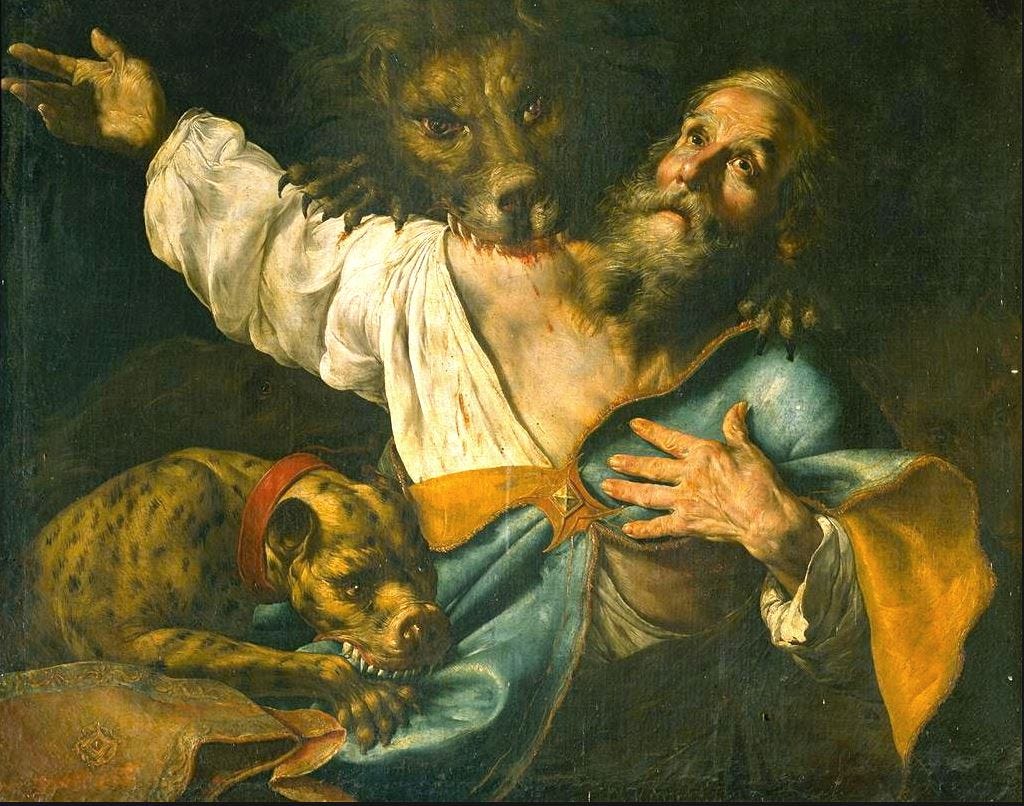
Yet the liturgy continues, sidelining claims about historical facts by embodying historical truth. Those who understand that the true defence of the Christian realm is not found in any historical endeavour, despite the fact that Christ was and truly did live a life in history, will instead take up the challenge, burdensome as it is in our modern prison, to live the feasts and the penitential periods, to wear the colours and remember the old ways, because those are the very expression of heaven’s final mandate given to Christ, King of all things, and to his blessed mother, Queen of Angels, in whose womb each of our spirits is being kindled into the gods who will come.
Augustine, Tractates on the Gospel of John, 14.5, trans. John Gibb, Nicene and Post-Nicene Fathers, First Series, vol. 7 (1888), https://www.newadvent.org/fathers/1701014.htm.
Augustine, On the Trinity, IV.5.9, trans. Arthur West Haddan, Nicene and Post-Nicene Fathers, First Series, vol. 3 (1887), https://www.newadvent.org/fathers/130104.htm. Augustine associates 25 March with both Christ’s conception and Passion and compares the Virgin’s womb with the unused tomb.
Bede, The Reckoning of Time (De temporum ratione), ch. 15, “The English Months,” trans. Faith Wallis (Liverpool University Press, 1999), pp. 53–54; excerpt at https://tertullian.org/rpearse/bede_on_eostre.htm. The passage concerns the survival of the name Eosturmonath for the Paschal season.
National Museum of Ireland, “May Day / Bealtaine,” https://source.museum.ie/en-IE/Collections-Research/Folklife-Collections/Folklife-Collections-List-(1)/Religion-and-Calendar-Customs/May-Day; Congregation for Divine Worship, Directory on Popular Piety and the Liturgy (2001), §§190–191, https://www.vatican.va/roman_curia/congregations/ccdds/documents/rc_con_ccdds_doc_20020513_vers-direttorio_en.html. These sources document May customs and Marian devotion; they do not establish a direct historical derivation of Marian May devotion from Beltane.
Ronald Hutton, “The Celtic New Year and Feast of the Dead,” Folklore (2024), doi:10.1080/0015587X.2023.2282282. Hutton questions the evidence for an ancient pan-Celtic New Year and feast of the dead; a direct replacement of Samhain by All Saints should not be treated as established.
Alden A. Mosshammer, The Easter Computus and the Origins of the Christian Era (Oxford University Press, 2008), especially chs. 14–15, doi:10.1093/acprof:oso/9780199543120.001.0001. The chronology is disputed: Mosshammer argues that Dionysius inherited an existing Christian era rather than independently miscalculating Christ’s birth.
Assemblée nationale, “24 novembre 1793 – Convention nationale et calendrier républicain,” https://www.assemblee-nationale.fr/dyn/histoire-et-patrimoine/revolution-francaise/convention-nationale-et-calendrier-republicain. The republican calendar was adopted on 5 October 1793, with its epoch at 22 September 1792; the Gregorian calendar was formally restored from 1 January 1806. Republican months had thirty days, divided into three ten-day periods.
Paul VI, Mysterii Paschalis (14 February 1969), sections I–II, https://www.vatican.va/content/paul-vi/en/motu_proprio/documents/hf_p-vi_motu-proprio_19690214_mysterii-paschalis.html. This is the primary document promulgating the revised calendar. Removal from the universal calendar did not necessarily suppress a saint’s local cult; the stated reasons also included the precedence of the mysteries of salvation and universal significance.
Excellent article! The fragility of the historical record is something I hadn’t really thought of.
However, Christianity is ultimately a personal relationship with Jesus Christ and the pursuit of Theosis.