



There is a terrible problem with esotericism. People will tell you that the problem with esotericism, or the ‘occult’, is that the study and practice of it leads ultimately to demonic obsession and even possession. But as Valentin Tomberg pointed out in Meditations on the Tarot, this is rarely so. (As it happens, the curious case of St Mariam Baouardy, the 19th-century Carmelite nun from Galilee who spent a considerable amount of time possessed by demons—undergoing the affliction for the salvation of souls—shows that demonic possession can be as much an indication of sanctity as of sinfulness.1)
Tomberg notes that, not demonic interference but megalomania is the typical risk of pursuing esoteric knowledge. In his words:
The practising occultist, esotericist or Hermeticist (if he is not practising, he is only a metaphysician or reformer) experiences the higher forces which work beyond his consciousness and which make their entrance there. At what price? ... Either at the price of worshipping on his knees—or otherwise at the price of the identification of self with these higher forces, which results in megalomania.2
Such megalomania arises from a structural problem concerning esotericism itself. Esotericism entails some hidden, secret, or at least deeper knowledge which can only be gained by a process of initiation, and which is inaccessible outside the fold of initiates. Hence, if an esotericist teaches something or makes some claim that doesn’t compel the intellect of the hearer, that hearer has two options: he can either accept the esotericist’s claim on his authority alone, or he can reject it and thus prove that he hasn’t been initiated into the deeper mysteries, for surely he would accept the teaching if he had been so initiated. Either way, the esotericist can be satisfied that he stands correct in his teaching.
In turn, the esotericist is fundamentally unable to be in error according to the structure of his own thought-world; he is necessarily an infallible source of truth and revelation. It is not difficult to see how such an assumption will lead to the self-idolatry of megalomania, and why the demons will happily leave such a person alone: he’s comprehensively damned himself without much help from them. Esotericism is consequently replete with charlatanism, with ‘gurus’ and ‘adepts’ of every kind claiming to teach some hidden or secret doctrine, the veracity of which cannot be denied—at least not by the supposed initiate.
In The Logic of Scientific Discovery, the philosopher Karl Popper made relevant observations about Freudianism and Marxism, calling them ‘pseudo-scientific’ because they couldn’t pass his ‘falsification’ test.3 If the Freudian says that you have ‘daddy issues’, for example, then you either accept what he’s telling you or you don’t, thereby proving that you’re in a ‘state of denial’. Either way, the Freudian is right. If the Marxist says that you must liberate yourself (and the rest of the proletariat) from the tyranny of the bourgeoise, you either agree with him or you don’t, thereby proving you’ve ‘internalised the regime of your own oppressor’. Either way, the Marxist is right. For Popper, any ‘system’ that could not be falsified was not to be trusted. There are of course problems with the alternative: any system that is inherently falsifiable cannot in principle possess certainty about anything. Hence, the falsification test has its obvious limitations, but also its utility, especially against the claims of self-appointed gurus.
It is this structural flaw in esotericism—that it cannot be falsified and leads to a ‘guru’ culture of megalomaniacal charlatans—that makes the works of Valentin Tomberg, Jean Hani, Wolfgang Smith, and Jean Borella, among some others, so very important.4 For as philosophers, theologians, scientists, and social historians—all sharing a devout Christian faith alongside an openness to knowledge that can be gleaned from initiatic pathways—together they show that esotericism can and should be exposed to the same scrutiny, and subjected to the same requirements of rigour, as any other humane discipline and practice. But then the question remains: why would such engagement with esotericism be deemed necessary or beneficial at all?
In answering this question, it is worth considering a very helpful passage from Jean Borella’s The Crisis of Religious Symbolism, extracted from a discussion therein on the significance of the European Renaissance:
What characterises the Renaissance for us was, first, a massive disoccultation of doctrines rather esoteric in nature: it witnessed the publication of multiple works … which dealt not only with a knowledge mysterious in itself, in its own nature, but even hidden from the unqualified masses, according to both senses of the term ‘occult’. This disoccultation should be clearly understood however. There is actually a paradox in making public what, by nature, should remain unknown, and in declaring openly that a philosophy is occult. But this hidden knowledge was, in fact, somehow constrained, because of the progressive change in episteme, to show itself as such to the very extent that it was inexorably ‘marginalised’ by the cultural revolution.5
As Borella observes, during the Renaissance, with figures such as Marsilio Ficino, Giovanni Pico della Mirandola, Heinrich Cornelius Agrippa, Abbot Johannes Trithemius among others, there was an enthusiastic movement to present and argue for doctrines and practices that were what today would commonly be called ‘esoteric’ or ‘occult’ or ‘initiatic’. These included everything from astrology; practical angelology; the synthesis of Rabbinical Kabbalah, Hermetic Qabalah and Christian Cabbala;6 and investigations into the healing properties of the mineral and vegetative realms, to the philosophical recovery of Pythagorean cosmology and Neoplatonic ontology at the Florentine court of the Medici and beyond.7
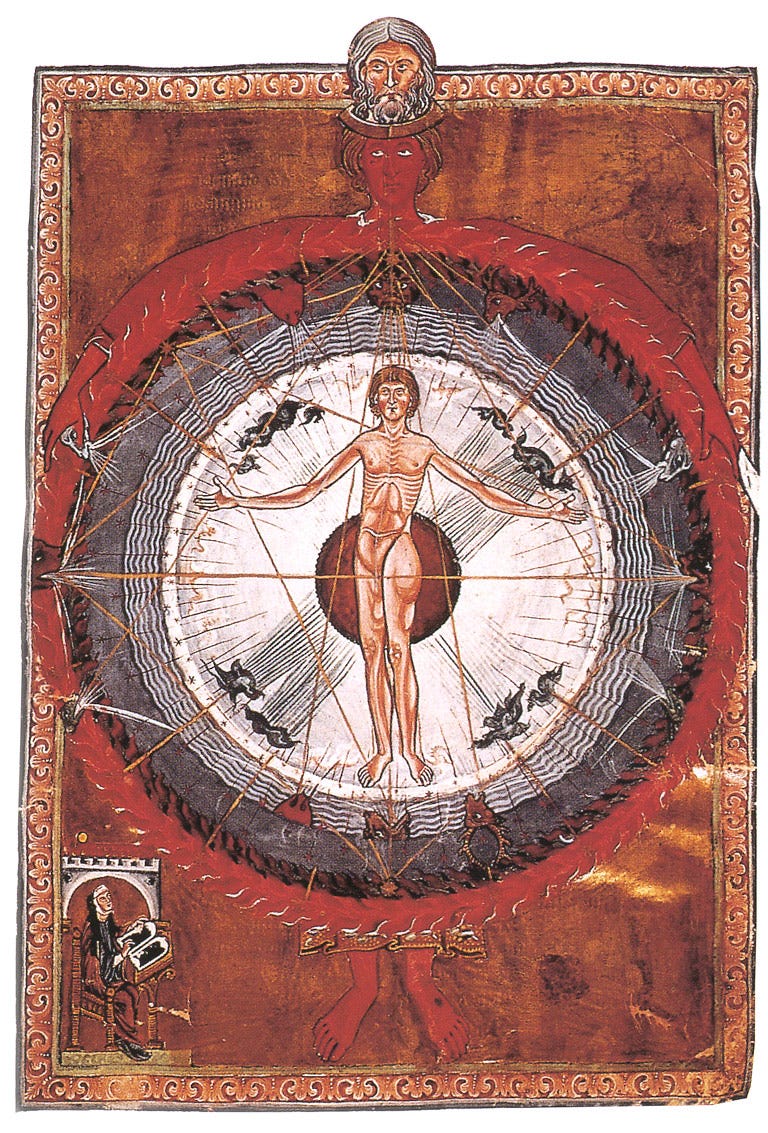
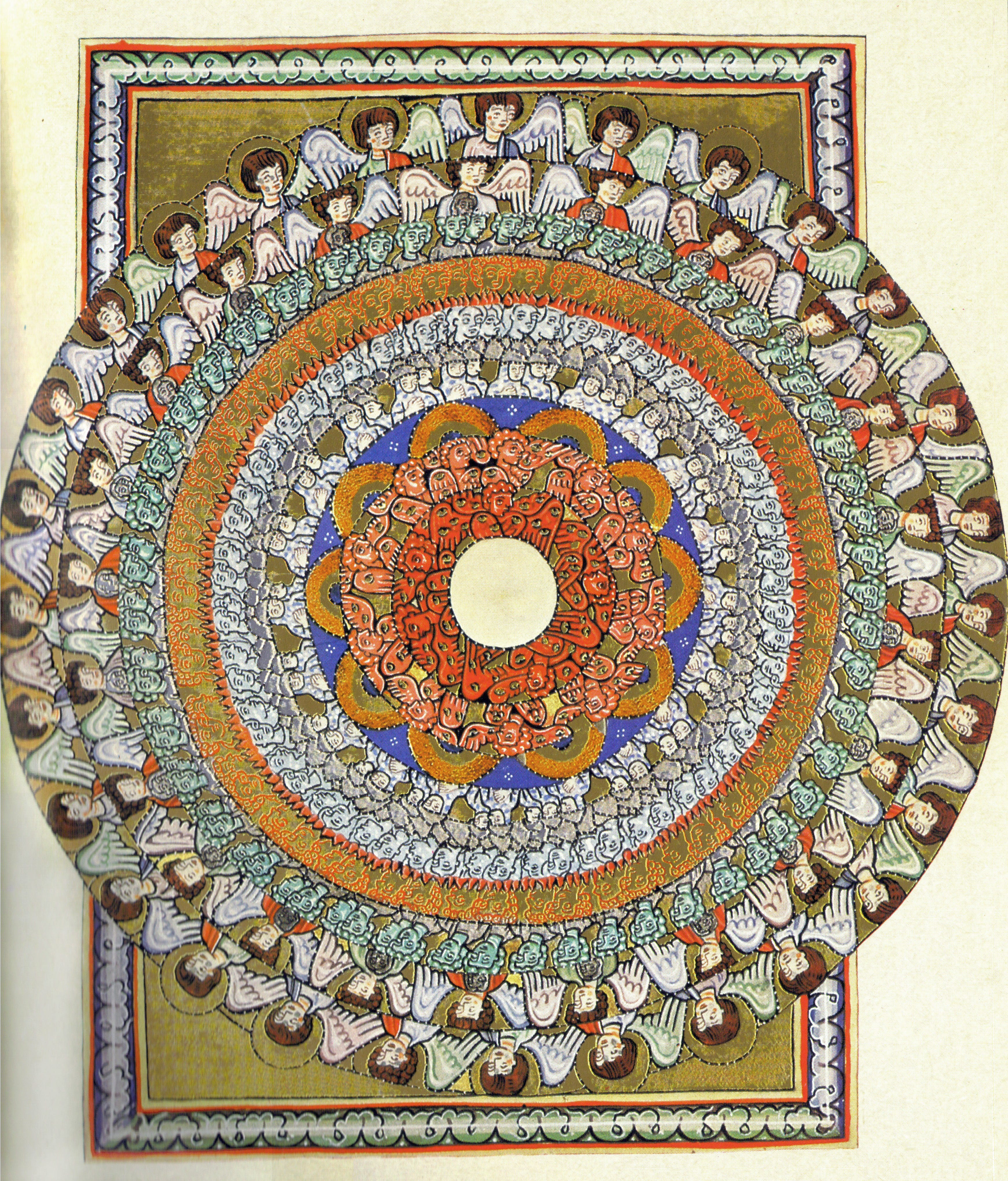
Borella, though, is raising the historiographical question of why this happened at that particular period. One may want to point to the Council of Florence in 1439, and suggest that Renaissance esotericism was the consequence of Hermetic and Platonic texts arriving from Byzantium during that event.8 But the medievals had already developed a Platonic cosmology and ontology from their study of the Timaeus among many other texts, foremost among which were those of Dionysius the Areopagite, and medieval writers were writing on all manner of ‘esoteric’ topics and practices, as is evinced by the masters of the School of Chartres and the works of Hildegard of Bingen, and those of Albert the Great in the next century, as well as so many others. What emerges in the Renaissance among the so-called ‘esotericists’ was not a new set of doctrines or practices, but a new way of talking and thinking about them, bolstered by certain newly arrived texts from the East.
What Borella suggests is that the Renaissance in fact marked a revolutionary change in ‘episteme’. The European mind was changing. What was happening was not so much the birth of the occult, but the birth of rationalism. And when this new episteme was applied to the true religion of the Catholic Church, it had the effect of stripping it of all those initiatic elements that had been baptised, healed, elevated, and given a home in the Christian Mystery. Thusly isolated, these orphaned initiatic elements of Christendom’s once integrated theotic gnosis were collated and they progressively formed a counter-religion. Borella explains:
The Renaissance was the period when western culture ‘rid’ itself of its ‘esoteric impurities’, and therefore when these, like weeping sores on a face, appeared most visibly. But this appearance should not mislead us: the epistemic tissue forming just below the surface is a tissue of mathematical rationality.9
Western culture, Borella suggests, was being ensnared by rationalism—by ‘mathematical rationality’—which could not contain within its purview those initiatic elements that, by virtue of being initiatic, resisted reduction to abstract propositional formulae. Naturally, those who saw this rationalistic turn for the epistemic truncation that it was, were keen to defend the initiatic pathways. Hence, we apparently observe a rise of new esotericists in the Renaissance, when in fact we’re really witnessing the last cry of the medievals. For as Borella convincingly claims, the same esoteric knowledge is present in the preceding centuries, but differs in that it is fully integrated with a unified and holistic Christian mind, rather than fragmented and fractured away from the spiritual centre:
This same esoteric knowledge, in course of the preceding period, is much harder to glimpse to the very extent that it formed part—much more closely than we are told—of the official culture, and even to such a point that it is not always easy to distinguish between official and esoteric. Thus, to cite only the most illustrious case, the reputation of St Albert the Great as a magician is based on the exceptional importance that the Master himself attributes to the hermetic tradition, in the person of its eponymous ‘founder’: Hermes Trismegistus.10
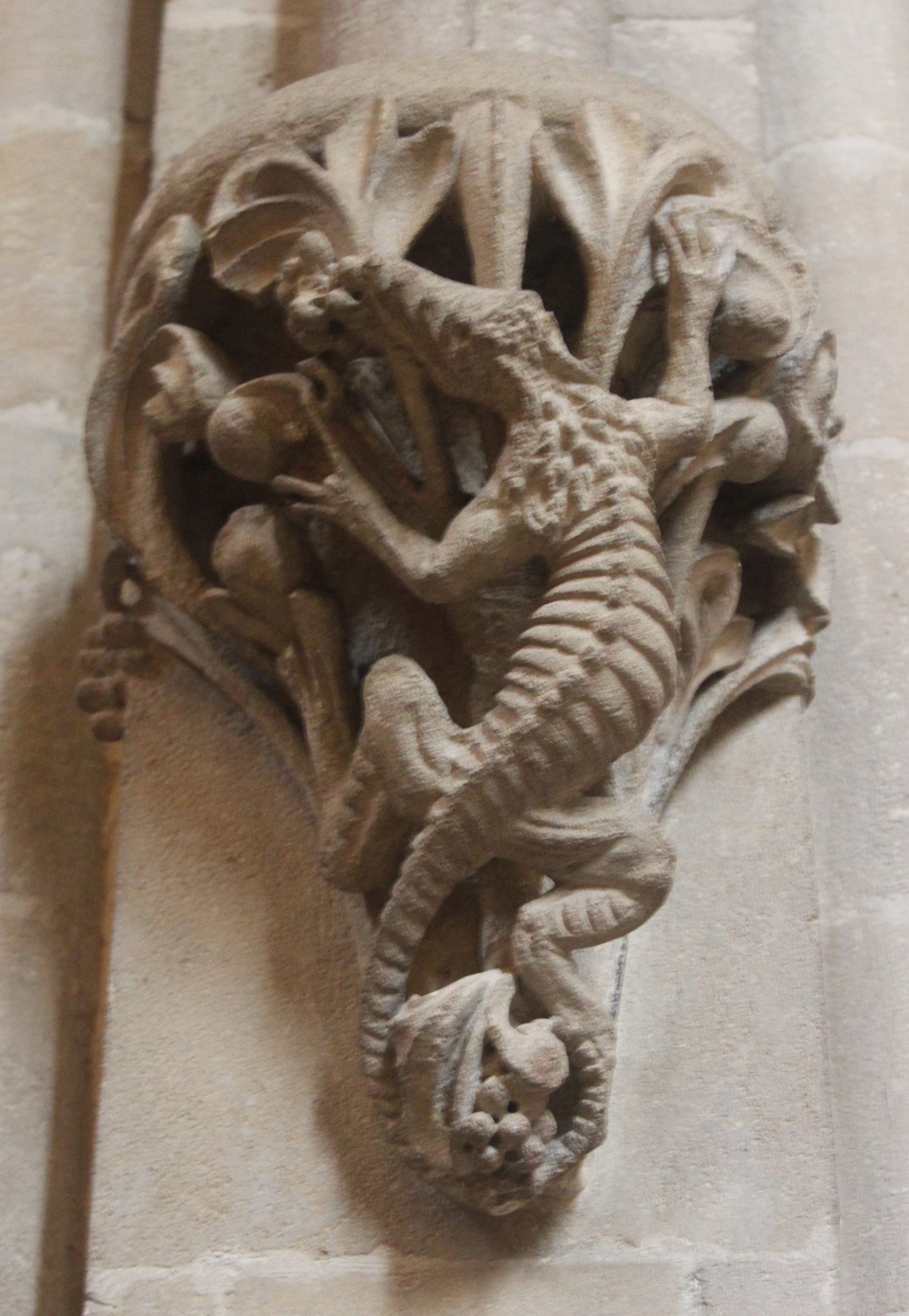
Put bluntly, and at the risk of losing some nuance, it was the rise of rationalism that created esotericism. And it is not just medieval intellectual culture that had achieved a healthy and dynamic integration of the esoteric into the institutional, making it hard if not impossible to distinguish them; material culture had achieved the same. In the 13th-century Wells Cathedral, there is a foliate corbel atop a pillar near the entrance of the chapter house, on which is sculpted a salamander crawling forth from flames. This image is not a biblical image, but an alchemical one. Whilst not denying the transmutational power of alchemy, this initiatic discipline was reinterpreted by the medievals to be part of a wider spiritual repertoire that took seriously the purificatory experience required for spiritual transformation, wherein the soul emerges into new life from the fires of purgation. To appeal to alchemical wisdom—which has its origins in the mystery schools of India, Mesopotamia, and Egypt—was considered neither eccentric nor demonic by the monastic masters of Wells and the other spiritual centres of Christendom. On the contrary, it was a way by which to keep such mysteries in their proper spiritual sphere.
For the same reason, Albert the Great among many others ardently studied the Hermetic texts, to the point that Albert in particular was universally deemed a great magus, so deep was his initiation into Hermeticism. The American scholar David Porreca has highlighted that Albert was familiar with, and directly quoted, seven Hermetic texts: Asclepius, Alchimia, De imaginibus et annulis et speculis Veneris et sigillis daemonum, Libri incantationum, De minerali virtute, De secreis Aristotleis, and De secreto sectretissimorum suorum.11 Altogether, he quoted these texts ninety-four times in his writings, only three times dissenting from their content rather than deploying them as authorities in support of his arguments. Moreover, those are only cases when Albert uses texts recognised openly by him as authored by Hermes; were we to take into account statements that modern scholars have identified as having their origin in works attributed to Hermes, Albert’s Hermetic quotations would number many hundreds. So indebted to Hermes did Albert consider his own philosophy that he reverently refers to the Thrice Great as “Antiquissimi Patris”, “Pater Philosophorum” and “Pater Alchemiae”: Most Ancient Father of Philosophy and Alchemy.
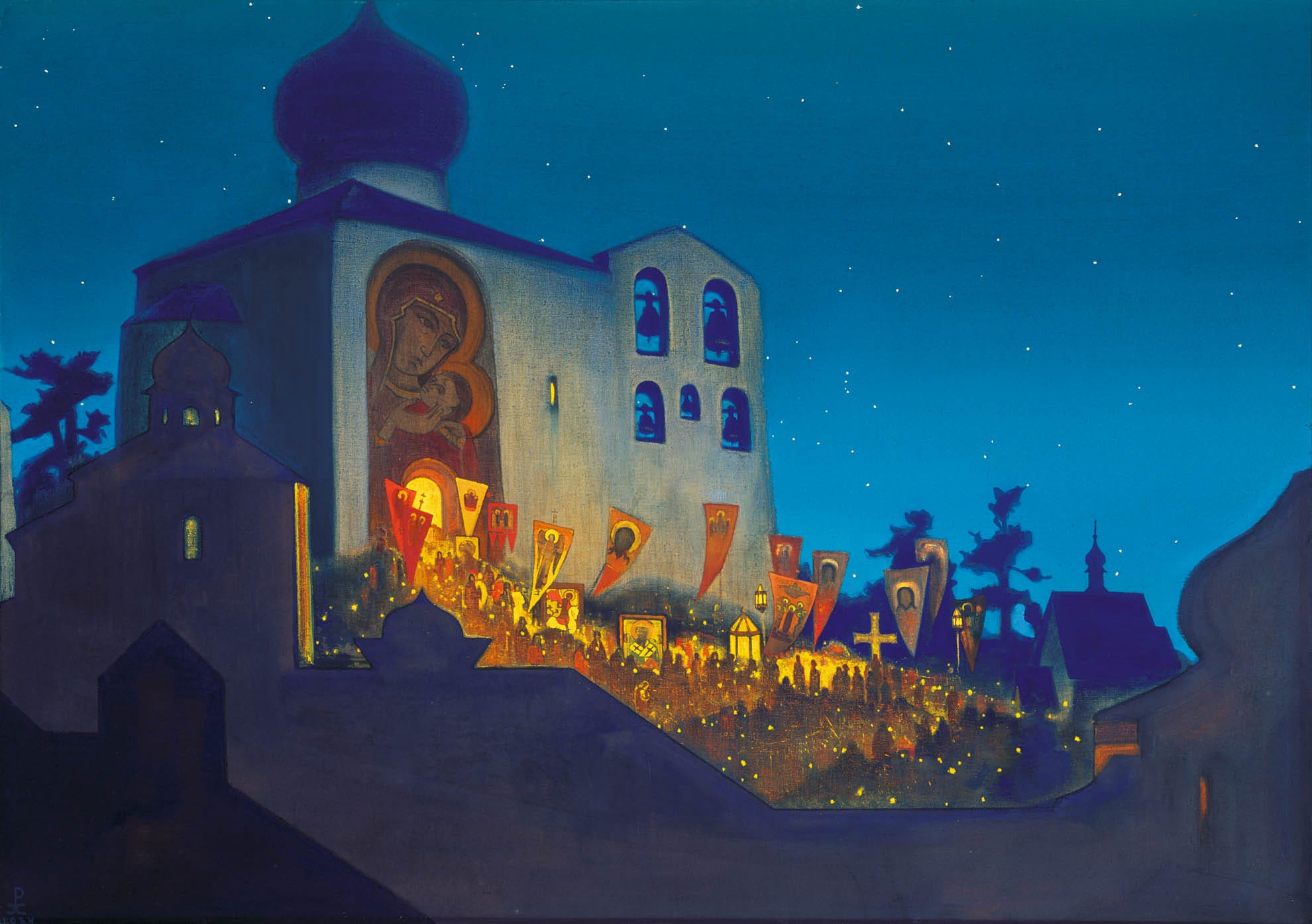
As the example of the ‘Doctor Universalis’ and the Corpus Hermeticum indicates, great holy men and women of medieval Christendom did not deem what we would now call ‘esotericism’ to be demonic and spiritually corrupting. That ‘esotericism’ was no ism at all, for it was fully integrated with the sacramental transformation of human nature that comes by the Christian Mystery as imparted to the earth by Jesus Christ through His Church. Precisely on account of this integration of the initiatic pathways with true religion, those pathways were not polluted by the charlatanism and megalomania that is commonly and rightly associated with esotericism in our own epoch. Nor were they subjected to the denunciations of rationalists, since the epistemic scourge of rationalism was yet to plague the West. Borella goes on to explain further:
The close relationship that the esoteric traditions harboured with theology and religion maintained them in a properly spiritual sphere. … While the marginalisation of these same traditions in the Renaissance, by distancing them from the Christian spiritual tradition, caused them to lose, in part, their supernatural character, and risked allowing them to be imbued with the ambient vitalist naturalism, so that the hermetic, alchemical, kabbalistic, astrological, etc. doctrines were degraded into a common magia naturalis. … Of all that the Renaissance would often retain only recipes for increasing one’s power, and would occasionally end up in the lowest kind of sorcery.12
The initiatic pathways were severed from true religion due to the incremental colonisation of the Western mind by the rationalism that is, in the final analysis, far more hostile to the Christian Mystery than those very pathways with which it once enjoyed a harmonious relationship. And once severed, they were frequently collated into a kind of synthetic ‘natural magic’ which, as Borella stresses, often collapsed into the power-craving and sorcery which may be denoted by the word ‘goetia’. Such is to be expected, given that all nature, once removed from Christ’s jurisdiction, falls under the principality of the devil. (One need only think of what has happened to the natural good of sexual intimacy, now that it has been removed from the sacramental order by that malignant combination of vice and technology.)
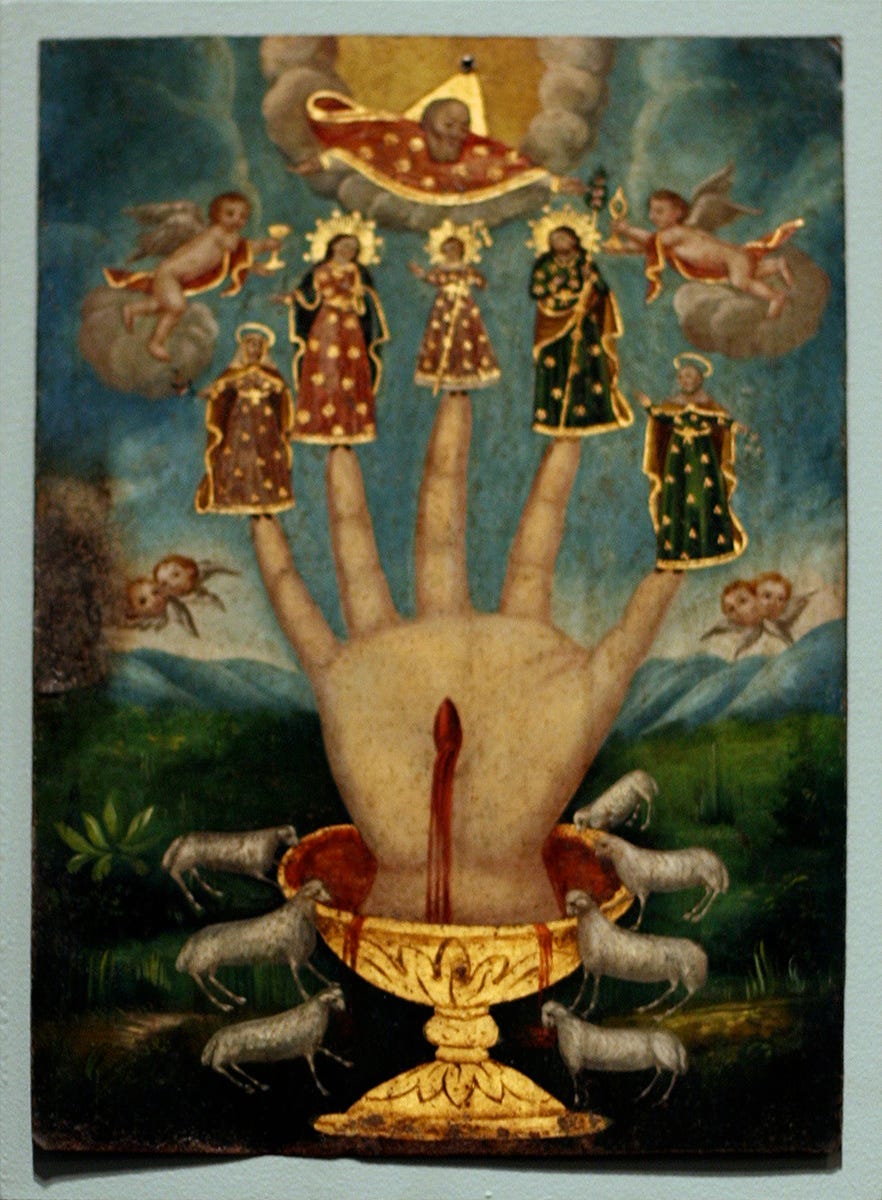
From the 16th century, Protestants snatched the political and social spheres from Christ’s Kingdom, declaring themselves free of the Church’s authority; then, beholding un-Christianised nature’s diabolical character, they denounced all nature as “totally depraved”. Likewise, today’s Catholics, when looking upon the initiatic pathways severed from the Christian Mystery, seeing them replete with charlatanism and judging them to be a kind of counter-religion of diabolical character, typically condemn them outright as outrages. In doing so, they are often deploring their own spiritual inheritance, which has been swept away from them by the tide of rationalism, an epistemic framework which they themselves have often unwittingly accepted. Indeed, it’s unsurprising that a fear and hysteria concerning the ‘occult’—which groups together everything from devil-worship and witchcraft to the alchemical and zodiacal traditions beloved by our medieval ancestors—has coincided with an acute protestantisation of Catholicism. Whereas a medieval Catholic might place an alchemical image atop a pillar in a cathedral, his coreligionists today would likely be horrified by any suggestion that we do the same; they apparently sympathise more with those Puritans who took hammers to all such supposed ‘abominations’.
It is sometimes said that these initiatic pathways are downstream from the Pythagorean cosmology that Pythagoras himself learned in the Egyptian mystery schools of the 6th century BC, and that the West would have remained in the mire of such thinking had the ‘Aristotelian revolution’ of the 13th-century schoolmen not taken place. There was, however, no such ‘Aristotelian revolution’, which is an illusory projection of 19th- and early 20th-century intellectual historians (as I demonstrated in my book The World as God’s Icon).13
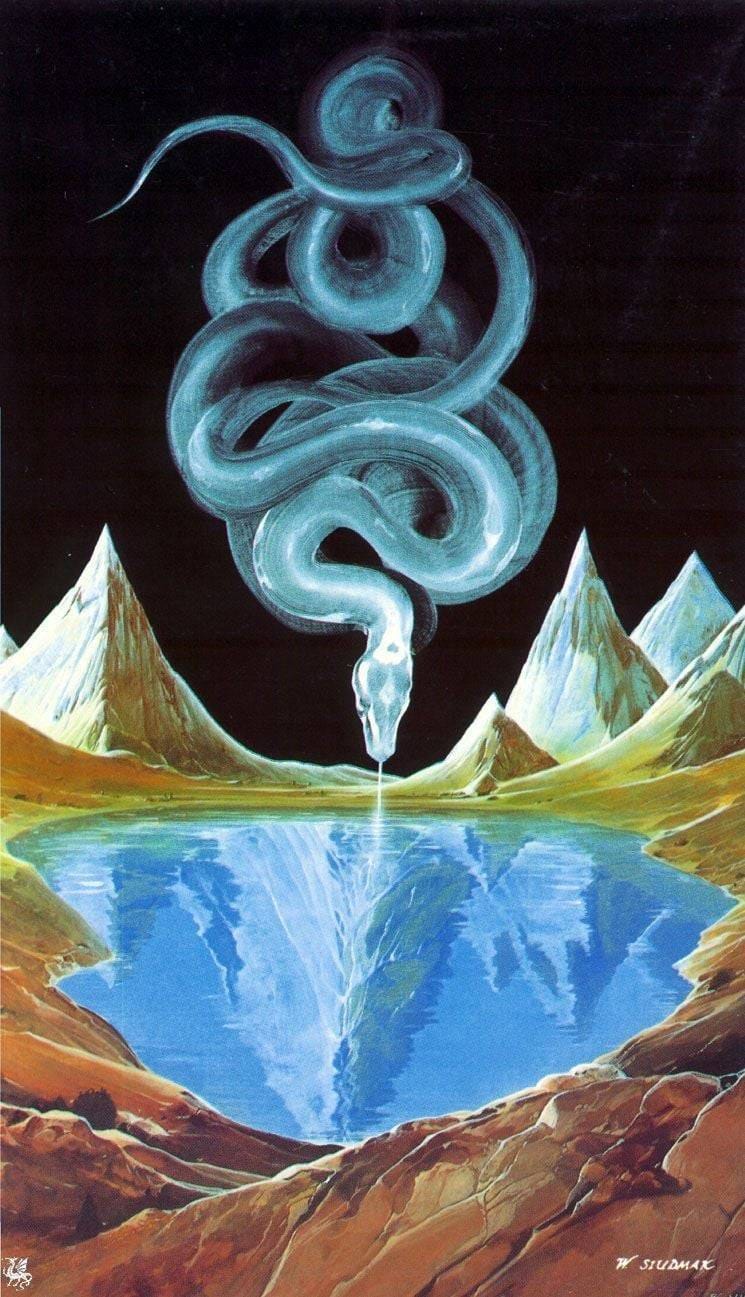
Those who continue to believe this erroneous historiography see the Pythagorean tradition, in all its millennia-long development and integration into the Christian intellectual tradition, as one and the same as the rationalism of which I complain. They say that Pythagoreanism, with its fixation on mathematics and geometry, reduces all to number, measurement, and quantity. There is a half-truth in this account; for it is rather the case that Pythagoreanism is the proper structure of the Western mind, and when the Western mind is deadened by rationalism, it does indeed reduce all to number, measurement, and quantity—all that might be termed epistemic modernity. But when Pythagoreanism is held by a living mind, patterns in creation are seen as manifestations of an ordered and good Divine Mind, giving rise to a participation account that sees creation as in receipt of the qualities that actuate it into ‘cosmos’—a unified whole—whose order and goodness below come from above. And within such a theocentric and theophanic framework, Albert the Great, Thomas Aquinas, and all the other so-called ‘Aristotelian revolutionaries’ developed their metaphysics.
Those like Borella who are engaging with so-called ‘esotericism’, endeavouring to resituate the initiatic pathways in a harmonious relationship with true religion are not syncretising Christianity with the occult in any reprehensible sense. On the contrary, they may be among the last in the West who still live and think with the integrated, theotic gnosis that once characterised the common mind of Christendom. Such people are Christian thinkers and practitioners who refuse to concede anything to the forces that would strive to undo the Christian Mystery and its transformation of creation, whether they be modern rationalists masquerading as Catholic traditionalists, or charlatanic and megalomaniacal ‘gurus’ who peddle an ‘occult’ doctrine which is really self-worship. Indeed, such thinkers and practitioners are, it might be said, the last remaining medievals.
See Amédée Brunot, Mariam “The Little Arab”: Sister Mary of Jesus Crucified (1846–1878), translated by Jeanne Dumais (Oregon, Eugene: The Carmel of Maria Regina, 1984).
Meditations on the Tarot: A Journey into Christian Hermeticism (Brooklyn, NY: Angelico Press, n.d. [2020]), 160.
See Karl Popper, The Logic of Scientific Discovery (London: Routledge, 2002; originally published in 1959), 57-73.
These authors—and we might add to their names those of Stratford Caldecott, Robert Bolton, Stephen R.L. Clark, Michael Martin and numerous others—have been made better known by the endeavours of the New York-based publisher Angelico Press. For special attention I would wish to point interested readers to Hani’s The Black Virgin, Caldecott’s The Radiance of Being, Smith’s Cosmos & Transcendence, Borella’s The Crisis of Religious Symbolism and Love & Truth, and the short yet important work co-authored by Smith and Borella entitled Rediscovering the Integral Cosmos.
Jean Borella, The Crisis of Religious Symbolism (Brooklyn, NY: Angelico Press, 2016), 101.
There is a custom among those interested in Hebraistic mysticism of distinguishing the unique pedigrees of this spirituality as found in the works of Jewish, Hermetic, and Christian authors, signified by the practice of spelling the word differently depending on what school is being considered.
Lorenzo de’ Medici was especially committed to advancing such recoveries, acting as Marsilio Ficino’s patron and establishing a courtly school of philosophy and theology in Florence with Ficino at the helm, which not only attracted many thinkers but the greatest artists of the Italian Quattrocento, widely affecting the direction of material culture.
The complete works of Plato as well as the Corpus Hermeticum, whose general contents were known in the Latin West only among a few persons—Albert the Great among them—with access to a limited set of texts, arrived in Florence during the Council. At the request of Lorenzo de’ Medici, without delay Ficino made translations of both Plato’s works and the Hermetic texts complete with comprehensive commentaries.
Borella, The Crisis of Religious Symbolism, 101.
Ibid., 101-102.
See David Porreca, “Albertus Magnus and Hermes Trismegistus: An Update”, 2010, https://philpapers.org/rec/PORAMA
Borella, The Crisis of Religious Symbolism, 102.
See The World as God’s Icon: Creator and Creation in the Platonic Thought of Thomas Aquinas (Brooklyn, NY: Angelico Press, 2020).
A fantastic article - as a "Sophianical Homeopath," this dichotomy created from faulty historical presuppositions is glaringly evident in the microcosm of my chosen medical art as much as it is in the Church itself.
Those Christian homeopaths who adopt a "disenchanted" worldview are quick to distance themselves from the Deism of its founder, Samuel Hahnemann, as insufficiently Christian. They are equally quick to distance or obfuscate his obvious debt to Paracelsus, a debt not found in his writings explicitly but clear in the formulae he used for the trituration of minerals.
This results in a mechanized view of a craft whose understanding of health is, at some level, vitalist.
Others strive to make it a more "mystical" art by emphasizing not the pneuma, but psychosocial analysis over a given pathology, which, while well-intentioned, ends up being highly Cartesian in its post-Freudian (read: esoteric) approach without actually ending people's suffering - the highest goal of the Earthly Physician and our Lord, the one true Physician.
This tension could not be farther from the deeply infused metaphysic of the great Russian Orthodox Priest, Wonderworker, and homeopath, St. John of Kronstadt, who understood the fruits of Renaissance medicine and the deposit of Tradition as deeply infused. As his Earthly sojourn was but a Century ago, this problem has become far worse in a fairly brief time.
On my first reading of Mysticism, Magic, & Monasteries, I approached Sebastian Morello’s arguments on esotericism with a mixture of hesitation and intrigue. Yet after a second reading, an illuminating conversation with Dr. Peter Kwasniewski about my initial reservations, and further reflection, I have been largely won over by his book. I have even begun incorporating some of its insights into my own work, hopefully creatively extending Morello’s worldview into broader realms of literature, imagination, and liturgy. I wish to thank Dr. Morello for his remarkable contribution and to acknowledge his book's deepening influence on my thought.
https://bernardus66.substack.com/p/ecstasy-a-sacramental-cosmos-and?r=gazm8&utm_campaign=post-expanded-share&utm_medium=web