



By Sebastian Morello
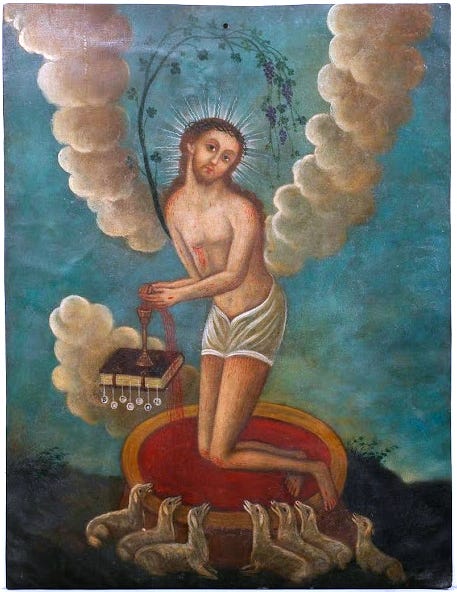
The Mystical Vine
Wine has long been an important part of my life. Wine is a holy gift for the deepening of eventide meditations. Upon gathering, wine is that spirit which descends into our chalices when we renew the covenant we frivolously call ‘friendship’, but what is more accurately called ‘death to self’. Over many years, I have sought to deepen my understanding of wine by energetic enquiries to the bottom of the bottle in my drawing room, and by field research in distant lands where alien soils, grape varieties, and viticultural methods surprise and titillate as glass and drinker dance together late into the night from a sedentary position.
I have also read what I can. Béla Hamvas’s 1945 book The Philosophy of Wine made a great impression on me when I read it as an undergraduate. Cain Todd’s 2010 Routledge monograph of the same title also had its positive effects, though in its attempt to ‘demystify’ wine it revealed its own shortcomings, for wine cannot be demystified any more than mysticism itself.
Perhaps no work on the philosophy of wine, of which there are a growing number, has had quite the impact on me as that of Roger Scruton’s I Drink Therefore I Am. Indeed, when I became his research student, I had only recently read the book, and I complimented him on it. ‘That book is indeed a profound work of mystical theology’, he replied with a wry smile as his other students chuckled. That was like Roger, to make bombastic claims undergirded by self-deprecation, largely because he could never resist the opportunity to cause amusement.
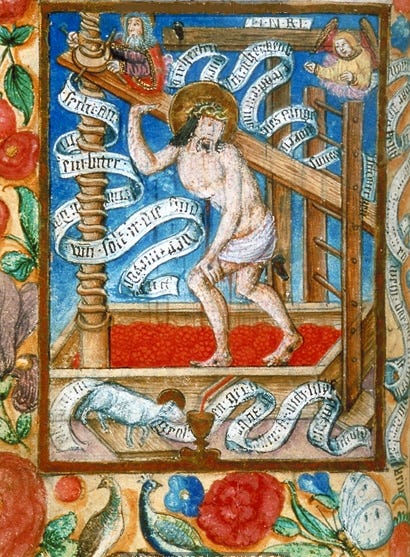
Perhaps the most bombastic moment in the book itself is the claim that the greatest proof for Christianity’s veracity is that it didn’t merely propose a god of wine—as the Greeks and Romans had done—but rather turned God into wine. It is undoubtedly an indication of Roger’s troubled relationship with the faith that he got that formula the wrong way round. The fact is, though, that Roger recognised the deep connection between wine and the divine, and specifically that there was nothing arbitrary about the choice of wine by the Incarnate Word to perpetuate His own presence upon the earth. This at least suggests that he may have been thinking about such things with greater depth than many of the Lord’s contemporary disciples.
