


One legend tells of Saint Patrick turning the pagan Welsh king Vertigius, whose tribe had howled like beasts, into a wolf. Strange as this story is, it is not the only lycanthropic narrative from the ancient hagiographies. The Abbot Saint Natalis is said to have anathematised an illustrious noble family in Ireland, which led to each member of the family, male and female, taking on wolf form for seven years. During this time, they abandoned civilization and lived in the wilderness, able only to satisfy their lust for flesh by devouring sheep.
These ancient stories of curses by holy men, in which the punishment is to become a wolf-man or a werewolf—literally vir-wolf—illuminate a very interesting theme within the Christian scriptures.
Whereas the men entrusted by Christ to govern his Church are given the name of bishop, which can also be translated as shepherd—those who herd the sheep, the flock of the Lord—the evildoers, by implication the threats to the sheep, are wolves. Throughout the Scriptures, wolves are metaphors for the enemies of God’s people.
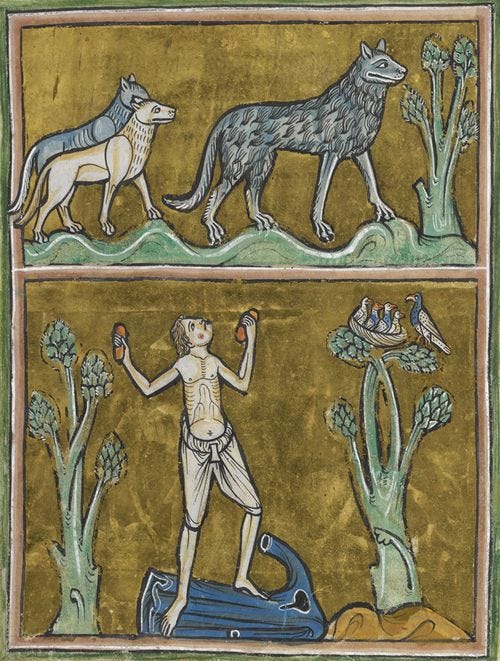
Ezekiel writes: Her princes in the midst thereof are like wolves ravening the prey, to shed blood, and to destroy souls, to get dishonest gain. (Ezek 22:27) And Christ, near the end of his ministry, tells his disciples: Behold, I send you forth as sheep in the midst of wolves… (Matt 10:16).
Yet as modern people we are often inclined to interpret stories of werewolves, when recounted in the lives of the Saints, through metaphorical lenses. The secular world has its own peculiar use of wolves for analogical purposes, particularly in the idea of a “lone wolf”, usually invoked to refer to isolated and potentially dangerous young white men who have taken against the liberal order.
Just as Scripture uses these images as metaphor, so too, we assume, do these ancient stories. Yet reports of lycanthropy are too widespread across both time and culture to dismiss so easily. In Constantinople 1542 AD werewolves became such a plague that Solyman II, called “the Magnificent”, personally led his Janissaries in skirmishes against them throughout the streets of the city “killing” at least 150 of these unnatural beasts.
Early 16th century France suffered similarly from a flood of cases, inducing the inquisition to step in. Maitre Jean Boin, OP., S.T.D., Prior of the Dominican convent at Poligny and Inquisitor General for Besancon provided over the trial of Pierre Burgot who confessed to striking a deal with three black robbed horsemen to save the lives of his sheep during an intense thunder and hail storm in which he agreed to acknowledge the chief horseman as lord and master, on his knees before the demon rider, renouncing God, Our Lady, the Saints and his baptism. Kissing the demon’s black hand his sheep were saved but his entrance into a desecrated life had only just begun. Years later a certain Michel Verdun would invite him to a secret sabbat wizards in the woods near Chateau Charlou where he was stripped naked and anointed with an ointment he experienced the transformation into a wolf-like creature. After this Pierre and Michel slaughtered many innocents including women and children. Many further trials have been left to us in the history books.
Throughout the mediaeval and early modern period monks, bishops and learned men discussed the nature of the werewolf and how to incorporate it within theological and philosophical frameworks. An old Poenitentiale Ecclesiarum Germaniae contains the following:
Hast thou believed what some were once wont to hold, namely that those who are commonly called Parcae can effect what they are often supposed to effect, namely that when a man is born they can direct and achieve his destiny, and moreover by a magic spell when-soever certain men will they are able to transform themselves into wolves, and such a one of this kind is called (teutonica) Werewulff, or else they transform themselves into an other animal shape as they list. If thou hast believed that Man made in God’s Image and Likeness can be essentially changed into another species or form by any power save that of Almighty God alone, thou must fast therefor ten days on bread and water.
A similar text is found in a Penitential of Bartholomew Iscanus, Bishop of Exeter, who died 1184. William of Auvergne a 13th century Bishop of Paris and an expert on the occult who coined the term “natural magic” wrote extensively of werewolfism in De Universo (pars. II, iii, cap 13) in which he discusses it as a species of demonic possession. Jean Bodin, one time Carmelite friar, jurist, professor of law and political theorist, made significant time in his intensely busy life to study particular cases of lycanthropy. In book II, c. VI of De La Demonomanie des Sorciers he opines, citing St Thomas Aquinas and others as authorities, that Demons can really and materially transform the body of a man into that of an animal.
To this very day, reliable witnesses recount strange occurrences involving wolf-men, and the bizarre testimonies of preternatural phenomena surrounding cursed land, such as Skinwalker Ranch in Uinta Basin, Utah, include tales of unnatural wolves. The particularly interesting thing about Skinwalker Ranch is what has been described as the “hitchhiker effect”: visitors to the ranch who engage in investigation often bring unwanted visitors back with them to their hometowns—all of which could easily be explained by hysteria and other psychological phenomena were it not for the fact that these “hitchhikers” are also experienced by individuals who know nothing of investigations at the ranch and merely come into contact with those who have visited.
A particularly striking set of testimonies involves people, sometimes children, who after spending time with investigators begin to notice themselves being watched from outside their homes by silent, standing wolf-men, whose sinister presence would have been interpreted as a curse in more theologically vibrant times.
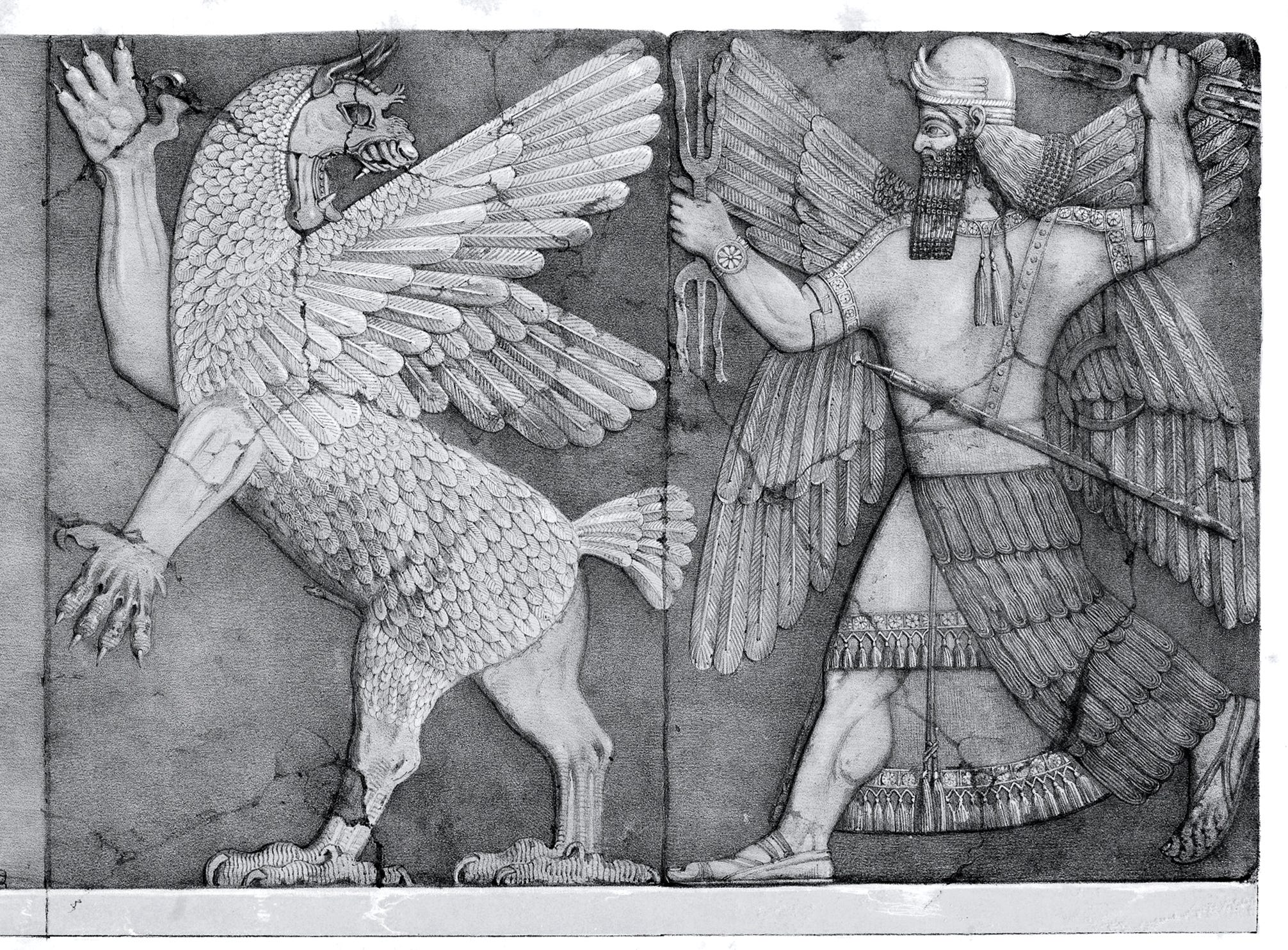
The ancient religions, from Egypt to Babylon to that of the Hebrews, understood spiritual beings manifested as combinations of humanoid form and animal features. Though always terrifying, a certain sublimity accompanied these mysterious angelic beings whenever they were understood as intermediaries or messengers of transcendent light. But terror comes in different flavours, and with some of these beings neither glory nor the sublime reveals itself, but rather an existential dread, as though one were in the presence of a fracture in the order of reality itself. It is this latter perception which invariably follows stories of unnaturally large wolves and wolf-men.
Throughout history, men like Nebuchadnezzar, through their own fault, or others through accident of birth or circumstance, find themselves plagued by these spiritual parasites which bind themselves to the subtle bodies of men, obscuring their nature and their hearts. However, what can afflict men can also afflict greater corporate bodies, such as nations. One reading, by Diego Hernan Rossello, of Hobbes’s Leviathan (where the idea of homo homini lupus est—man is a wolf to man—appears) argues that seventeenth-century scholars were concerned with real lycanthropy, a melancholic syndrome that could transform humans into animals, and that Hobbes’ invocation of the wolf is rather less metaphorical than the modern interpretation might suggest. After all, who is less harmonious with the body politic than the howling, unhappy man, unable or unwilling to participate in the smooth running of the state?
We cannot be sure what kind of disordered gods enslaved the men who lived in the ancient near East but we do know that the great baptism that the region underwent in the early centuries of the first millennium was so effective, and its Demons so well exorcised that the land became home to some of the greatest spiritual centres and theological schools of the early church. The school of Nissibis in the culturally Mesopotamian area of modern-day Turkey, and the great school of Seleucia-Ctesiphon, a handful of miles from modern day Baghdad, are two examples of the widespread rich theological and philosophical culture of the newly Christianising West and central-south Asia. The darkness had been lifted and light was illuminating the hearts of an ancient and sophisticated civilisation. Unfortunately, the casting out of the evil spirits is not always the end of the story, as Christ tells us:
And when an unclean spirit is gone out of a man he walketh through dry places seeking rest, and findeth none. Then he saith: I will return into my house from whence I came out. And coming he findeth it empty, swept, and garnished. Then he goeth, and taketh with him seven other spirits more wicked than himself, and they enter in and dwell there: and the last state of that man is made worse than the first. So shall it be also to this wicked generation. (Matt 12:43-45)
Before the seeds planted could reach their full maturity, the armies of the “light of Islam” salted the spiritual earth and brought about an emptying of the house of the East. This vacuum did not go unnoticed: the spirits returned and the devouring wolves took possession of the deserts. Following in the footsteps of the cult of Lykaean Zeus of which Plato speaks in the Republic, book VIII, when Socrates tells us that:
…anyone who tastes the one piece of human innards that’s chopped up with those of other sacrificial victims must inevitably become a wolf. Haven’t you heard that story?
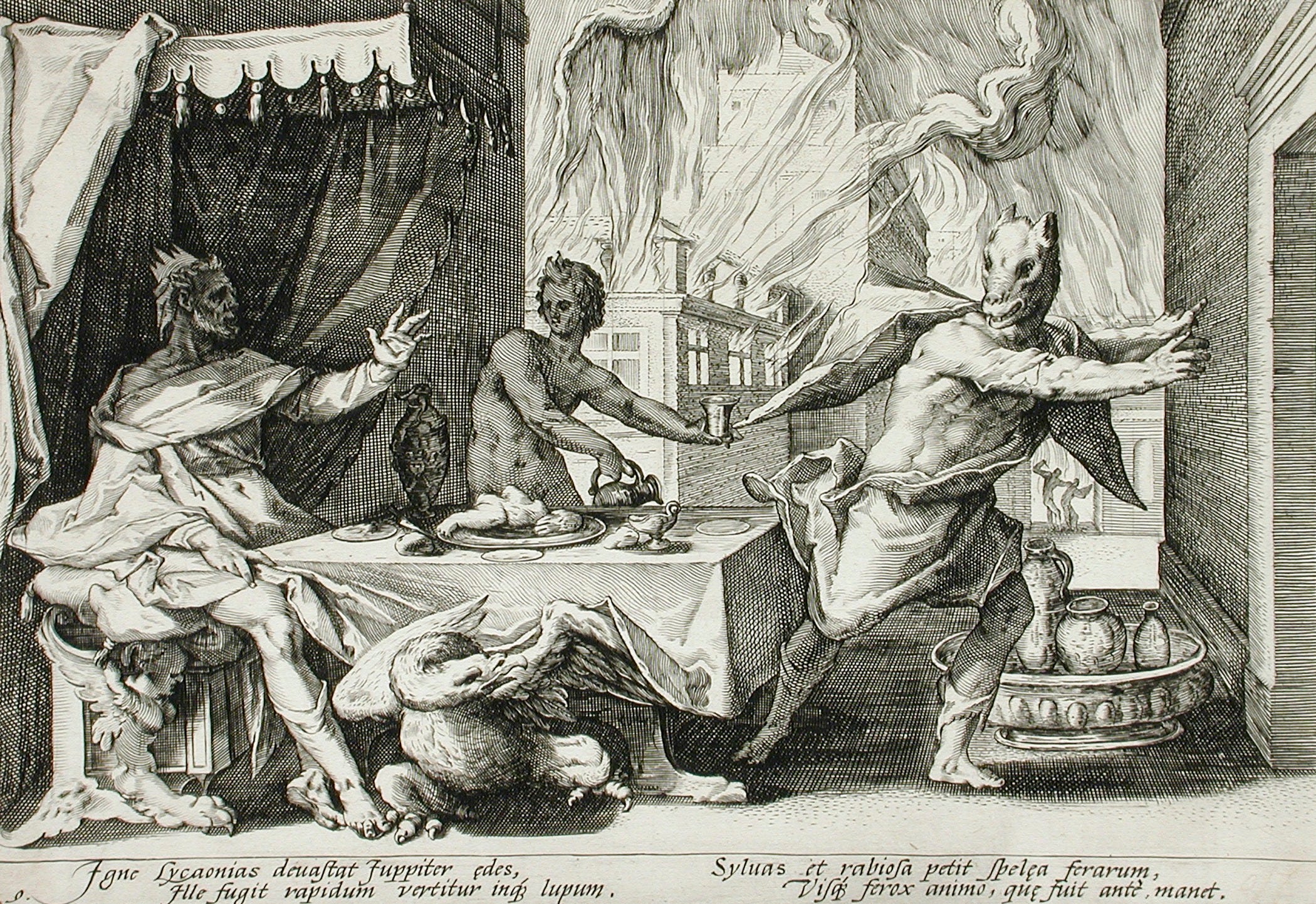
Ever since predation of the weak and the young became the law of the sand, lupine spirits took possession of the men of these foreign lands forming them in their own likeness. In the stomach-turning practice of the Bacha Bazi for instance we see an exact representation of the lupine predation described by Strato:
By night, on pleasure bent, my dinner o’er,
Like to a wolf, I came before the door
Of Aristocidus, and then I saw
His lamb-like son, and unto him I swore
To give him many gifts, and plighted troth
To him with kisses twain; now am I loath
Do vine-bred fancey were indeed the growth.
Now these tribesmen have come to our shores and Britain has entered her great passion. They’ve come devouring children and women, they’ve come as a flood, wolves among sheep. The rape genocide of Britain would be bad enough where it not for the fact that our elite class have also become wolves. Plato also warned about this as his dialogue continues:
Then doesn’t the same happen with a leader of the people who dominates a docile mob and doesn’t restrain himself from spilling kindred blood? He brings someone to trial on false charges and murders him (as tyrants so often do), and, by thus blotting out a human life, his impious tongue and lips taste kindred citizen blood. He banishes some, kills others, and drops hints to the people about the cancellation of debts and the redistribution of land. And because of these things, isn’t a man like that inevitably fated either to be killed by his enemies or to be transformed from a man into a wolf by becoming a tyrant? (Republic, Book VIII)
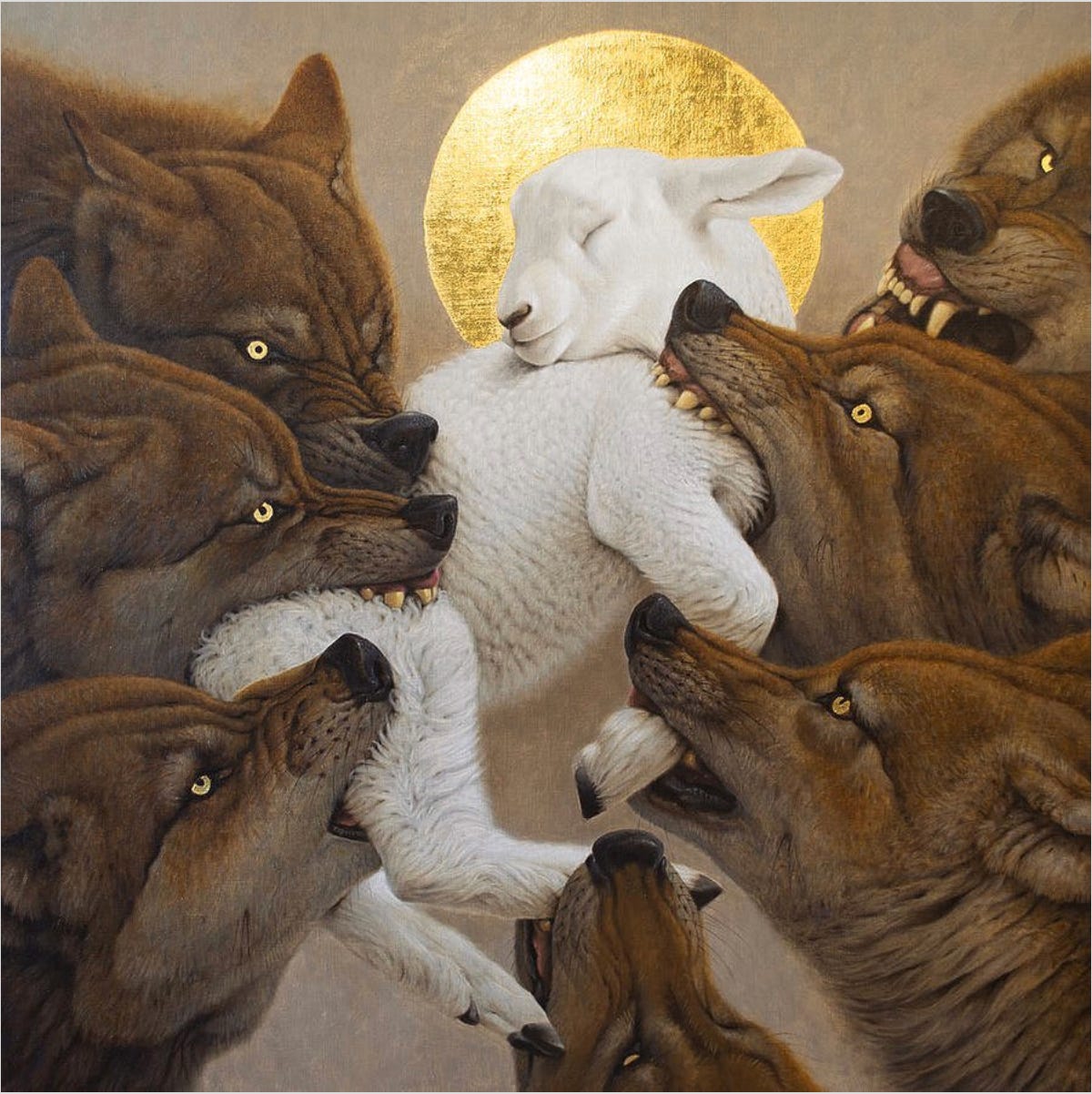
Since parliament gave license to the killing of unborn children, millions of little ones have been slaughtered, devoured by the wolves of our New World. Unlike the blood lust of war here we are confronted by the taste of “kindred citizen blood” and the emergence of tyranny. Surrounded by enemies without and within, the tribes of this island are scattered and demoralised, desperately in need of shepherds. What great shepherds we have had in the past; just as sometimes the spiritual wolves manifest in physical phenomena, so too have the bishops wielded their spiritual sword on the physical plain taking up arms to defend Christian women and children.
One thinks of the illustrious Saint-Bishop Ulrich of Augsburg, who oversaw the protection of his city against the repeated attacks of the Magyars leading the defence with bravery and honour. Likewise, Saint Heahmund, ninth century Bishop of Sherborne, a warrior who died fighting alongside the Anglo-Saxon king Æthelred I of Wessex and the future King Alfred the Great defending these hallowed lands against the Danes. Carrying a sword to defend his flock, the church recognised him as a martyr.
But you, bishops of this modern world, are you all hired hands? (let the reader understand). Are you all bought and paid for by the enemy? Or is there any among you who stand for your flock as the children of Europe who are being devoured by foreign wolves?
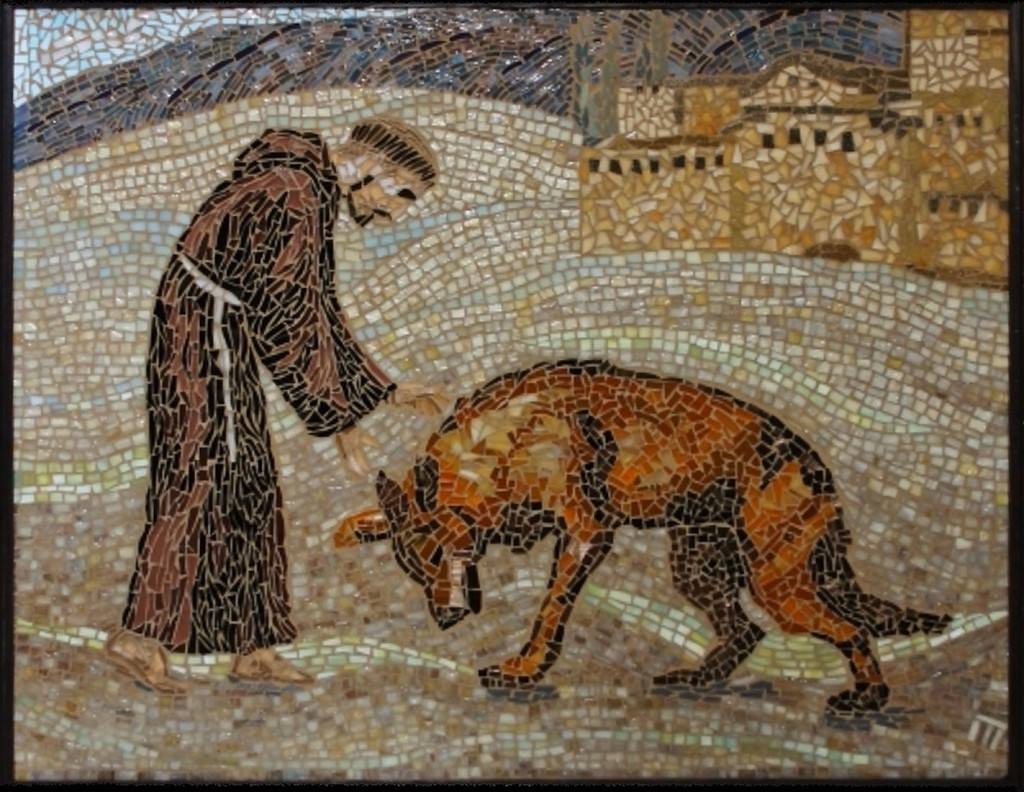
My purpose here is not to demonise wolves, I believe them to be extraordinary, noble creatures. Many Saints forged friendships with wolves. Saint Francis and Saint Ruan who had such an affinity that—ironically in the context of this piece—while in Brittany he was accused of being a wolf in disguise! When Saint Edmund of East Anglia was brutally murdered by the Danes in 869AD it was a wolf who discovered his severed head and protected it from scavengers. When the party searching for the Saint discovered the wolf it was holding the head between its paws, crying out “Hic, hic, hic…” and they marvelled and praised God and honoured the wolf.
The lupine spiritual creatures we are dealing with in this piece are instead the manifestation of the fallen face of wolf-nature, the wolf as lost in the wilderness and whose condition is exacerbated by man’s priestly abdication. The learned Jesuit Cornelius a Lapide, wrote that the evening wolves are demons who “prowl abroad in the dark hours, and urge man to every kind of lust and murder, and to other infinite crimes”. So intimate is this association of the wolf with evil that in early English the word Wolf is used interchangeably with the devil—the wolf of hell.
The ancient constitutions of the West already lay out what must be done to Wolf Men. One early Norman law proclaimed that for certain heinous crimes (no doubt rape genocide would be included), a man is to be declared wargus esto—become a wolf, homo sacer—and is to be hunted and slain by those who love peace and goodness. The laws laid down by Saint Edward the Confessor continued this line of thought:
Concerning Those Who Flee the Peace of the Church… And if thereafter he shall be found and can be taken, let him be delivered to the king, or let him defend his head [i.e. save his life]; for from the day of his outlawry he shall bear a wolf’s head, which is called among the English wluesheued. And this sentence is common to all outlaws.
Stand up Shepherds of God and protect the sheep for it is not the spirit of the age you answer to but to the Consuming Fire. Fear Him who has a store house of millstones for those who allow the little ones to stumble. Protect us from the tyrannical wolves in power who lust for the blood of the weak, protect us from the wolf invaders who are devouring our children, take up the sword that the Lord has given you and bring peace back to this hallowed land.
A delicious post. I fear many a modern editor might tell you that it's too much. Too ornate. Dense. "Take another pass and simplify a bit, won't you?"
Don't do it.
The journey from almost pre-history, on through modern times to find that a form of werewolf remains very much alive and present and with us today, is entirely the point. Well done.