



[Brian Scarffe’s essay on “The Last of the Book Lovers”, to which this essay makes a lovely companion, can be found here]
By Stefan Udell, author of The Word Made Flesh: Mediations of the Saints on the Sacred Heart (Angelico, 2026).
Do we read when we read a lie? If we know we have read a lie, if we become aware of the writer’s will to deceive, or even of his own deception, we have read, because we have learned something true. But if we do not know we have read a lie, that we have read nothing true, then in a real sense we have not read at all. It is also possible to read true things and not actually read.
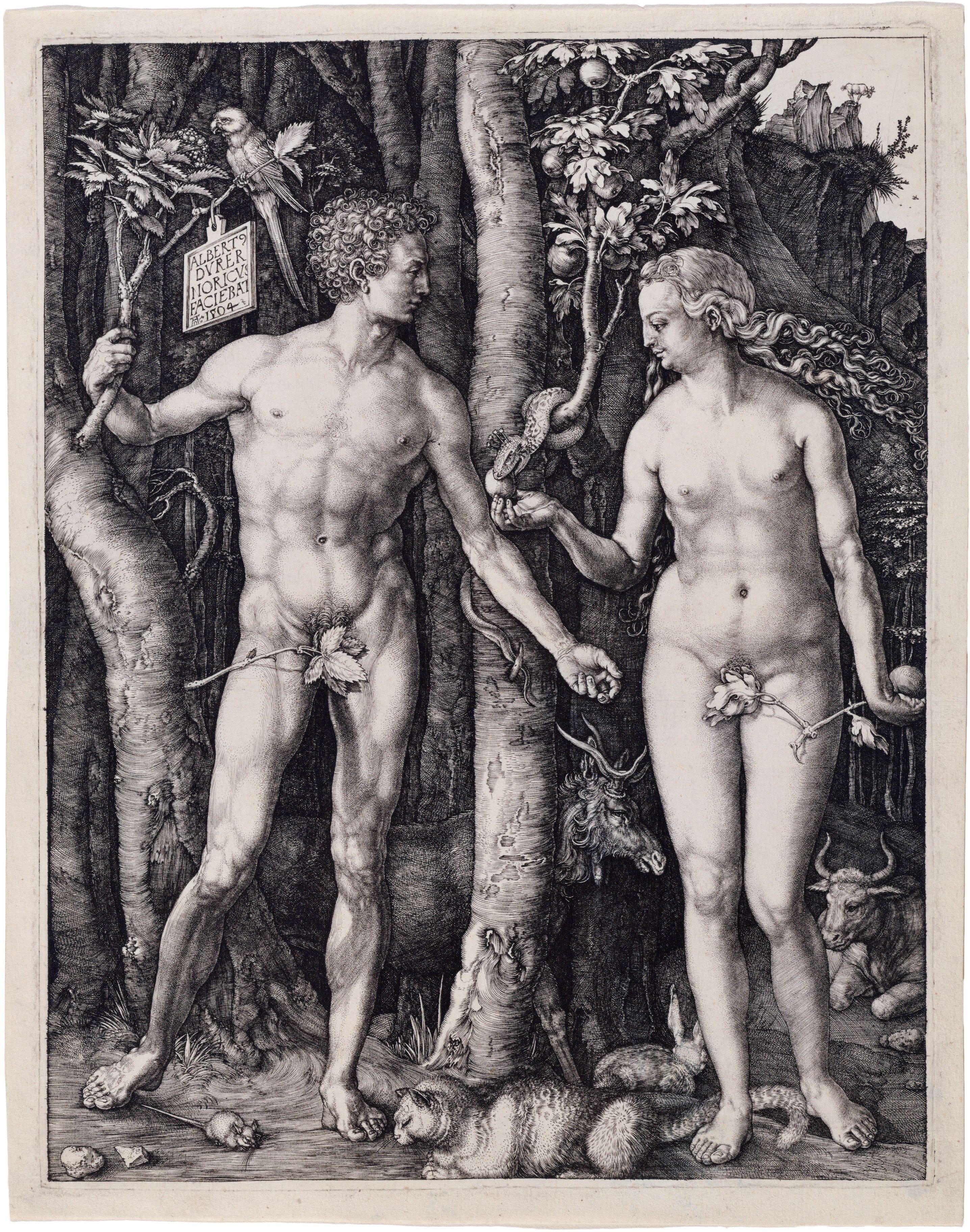
The story of Adam and Even in the Garden illustrates the point, when the serpent promised the gift of knowledge with the first lie ever told. All they had to do was eat the fruit of the tree in the midst of the Garden and they would be enlightened. For God knows that when you eat of it your eyes will be opened, and you will be like God, knowing good and evil. But God set a limit at the tree: some knowledge was hidden from them so that they might flourish, implying a law higher than knowledge. Desiring the knowledge hidden from them, they transgressed the limit, and were banished from the Garden. They acquired knowledge by eating the fruit, but they couldn’t perceive the consequences of falling for the serpent’s lie, which blinded them to the higher law.
By taking of the fruit their understanding became obscured, and, to understate the case, they lost more than they gained. The serpent was right about their eyes being opened, but only in a negative sense. The subtle deception was that the eyes of their hearts were closed, and as a result their physical eyes distended, or were “opened”, such that they saw only their bodies, naked and without the natural clothing of the soul.
What this suggests is that some knowledge, even though it is true, can prevent us from seeing what we might see, and even diminishes our capacity to perceive generally. There is certain knowledge hidden from us so that we may learn or even simply perceive through our senses. Attention also works in this way: it is not possible to process everything our senses receive—we would not be able to perceive anything from the overload and simply shut down. But we can attend to what we need in order to flourish, and this requires that the input we receive be somehow limited. The question is, what is the nature of this limit, what is this higher law that brings understanding to the limits of our knowledge?
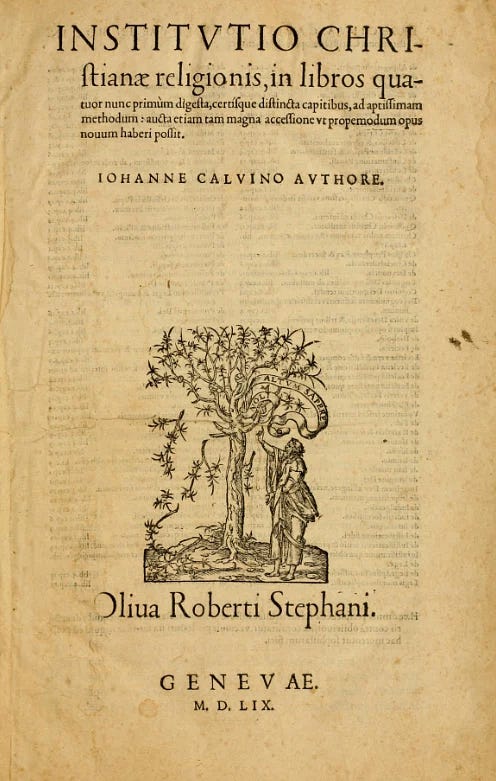
Reading has natural limits, but there is some ambiguity as to where the limits are set. The foundational limit, at least since the dawn of the printing press, is the text; the medium the text is found in is merely the object that contains it. To illustrate, the internet was initially touted by some as a new paradigm in reading that was non-linear and hyper-textual, one that freed readers from the material restraints of books. But it turns out to be just as, if not even more, linear than books—text is most often presented as a continuous and seemingly endless scrolling stream. The text remains in both cases the standard and the limit. This unsurprising technological non-development is one symptom of our modern presumptions about reading, those that underlie the basic modern definition and reify the text: the comprehension of the meaning of written or printed words. The dissociation of the text from the book, or any such medium, appears to echo Cartesian dualism, a projection of the mental (the abstracted text) into the physical (the object or medium that contains it), with the object subordinate. This dissociation frees language from the true limits of reading.
To pick on Descartes a little more, and to sound the depths of the problem, such dissociation is declared a principle in the Meditations on First Philosophy: “I am conscious of will so ample and extended as to be superior to all limits.” Descartes claims the will is infinite, and thus naturally placed above any principle that might limit or define it. This move renders the will obscure, disassociating it from the embodied person. Abiding no higher principle, the will is reduced to the exercise of power. Echoing the serpent’s promise at the tree, Descartes concluded in a letter he wrote later in life: “Now free will is in itself the noblest thing we can have, since it makes us in a way equal to God and seems to exempt us from being his subjects.” Now, the infinite will, free of all limits, becomes the measure of all things, placing everything under its dominion, not like a god but like God Himself; it acknowledges no mystery, but assumes that all knowledge hidden to us can, given sufficient willpower, intelligence, and resources, be uncovered and mastered. If we just keep reading, we will eventually comprehend all.
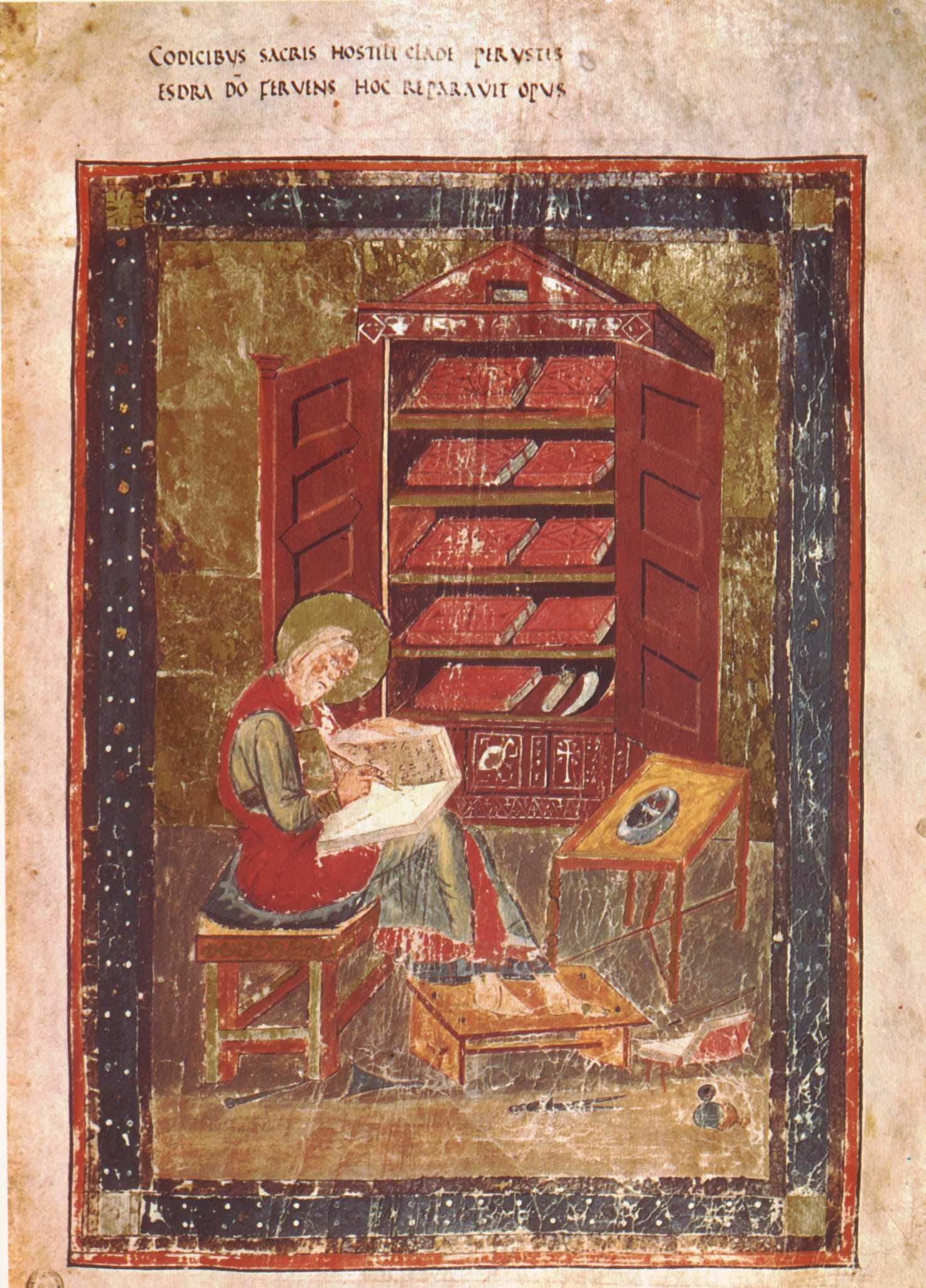
Against this idea of knowledge stands the reality of mystery; while mystery draws us beyond the weakness of our intellects, it always remains. We are limited by it, and we are also perpetually indebted to it, for while we never grasp all knowledge, we are naturally drawn to the beyond by mystery, learning throughout our lives. But can mystery be considered a proper limit of reading? What is the limit then? It is not the text—it is the medium. A book, for instance, conforms to the senses, to the hand and to the eye, the conditions for receiving it. The book limits and orders the text, and is therefore part of it in some way. This means that the codex format, the book as we know it, is not a technology but a mode of language. It is more than an artifact: it is both a mode and a syntax, and therefore also contains meaning inseparable from the text. This makes the text three-dimensional, and in a sense, a body. The meaning inherent in this mode may go unnoticed or unused, as it has in modern times, but it was used by many authors before the invention of the printing press, the technology that forced this mode out of the author’s toolkit and out of the mind of the West. It has been lost, and remains hidden.
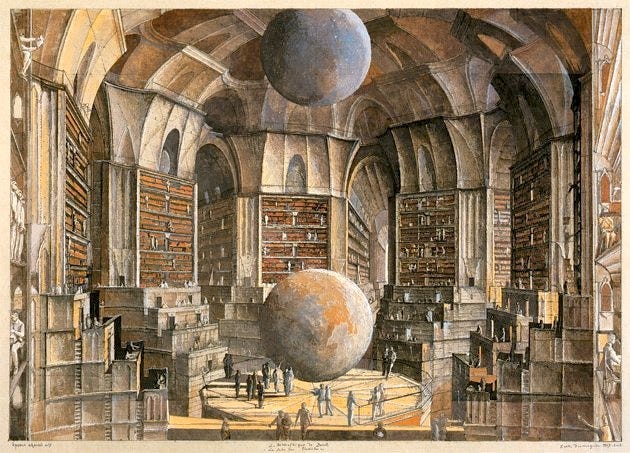
As a result, the modern book is stuck in a limitless vortex. Reflecting on the modern mode of the book—Jorge Luis Borges’ image of the Infinite Library—Foucault observes: “Language must push back to infinity this limit it bears with itself, which indicates, at once, its kingdom and its limit.” Foucault diagnoses the condition of language today: infinite meanings lie hidden beneath the surface of texts. This is the resulting paradox of the “infinite text”: the illusion of unrestricted access to knowledge limits our ability to read. What enables us to read more deeply are precisely those limits that were silently and unwittingly jettisoned through technological advancement. Despite this, the higher law remains and governs both the act of reading and knowledge itself, however faintly, and no matter our lack of awareness of proper limits. In opposition to this idea, Foucault proposed his own paradox: “If we make a book that tells of all others, would it or would it not be a book itself?” Before we can answer the question, we get stuck on the initial assumption. Descartes’ infinite will constrains Foucault to imagine that we make the book that tells of all others, rather than the book making us. For him there is no higher law that determines what a book is, there is no mode. And he’s right, there isn’t one for the modern world, not in this age of cascading tyrannies. But Foucault considers the alternative—a book that makes us—a tyranny. Is not infinity tyranny when applied to language? Infinity is a mathematical concept, a figure of speech, a supernatural reality, an attribute of God, not a limit of language.
Because this is the case, the book is the limit. It is therefore not trivial that books are artifacts. We imagine a text to be independent, infinitely reproducible in any medium without gain or loss of meaning. And yet, texts are never abstract; they are only abstracted when considered qua text, as instantiations rather than unique signs of the mode that define them—in other words, as books. The urtext, the idealized text, is not in some lost original copy, nor is it in the mind of an author; there is no such text as far as we are concerned. If an author were to rewrite his own lost book, he would produce a different one, not from a faulty memory, but because the source of the text lies elsewhere. If there is textual stability, it resides outside the text. The text cannot stabilize itself. It is possible to be fooled into thinking it does, as is the now the case.
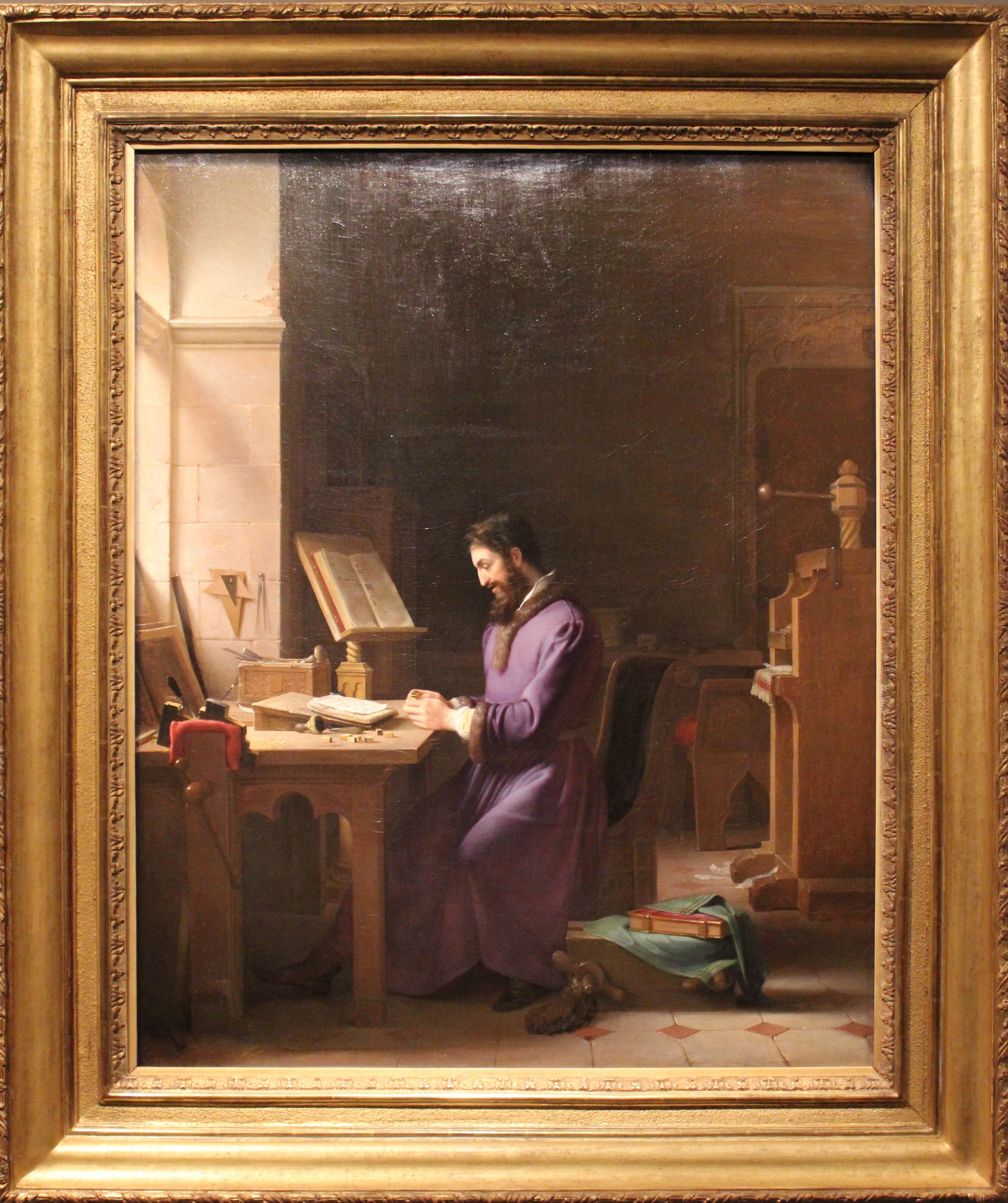
One must only remember the idea of infinite monkeys at typewriters eventually producing Shakespeare’s Hamlet. They will not, of course. Part of the reason we might think this possible is the printing press, which provided us with a relatively stable medium that created the illusion of extra-textual stability. Fixed fonts, page sizes, and the precise mechanics of production constrained the text. The text filled space one moveable type at a time. The relationship between word and page was subject to the rigid atomism of the system, and somehow this pried the text from the page. Do all textual possibilities simply appear on an infinite grid? Are all combinations possible there? The artificial limits of print production thus contained the contradictions of Cartesianism. At the same time, the printing press made “infinite” production and repetition possible—a pseudo-stability resulting from multiple and unending identical copies (of the history book The Da Vinci Code, God help us). Now, digital technology has overturned the pseudo-stability that once resulted from the material limits of print. Though digital text mimics print, the material limits of print have given way to the virtual limitlessness of the internet, rendering the Cartesian mind-matter rift malignant. We now inhabit Borges’ prophetic infinite Library of Babel, “which chance would organize and which would eliminate intelligence.”
A lie has blinded us to the higher law of reading; if we are unaware of this law, we do not read. One may protest that true and meaningful things can certainly be found in books. But any such thing, without its limit, is ultimately meaningless. It serves nothing but the unbearable heaviness and nakedness of matter. I lay myself open to the criticism of hypocrisy here. Is not this text also afflicted with the same sickness? Yes, but reified texts could be seen as preliminary to the type of reading I am suggesting; modern texts can still direct readers towards the act of reading. There have been authors who have keenly felt this lack and, although ignorant of the solutions discovered in the past, have come up with their own solutions (Jason Baxter shows one such solution in his recent article on Dostoevsky). In addition to these modern insights, we might return to those books mentioned earlier, which offer a solution to the problem of the “elimination of intelligence” by the disembodied and limitless text. They are written in a mystical mode that causes the reader to float, body and soul, up to the Word, where all words are united in the Infinite One who came down and Incarnated in a limited human body. What these books are, and how they are to be understood, is for another time.