


by Fr. Robert Nixon, OSB, Abbey of the Most Holy Trinity, New Norcia, Western Australia.
(Donations to the Benedictine community at New Norcia can be made here.)
It is typically assumed that the movement of Christianity into Europe was a kind of dethroning or usurpation of a former pantheon of deities (Graeco-Roman or Germanic) and the replacement of these with a new one—specifically the ‘Desert God’ of the Semitic peoples. However, it will be argued here that the real situation was much more nuanced, and that there was, in fact, a fundamental continuity between the concept of Divinity (and humanity, for that matter) between the earlier faiths and creeds of the European peoples and Christianity.
In order to demonstrate this, we shall first consider the conception of a unique and supreme Divinity in both Graeco-Roman and Germanic theologies. Following this, the continuity of the Christian ‘Deus’ or ‘Gott/God’ with the European conception of a supreme and transcendent Divinity will be demonstrated.
The distinction or differentiation between polytheistic and monotheistic theologies is, in reality, far from clear cut. Essentially, it is contingent upon how one defines ‘God’ or ‘god(s)’. If a god is simply understood as indicating a spiritual being which is not subject to physical aging or death, then, in a certain sense, the angels, saints and even devils of Christianity could be called ‘gods.’ But if the term ‘God’ is reserved for one ultimate, eternal and supreme Being, utterly beyond all attributes and limitations (as it is in the Christian tradition), then clearly, and, indeed, by definition, there is and can be One only. For this reason, although Christian tradition affords non-physical and non-mortal status to angels, saints, and devils, it does not call them ‘gods’, but rather, the term ‘God’ is reserved for the supreme, transcendental, self-sufficient and eternal Reality, “I-am-who-am.” (Ex 3:14)
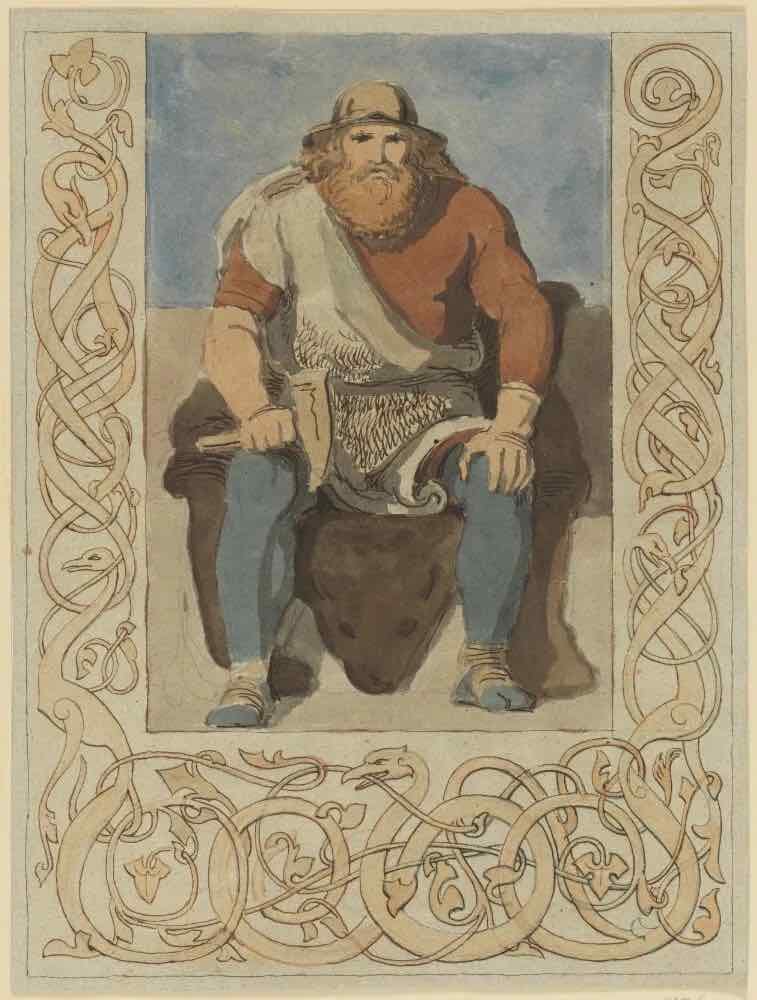
It is suggested that this distinction can be applied equally to the pre-Christian theologies, which are typically labelled as ‘polytheistic’. Yes, there were various spirits or manifestation and forces (Aphrodite, Apollo, Thor, etc.) who were believed to be non-physical and immortal, and super-human in terms of intelligence and power. In this sense, they were considered ‘gods.’ Yet they were not held to be ‘God’ in the sense of a supreme, transcendental and eternal Reality, or a ‘First Mover’. As noted, by definition ‘God’ in this sense could logically only ever be One.
Hence it is natural that expression of essential unity and uniqueness of the Supreme Divinity, a primordial Logos, abound within Graeco-Roman philosophy and mysticism, without an incongruity with the veneration of a pantheon of other ‘gods’, in the lesser sense of immortal, spiritual beings. Aristotle affirms: “A First Mover, then, exists of necessity; and because it exists by necessity, its mode of being is the Good, and it is in this sense a first principle.”1
Likewise, Proclus argues:
It is necessary, then, that the First Cause should be one; for the Monad presides over all multitude, excelling all things in power and goodness, and on this account it is necessary that all things should participate in its nature.2
Expressed in this way, such a perspective accords perfectly with the transcendental monotheism of Christianity, which Aquinas expresses in terms of a Godhead which is “ipsum esse subsistens” (‘being in itself’), something which could only ever be One. Clearly, the Greeks and Romans did not consider this fundamental unity of the transcendent God to conflict or be incongruent with the mythological elaboration and veneration of other ‘gods’—understood either as allegorical figures or symbols, or quasi-independent spiritual entities.
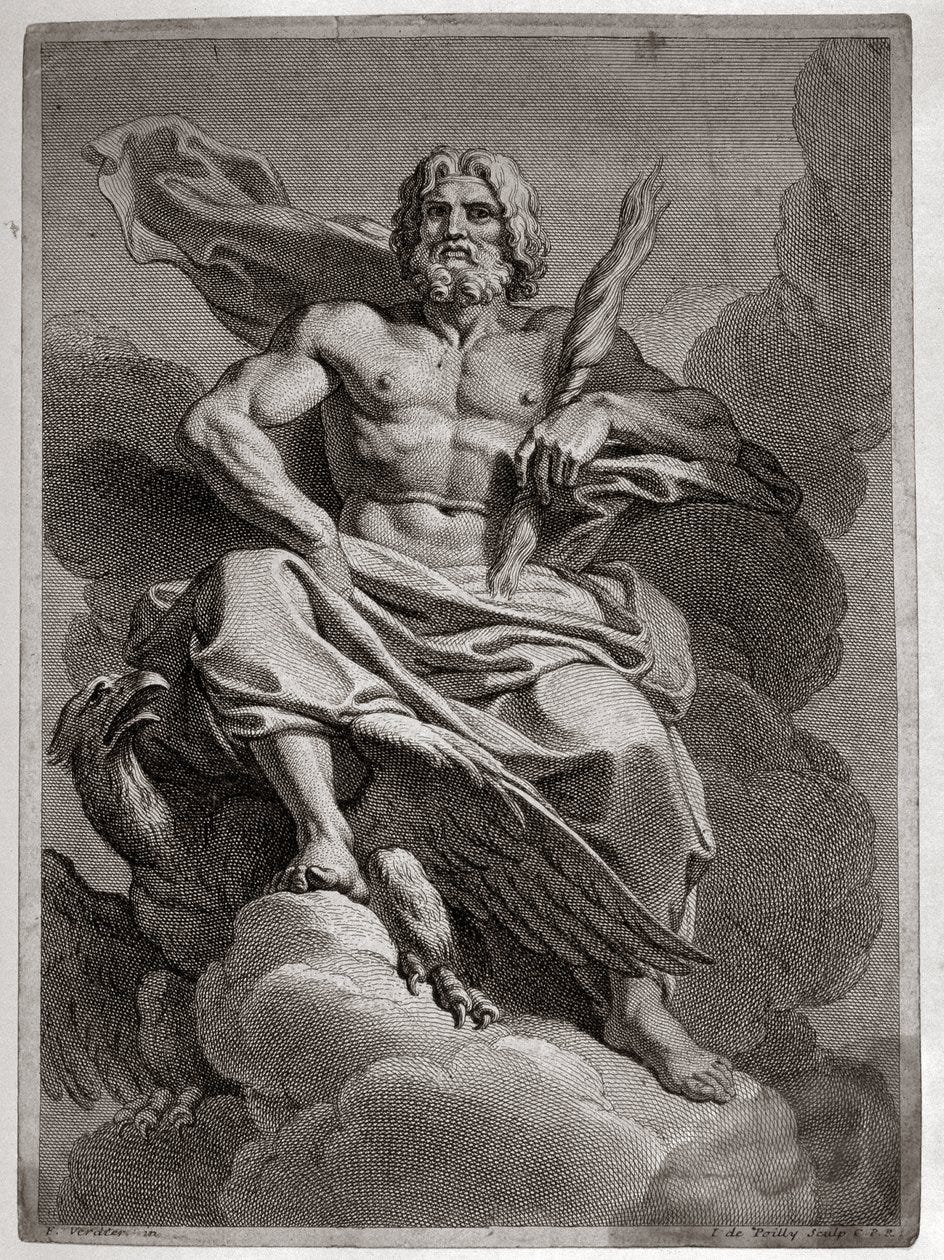
Even Zeus, the supreme Deity, could be understood either in a mythical, anthropomorphic form, as the King of the Olympian Court and subject to a range of quasi-human and even capricious emotions; or in more a philosophical and mystical way, as the supreme Unity, the ipsum esse subsistens, in whom “we live and move and have our being.” (Acts 17:28) This dichotomy in imagery, reflecting the variance between popular piety and philosophical theology, is, arguably, equally evident in the Christian approach to God, which ranges from highly anthropomorphic to more purely mystical. Furthermore, a plausible analogy could be drawn here between the co-existence of belief in one supreme God and a pantheon of other, lesser spiritual beings (‘the gods’), and the Christian doctrine of the one God, which does not preclude the veneration and invocation of non-supreme, non-eternal spiritual entities, such as angels and saints.
Sources of the pre-Christian conception of God for the Germanic peoples are far fewer than for the Graeco-Romans. The most detailed and best-known literary records of Nordic mythology (such as the Elder Edda and Prose Edda) are, in fact, productions of Christian authors, dating, in the redactions we possess, to no earlier than the late Middle Ages. Tacitus, in his Germania, declares that: “neque in ullam humani oris speciem adsimulare ex magnitudine caelestium arbitrantur.” (They [the Germanic peoples] judge it to be impossible for any human mouth to express a [fitting] comparison for the majesty of the Heavenly realities.’)3 Other Roman records we have speak of the Germanic peoples as believing in an ‘All-Father’ (Alföðr), whose name was represented by a range of orthographical forms—Odin, Woden, and most significantly for the discussion here, Godan.
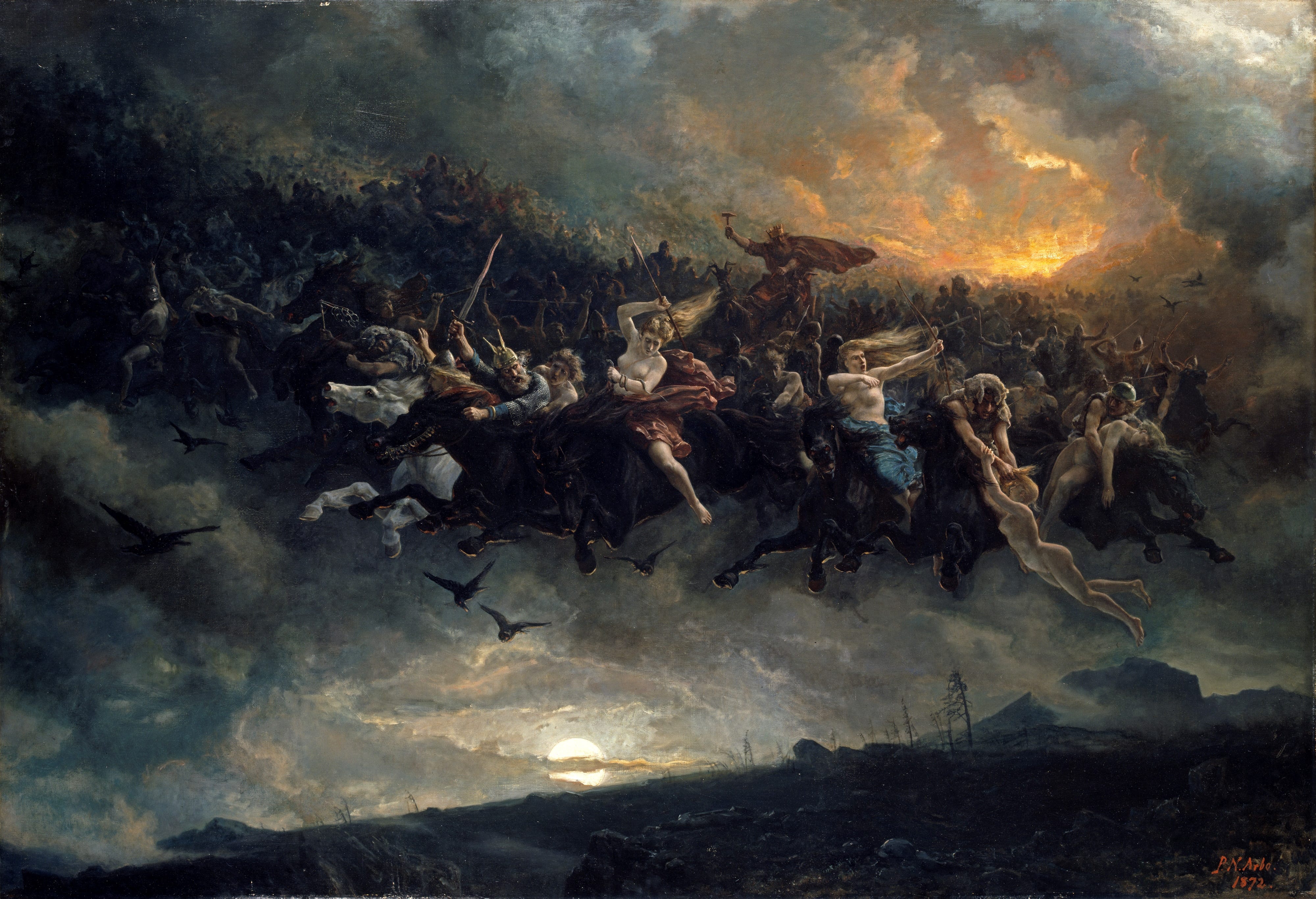
The word used today to signify the unique Supreme Deity in Christian discourse in the Germanic languages is God/Gott (and similar cognates). This is very clearly a form or adaptation of Godan/Woden/Odin. Indeed, the name God was already in use to designate the ‘All-Father’ (Godan/Woden/Odin) by the Anglo-Saxons in pre-Christian times. And in Latin, the official language of the Roman Catholic Church, the word Deus (translated as God) is a direct transliteration of the Greek name, Ζεύς (Zeus).4
These relationships, or rather identities, of name are not of merely etymological interest, but point to a fundamental continuity in understanding of the God of Christianity with the Supreme Deity for both the Germanic and Graeco-Roman peoples. All of them may with justification be identified with what Julius Evola terms the ‘Dietas solis’ (‘Solar Godhead’),5 the All-Father of the Occidental races. Interesting, the name Jupiter is a contraction of the term Diespiter or ‘Father of the Day,’ virtually identical to the designation ‘Father of Lights,’ used as a title for the Divinity in the New Testament (Js 1:17).
This concurrence and harmony is, when considered objectively, not at all surprising. For any conception of a unique Supreme Being must recognize the universal nature of such a reality, as is reflected, to some degree, even in the Hebrew Scriptures, the “God of every tribe, tongue and nation.” (Daniel 7:14). The interesting implication is that the acceptance of the Christian faith would not have involved any abandoning or renunciation of Deus/ Ζεύς or Godan/Woden/Odin, but rather an essential continuity, a process which was natural and evolutionary, rather than revolutionary and disruptive. It would certainly not have necessitated discarding an ‘old God(s)’ in favour of a ‘new God’, any more than the conversion of Jew or Muslim to Christianity would involve such a process—perhaps, indeed, even less so.
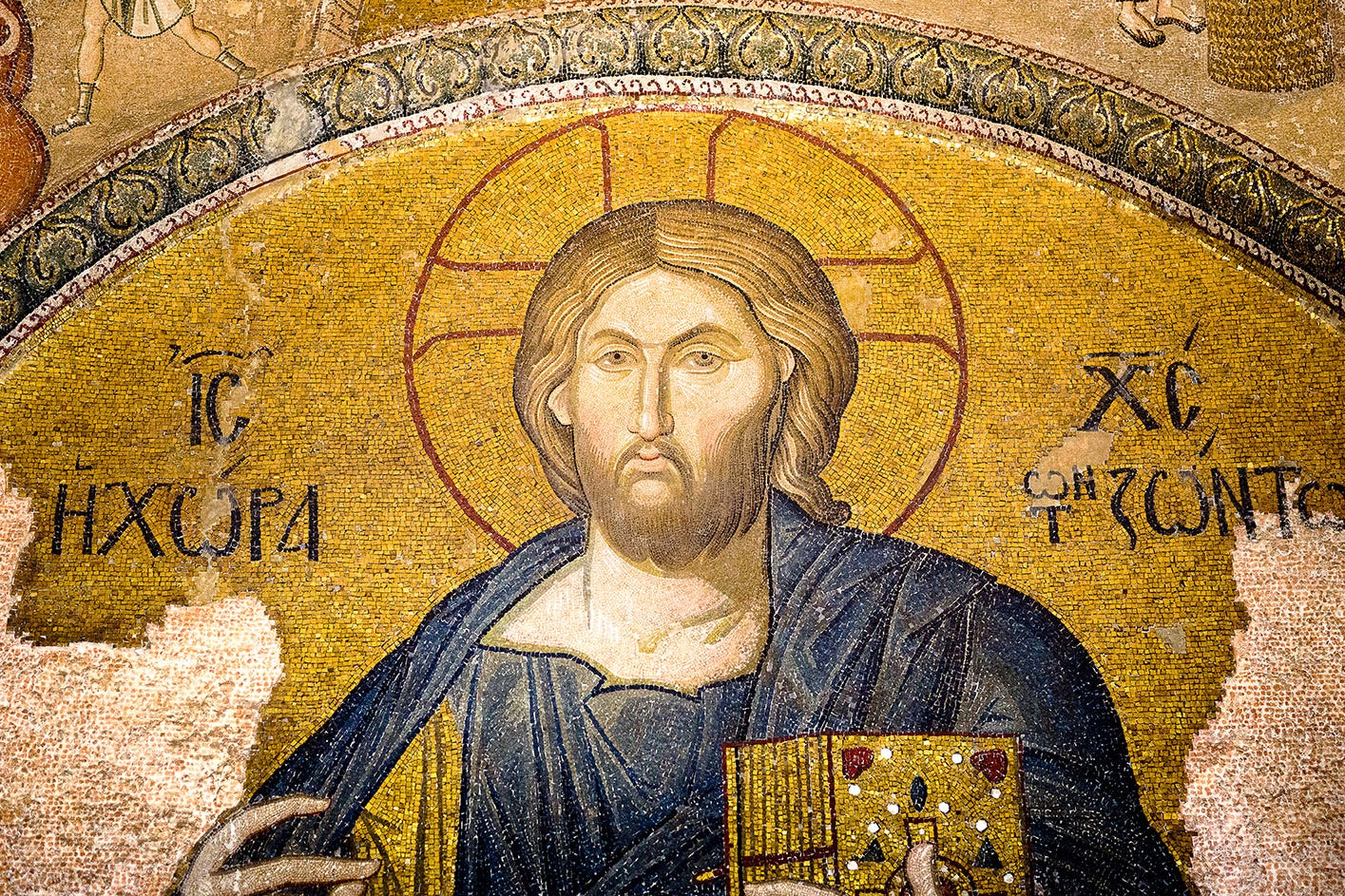
Here, it is pertinent to consider the sources which shaped Christ’s own thinking and language of the Deity. Arguably, since (according to Christian belief) he was himself an Incarnation of God, he already possessed perfect and complete knowledge, as it were, first-hand. Nevertheless, the reality of his humanity means that cultural and intellectual influences were not irrelevant to his understanding, and therefore cannot be disregarded. Undeniably, he was familiar with the monotheistic traditions of the Middle East, including the customs and writings of the Jewish people (although, as a Galilean, he was strictly speaking, not a Jew at all, for the Galileans were regarded as goyim or outsider by the Jews themselves, and this is the very meaning of the word ‘Galilean’). But the Jewish (or, more correctly, Middle Eastern) conception of God had undergone, and was continuing to undergo during the time of Christ, a considerable transformation and fragmentation. On the one hand, there was a discernible movement towards the theology of a unique, transcendental Supreme Being, reflecting, without doubt, a Hellenic influence, and fully consistent with the approach of Christ; but on the other hand, remnants of the jealous, tribal ‘desert deity’, requiring blood sacrifices for appeasement and imposing arbitrary laws of sabbath observance and ritual cleansing, still persisted. This duality was expressed strikingly, if perhaps in somewhat extreme fashion, by Kaiser Wilhelm II:
Our Christian God, the merciful, forgiving God, the personification of eternal love, our father, as Christ has taught us, had absolutely not the slightest thing in common with the vengeful bloodthirsty, angry old Jahweh of the Jews.6
The view that the God proclaimed and incarnated in Christ was different, and even in diametric opposition to, the deity of the Jews had considerable currency in the early Christian period. It was adopted by many of the Gnostic sects, who posited that the God of the Old Testament was a demiurge, the same as the ‘Ruler of this World’ spoke of by Christ (cf. Jn 14:30). Although this view, from a theological perspective, is erroneous, it does point to a genuine disparity in values between the God of Christ and laws and practices of Jewish tradition. The Church teaches that the Gods of the New and the Old Testaments are one and the same; yet acknowledges that the Old Testament presents only a limited and imperfect insight into God’s true nature, which finds its true expression in the person of Christ.
It is historically untenable to imagine that Christ was unfamiliar with European thought and literature. The Gospels (all originally written in Greek) tell us that he spent his youth, his years of formation and education, in Egypt, at the time a Greek-speaking, culturally diverse part of the Empire—a veritable ‘melting pot’ of philosophical and spiritual schools from all corners of the world, including sages from the distant East and traders and adventurers from the far North. Moreover, the Gospels show that Christ was perfectly capable of conversing with educated Greek-speaking officials and officers (who were drawn from all parts of the Empire), with whom his words clearly had genuine and fascinating resonance. Consider, for example, Pontius Pilates’ profound question: “Truth—what is that?” (Jn 18:38) The colloquy of which this is part demonstrates that Christ was seen as, among other things, “a wise philosopher,”7 by educated Europeans of his time. When he spoke of the Divinity, his words evidently resounded strongly and naturally with Roman soldiers and officials, and apparently more so than they did with the Jewish officials. This would not have occurred unless these European ‘gentiles’ recognized the God of whom Christ spoke as fundamentally one and the same as the unseen ‘Father of the Day’ to whom they already aspired and related.
The essential continuity between the God of the Christian faith and the already existent European conceptions of a Supreme Being sheds a remarkable illumination and clarity on a number of historical facts. Firstly, and most importantly, the conversion of the peoples of Europe to Christianity was remarkably free of resistance and violence. The peoples generally readily embraced the teachings of Christ, without coercion, or spiritual or cultural catastrophe. This would not have happened if it demanded a complete and radical renunciation of their previous beliefs and values. On the other hand, if an essential continuity was perceived, and the Gospel seen as a development, strengthening and clarification of their own native values and spiritual aspirations, then it makes perfect sense. A case in point is the emperor Constantine the Great, who was converted to Christianity and declared it to the be official faith of the Empire. Prior to this, he had been an ardent devotee of the Sol Invictus, the ‘unconquered Sun.’ He did not actually abandon this devotion, which really amounted to a form of transcendent monotheism; rather he saw Christianity as more perfect expression of it.8
If the hypothesis that the God of Christ was understood as the same as the Supreme Deity already believed in by the European peoples then it follows that the authentic European spirit finds in fullest and truest expression, rather than an abnegation or suppression, in the Christian faith—and that this faith is not a ‘foreign imposition’ but rather an expression of its own highest and holiest aspirations and values.
Aristotle, Metaphysics, XII.7.
Proclus, Sallust on the Gods and the World, V.
Tacitus, Germania, IX.
Compare with Sanskrit द्यौस् (‘Dyaus’), the name of the ‘Sky-Father’ deity found in the Rig Veda.
Julius Evola, Revolt Against the Modern World, trans. G. Stucco (Rochester, Vermont: Inner Traditions International, 1995), 9.
Letter to Eva Chamberlain-Wagner (14 April 1927), quoted in John C. G. Röhl, Wilhelm II: Into the Abyss of War and Exile 1900-1941 (Cambridge: Cambridge University Press, 2014), p. 1236
See Gospel of Thomas, 13.
Indeed, early Christians hymns delight in employing solar imagery from Christ, identified as the Sol Justitia. Similarly, titles such for supreme God traditionally used by the Roman and Germanic peoples, such as ‘Thunderer’ (Tonans) and ‘High-throned’ (Celsithronus) are freely and openly used in early Christian poetry and hymnody.
Parts of this are extremely speculative...but a fun read none the less
The Black Adder surely had this nonsense in mind when he proffered the famous comment UTTER CRAPP.