



I have a strong distaste for celebrity exorcists, and I suspect many of you share this sentiment. The devil is real, and must be accounted for, but somehow a select group of priests have become his mouthpiece in the public square, passing along descriptions of his nature and activities through lectures and podcast interviews, all in somber tones. I’m not a member of the administrative hierarchy, and thereby have no place to suggest how these priests should be handled, but my distaste lies in their esoteric authority. Ultimately, this authority is based on unfalsifiable claims that are epistemically unbalanced. Unfalsifiable due to the nature of their origin (if a demon told him “this is how I took your government out,” how could you disagree?) and epistemically unbalanced because the other side of the question becomes impossible to investigate. When a celebrity exorcist declares something “demonic” it becomes so catastrophic that all contrary evidence becomes irrelevant or morally suspect. Yet what are not considered (and cannot be, if the “demonic” accusations must be taken by fiat) are the good things that are part of our Catholic heritage that were rejected not because they were found to be nefarious, but because they didn’t fit in the modern world’s materialist worldview.
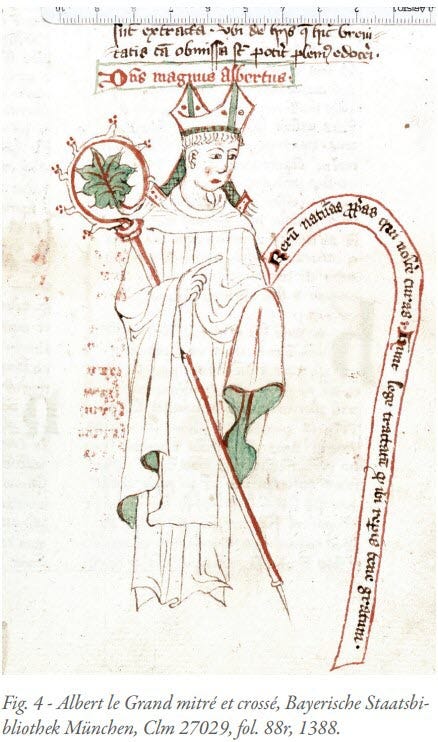
To use an easy example, crystal healing practices are always referred to as “New Age activity” when in fact two Doctors of the Church have written textbooks on such practices, Ss. Hildegard of Bingen and Albert the Great, mentor of St. Thomas Aquinas. Not only do they believe these practices to be permissible, but they go so far as to promote them as means of living a good Christian life. St. Albert when instructing how to prepare astrological talismans in his textbook Speculum Astronomiae cautions readers to avoid “suffumigations or invocations” but encourages talismans nonetheless:
The images found in this sensible world made from the four elements obey the celestial images (i.e.: the constellations) of the heavens—some of which are close to things found existing in their naming and their creation in our world, but certain ones are miraculous and are far from us and rise up in rational estimation, by means of the profundity of our intellect.
As Marsilio Ficino argues, the difference between engagement with demonic entities and beneficial practices is simply whether rival religious rituals are brought in or merely interactions with the parts of the natural world that promote spiritual wellbeing. We don’t have to call upon spiritual beings to enchant the cosmos, they are already enchanted by nature of their … well, nature.
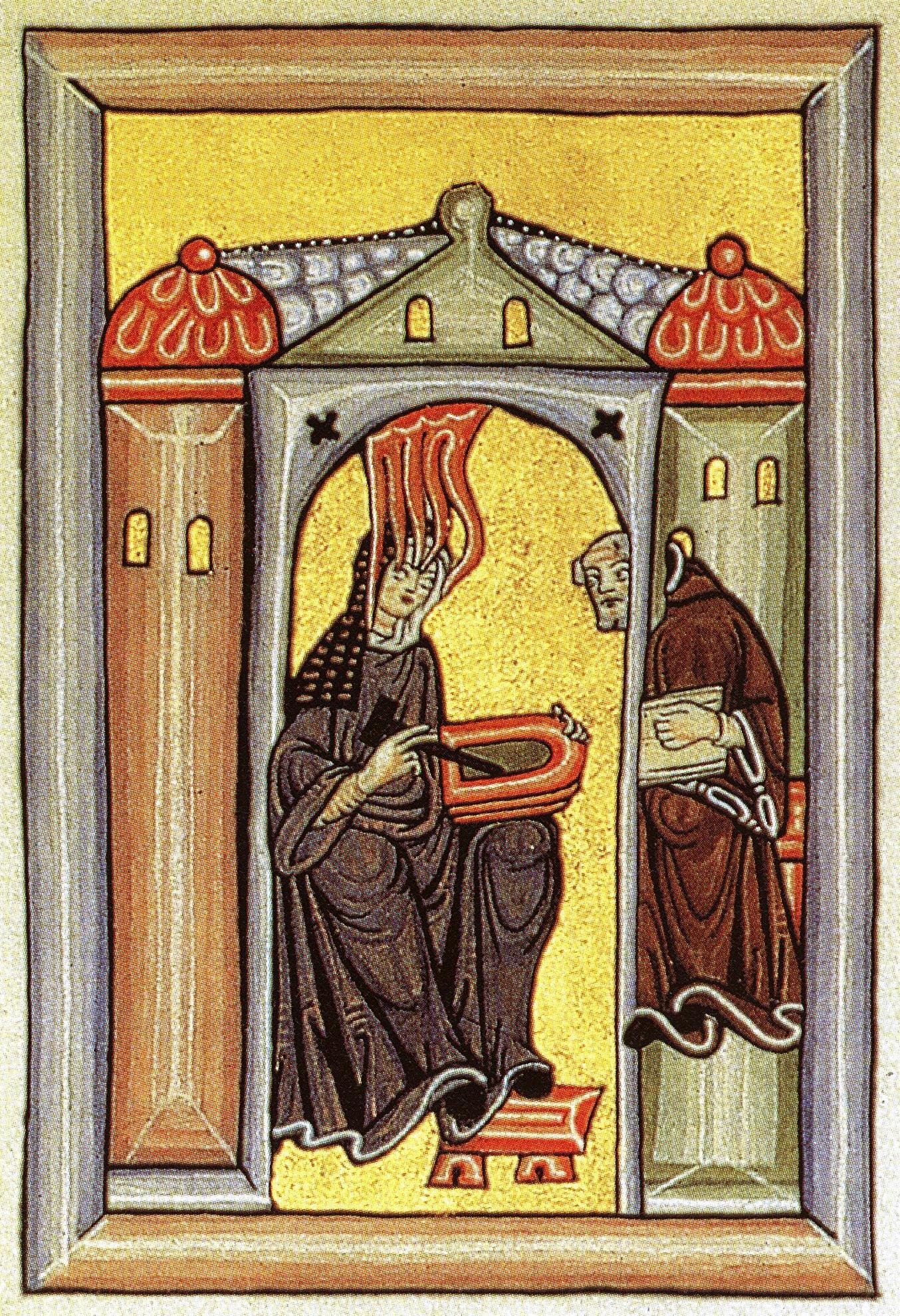
The spiritual benefits of such a magical worldview is difficult to navigate when St. Hildegard is championed by the New Age as a protofeminist (because as mother superior of her convent she only lived with women) and witch doctor (because she believed not just the body but the spirit could be healed with God’s creation), but fortunately there are people out there doing the heavy lifting for us.
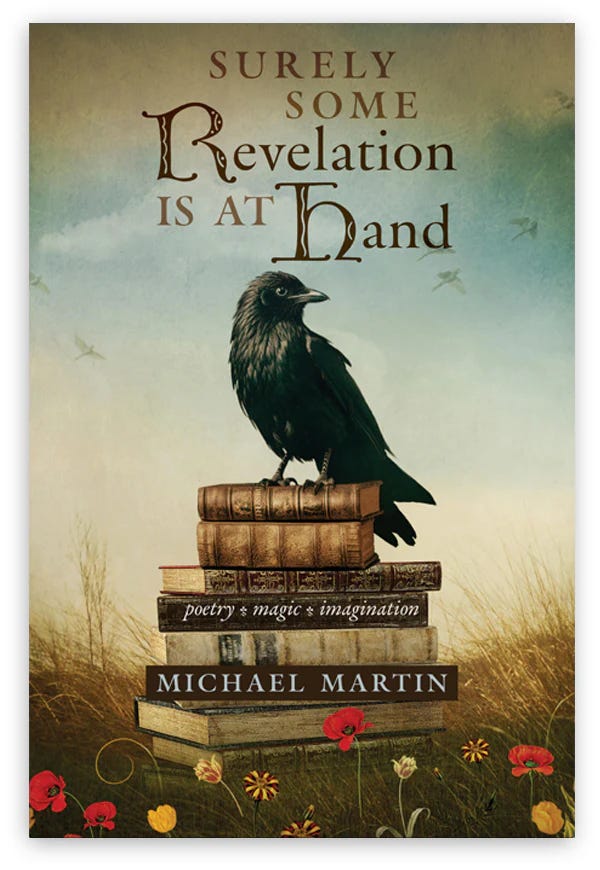
One such individual is Dr. Michael Martin; poet, philosopher, musician, and biodynamic farmer, Dr. Martin has dedicated a large portion of his life to the study of “the dearest freshness deep down things,” and his latest book Surely Some Revelation Is at Hand (Angelico Press, 2026) is a distillation of his efforts. As he explains in the introduction: “We are, in fact, across the West, a culture absolutely lacking in poetry; and because we are lacking in poetry, we are lacking in the power of words and, what’s more, the power to resist the onslaught of magical formulae bombarding us from every direction … This book is my attempt to change course.”
As he expands over several essays, the importance of living out magical practices is in fighting the dark magicians of modernity who are manipulating our lives all around us: just like all acts of propaganda, you don’t need to believe it for it to work. These sorcerers want us to live in a materialist, dualist worldview all the better to control our interior lives, separating us from our birthright as divine icons of the Creator.
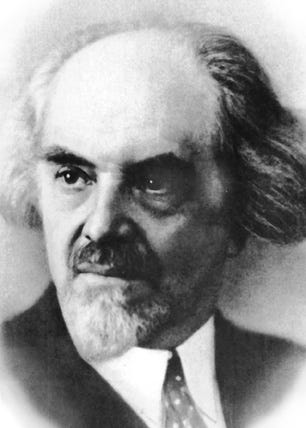
In my favourite chapter (although “The Dionysian Wild” and “Hunting the In Between” were close contesters) “The New Middle Ages,” Dr. Martin unites the old ways with the new philosophers and poets. For some reason, many late twentieth century Russians were anticipating a “New Middle Age” despite their disdain for the Scholastic philosophers. But why is such a renewal desired? “The medieval period was nothing if not a time of a poetic metaphysics,” Martin explains, “and, at best, our current milieu can only understand the symbol as a symbol … and not an utterance of reality.” To our modern ears, symbols are merely code for other materialist concepts; when modern man is threatened by the possibility of real magic, we assuage him with the common phrase: “it’s just a symbol, what’s really happening is…” to be followed by some biological or economic phenomenon. The symbol as “a statement of reality” is at stake here, Michael Martin argues, and a reunion with magic is needed to regain the real.
But what about the dangers of engaging in magic and possibly falling into witchcraft? Dr. Martin isn’t particularly concerned with the overly scrupulous citizen, but he also doesn’t give much support for the overly eager occult neophyte. Rather, he shows his readers the other side of the epistemically unbalanced accusations mentioned earlier: instead of being a vessel for mere power, the spiritual science of magic is poetry in action. Astrology is one such example. “Astrology, like alchemy,” writes Dr. Martin,” draws on the capacities of both sides of the brain; the calculation and geometry integral to erecting a chart is an obvious left-brain activity, whereas the interpretive modes … belong to the domain of the right-brain.” The prevalent third person perspective of materialism tries to convince us that the most real way to interact with the world is through empirical data, leading us to trust our senses less and less, quantity always reigning over quality:
A great part of the difficulty of entering the world of poetic metaphysics for those of us enmeshed in a post-Christian age of technocracy given to physicalist epistemologies is that so few of us know how to inhabit the poetic without submitting (unconsciously for the most part) to the Cartesian dualism that takes the symbol as something ‘out there,’ something to be analyzed and interpreted, as just another object subject to left-brain interrogation[….]. The fact that we see the symbol as something ‘out there’ categorically alienates us from the Real.
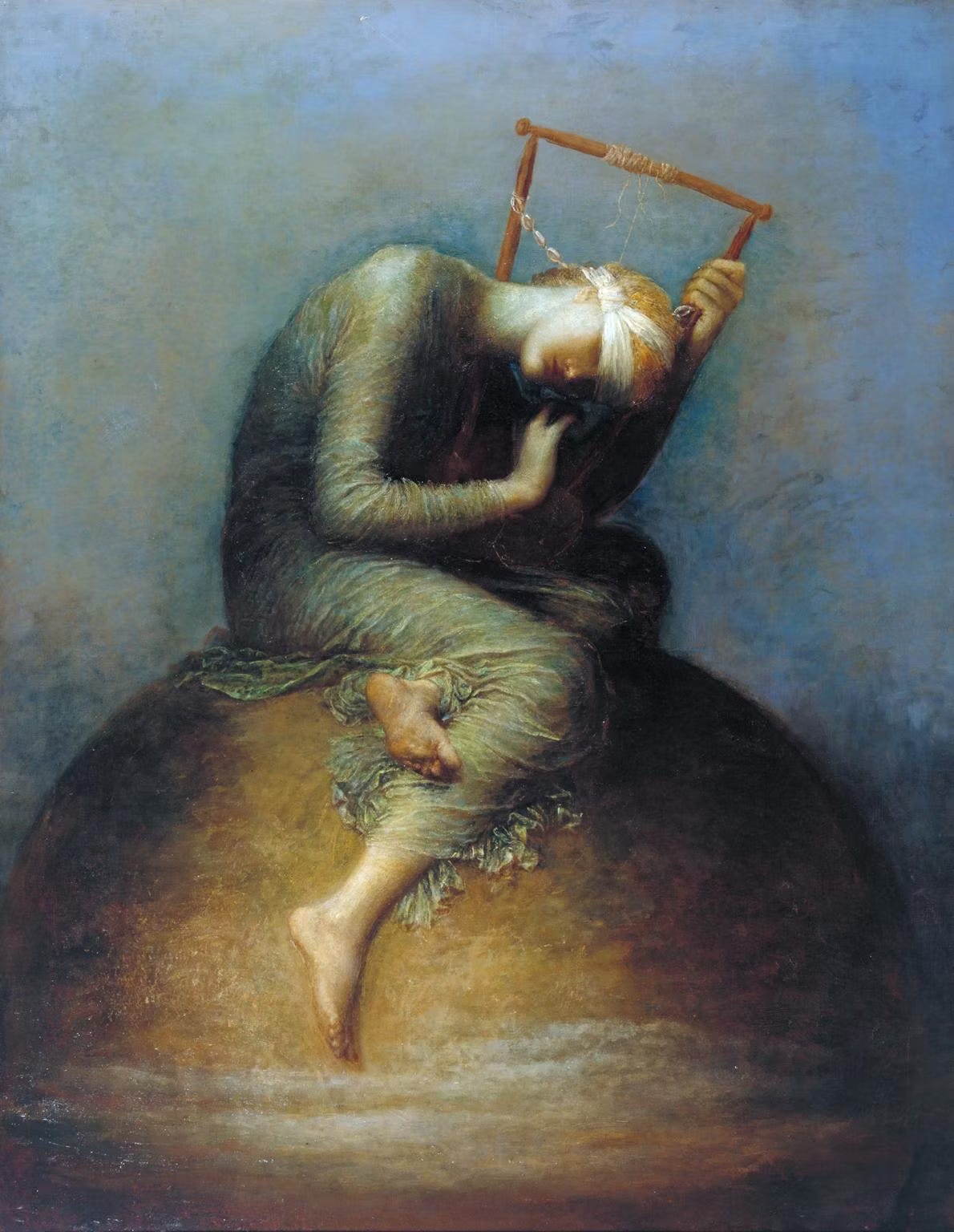
These words are a fight against abstraction, remaining within the metaxu, the “between points” depicted in his dream-like chapter “Hunting the Between: a Martinian interpretation of William Desmond.” Using his experience as a hunter, he uses this as an analogy for poetry and magic: “The strange thing about hunting is that the more the hunter thinks about the hunt in media res, the less he is actually hunting.” In a world that insists the whole is equal to the sum of its parts, a poetic metaphysics will never make sense nor be attainable. Something needs to be restored.
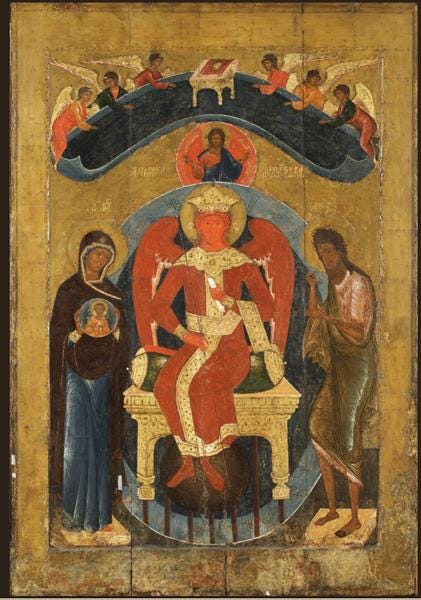
Michael Martin’s expertise in Sophiology (the study of Holy Sophia, presented so well in the chapter “The Color Blue” as well as his previous book The Submerged Reality) brings unique insights to the magical conversation, that of the Divine Feminine. Modern culture, he explains, has perverted the alchemical image of the hermaphrodite by a disunion of the masculine and feminine, “no longer an image of integrating the soul but of invasive medical procedures and lifetime subscriptions to hormone treatments, the soul left to flounder in a hell of pain and despair.” This war on human nature is ultimately the conclusion of our war on nature itself, a rejection of the World Soul (Sophia) in order to view the universe as a gathering of stuff that can be used however we please. In this war, poetry must be trivialised because it prioritises the whole rather than the sum of the parts. But a solution to an enslaved humanity is within our grasp:
The antidote to such a predicament is obvious, as Berdyaev explains: ‘My salvation is bound up with that not only of other men but also of animals, plants, minerals, of every blade of grass—all must be transfigured and brought together into the Kingdom of God.’
This transfiguration is also a nuptial union, masculine with feminine, the Creator with creation. Such a daunting task is only possible with a sort of alchemy, turning the lead of our modern world into sacred gold.
Magic is fairly easy to malign because it’s easy to ignore the metaxu, the between point of creation and the Creator. This reality cannot be laid out “like a patient etherized upon a table” nor predicted through a spreadsheet. For the modern day materialist, this is quite dangerous, and Michael Martin would hardly disagree. The “Sophianic Real” brings us into the unknown just as much as it brings us back to the certainties of truth, “The submerged reality” he tells us, “lies in hiding, as it were, awaiting discovery.” The Kingdom of Heaven is both “at hand” as well as “within you.” In this way, the epistemically unbalanced position of the celebrity exorcist becomes quite clear: to ignore magic is to ignore not only a vital element of reality, but an essential aspect of the Divine: “Can we be at peace with the wild of God?”

Modern culture is Gnostic in the worst, Manichæan, Albigensian, dualistic way possible. The world of the Serpent, as Tomberg would call it, if he were more open to polemics.
The Mediæval revival the Russians predicted, though, I do believe is in process now. The world has become so caught up in the insanity of the tyranny of quantity and the evils of Materialism that it has become obvious which is truly the unenlightened path. Looking at the popularity of YouTube channels like Medieval Mindset and others devoted specifically to the Mediæval era is a good indicator of where the youth are directing their attention.
Personally, I even see the interest in witchcraft, Manifestation, and similar as serving a good purpose. It comes from a deep-rooted desire to escape the atheism and Marxism of our day, though expressed in a less than ideal manner. I think most of those young women and men will come to the Faith the more we talk about matters such as Traditional Western Astrology and Medicine (TWA and TWM), and explicating the licit magical practices our ancestors engaged in for various purposes will accomplish much in that regard. Tossing the Puritanical tendencies we've adopted as a reaction to living in a post-'Enlightenment', post-Reformation, world, and returning to a more grounded, holistic, Catholic in the true sense, weltanschauung will do more to establish Christ's Kingdom than any anti-sorcery campaigns.
What if the necessary potentially world-transforming Divine Revelation has already occurred in the form of The Incarnation of Conscious Light
http://www.kneeoflistening.com/chapter-one/6
http://www.integralworld.net/reynolds17.html Reality as Indivisible Conscious Light
And as Orpheus too:
http://beezone.com/frank_marrero/orpheus.html
http://www.adidaupclose.org/Literature_Theater/skalsky.html an introduction to The Orpheum Trilogy
And as the Goddess too http://beezone.com/adida/shakti/theshaktiherplaywithadida.html
http://beezone.com/current/index-102.html The Pleasure Dome Law
Western culture is dualistic all-the-way-down
http://beezone.com/current/three_great_myths.html