



By Sebastian Morello
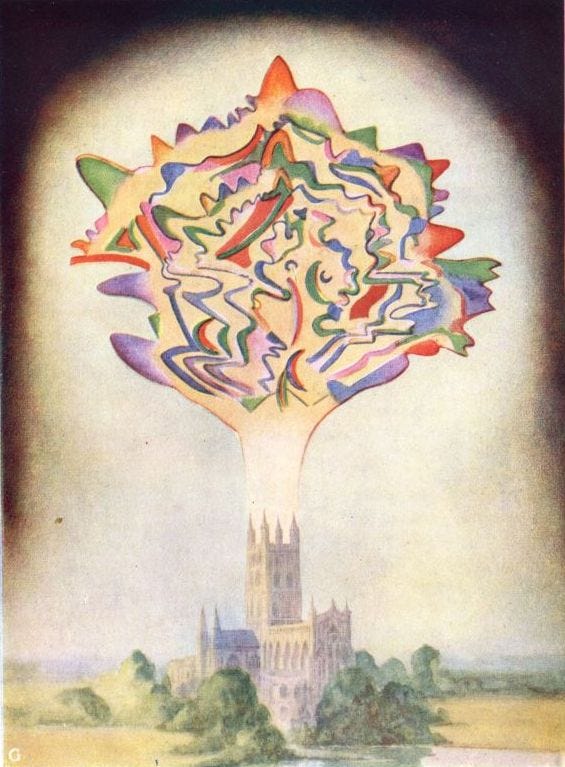
Modernity is not merely an epistemological or metaphysical, nor a cosmological phenomenon—the mere tacit acceptance of nominalism or the prejudices of the scientific revolution—but it is also a political one. And inasmuch as it is a political phenomenon, I suggest that it beings with the proposal that we all be governed by an egregore of some kind.
That may seem an odd way of putting it, and indeed it is. An egregore is a mind-virus, a conglomerate of mental errors that take hold of communities and which are, I have suggested elsewhere, a useful part of the repertoire of demons for their manipulation of human beings, leading to terribly destructive behaviours.1 Such mind-viruses characterise the modern condition.
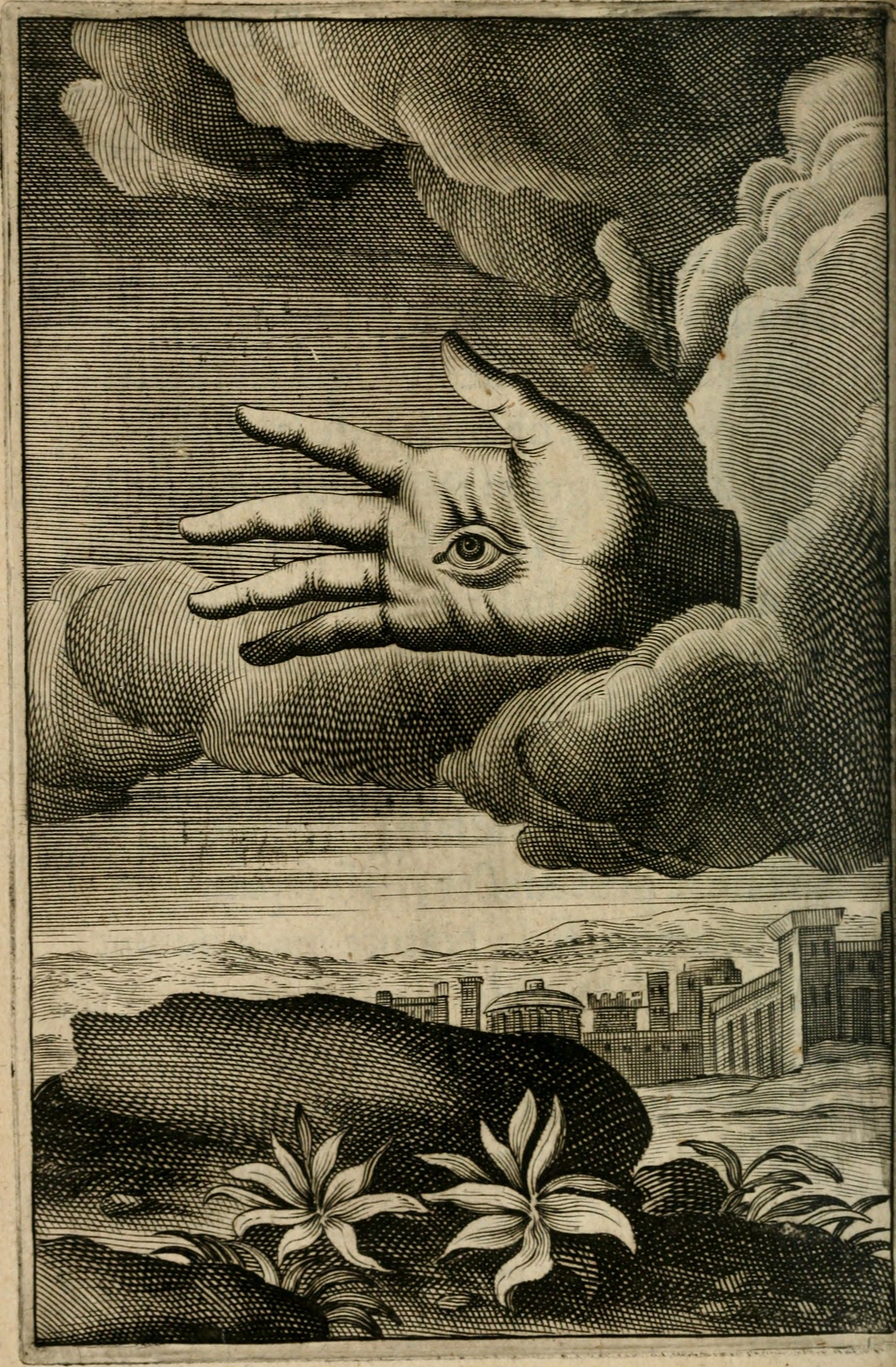
We get the notion of ‘egregores’ (literally, ‘the watchers’) from the first book of Enoch. The understanding of ‘egregores’ that has developed among esoteric thinkers over the last few centuries is not identical to that presented in Enoch, yet the later understanding remains deeply informed by that ancient text. Therein, wicked spirits—the egrḗgoroi—commingle with human nature and pollute the minds of those they capture, ultimately seizing them by way of passion. This satanical blending of fallen human and fallen angelic nature brings forth a new kind of monstrous thing called the nephilim, vile giants that swamp humanity.
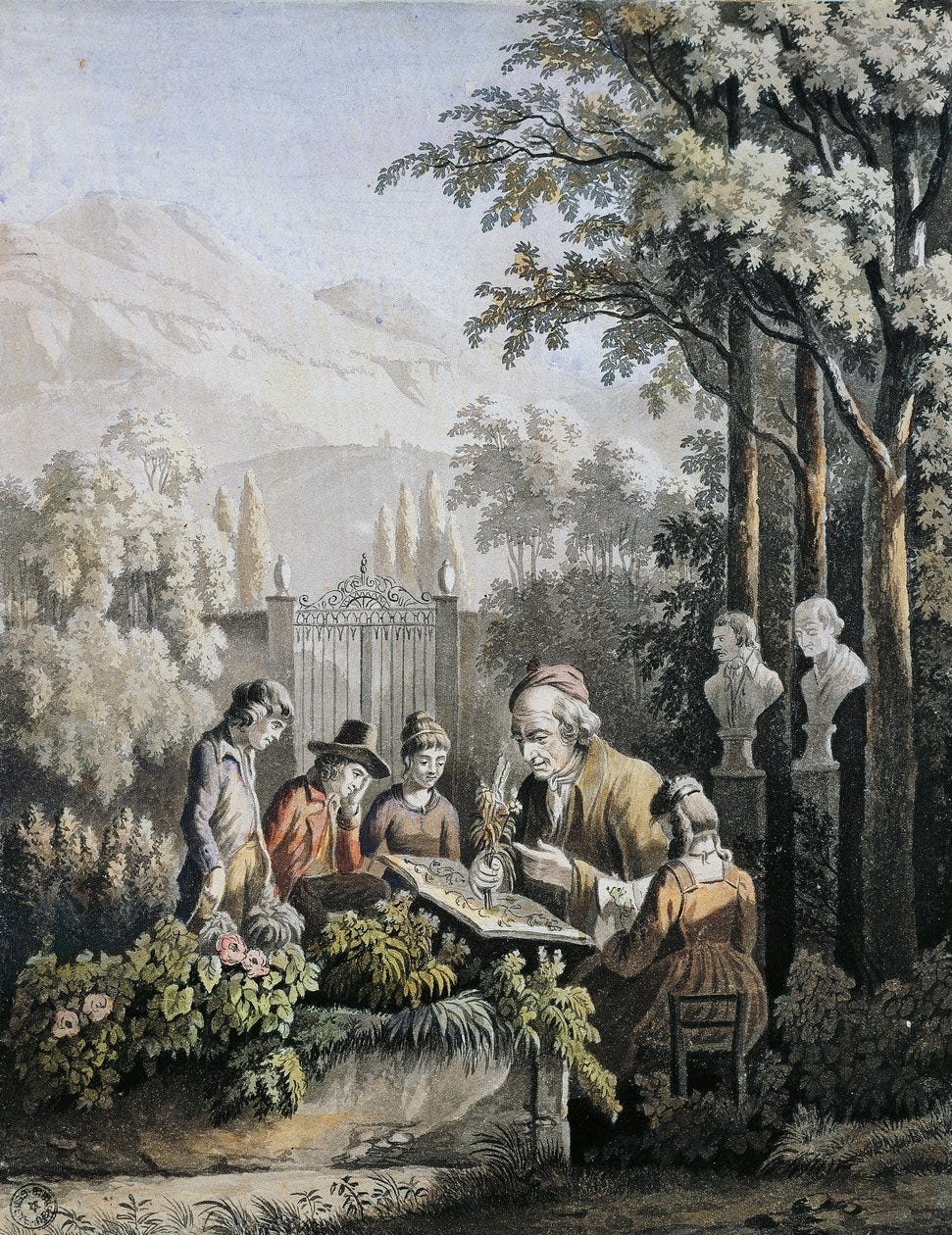
What has this myth, though, to do with political modernity? Thomas Hobbes suggested in the seventeenth century that humans were such menacing and rabid creatures that we needed to be subordinated to some Draconian political order that would keep us in check. John Locke soon took up this notion and humanised it somewhat, suggesting that we did indeed all need to opt into a political community for our very survival; not, however, because we’d all be otherwise raping and eating each other, but because such a community would come with countless benefits. By so opting in, we’d have to give up certain rights and powers that we had in the ‘pre-political’ condition, and hand those rights and powers over to the contractually-formed state, but we’d be cared for in return.
I call this contractualist proposal in both its pessimistic Hobbesian form and in its optimistic and more benign Lockean form ‘egregoric’ because in order to accept either, it is first necessary to concede a false premise. That premise is that there is such a thing as a pre-political ‘self’ that then opts in to political life. This is the fundamental error on which all political modernity hinges. It has reasserted itself again and again, later in Rousseau, later still in Rawls, in all ideological thinking since Hobbes created the erroneous mythos, and it frames all public discourse, at least implicitly.
We apparently could not break free of the egregore that took hold of our minds, and it remains the basis for the entire conception of moral becoming which in turn dominates all contemporary conversation. Outside of the established terms of that conception lies only lunacy and Nazism according to the prevailing weltanschauung. Moral becoming thus constitutes the responsible choice of individuals fully to opt in to the political community and derive benefits from it, whilst knowing that by so doing they are giving up something of their original authenticity and individuality. The challenge, then, according to the modern episteme, is to enjoy those social benefits whilst also constantly striving to retrieve and conserve that original sense of ‘self’ that enjoyed utter—albeit undefended—freedom of self-realisation before the social contract was established.
The blue-haired, ear-tunnelled, tattooed, unclean, swearing ghoul who is blaring out music from his mobile phone whilst eating fast food in the train carriage near to where you’re sitting—an incarnation of antisociality—is asserting his supposed radical individuality in his chaotic attempt to retrieve and make present again his pre-social self. He will be the first, however, to get his covid booster and call the police to report a ‘non-crime hate incident’ because he overheard a gay joke in a pub. He expects the Leviathan to do its job and honour the contract he’s made with it. He is both utterly alone and yet nothing independent of the monster of whose body he’s a cell.
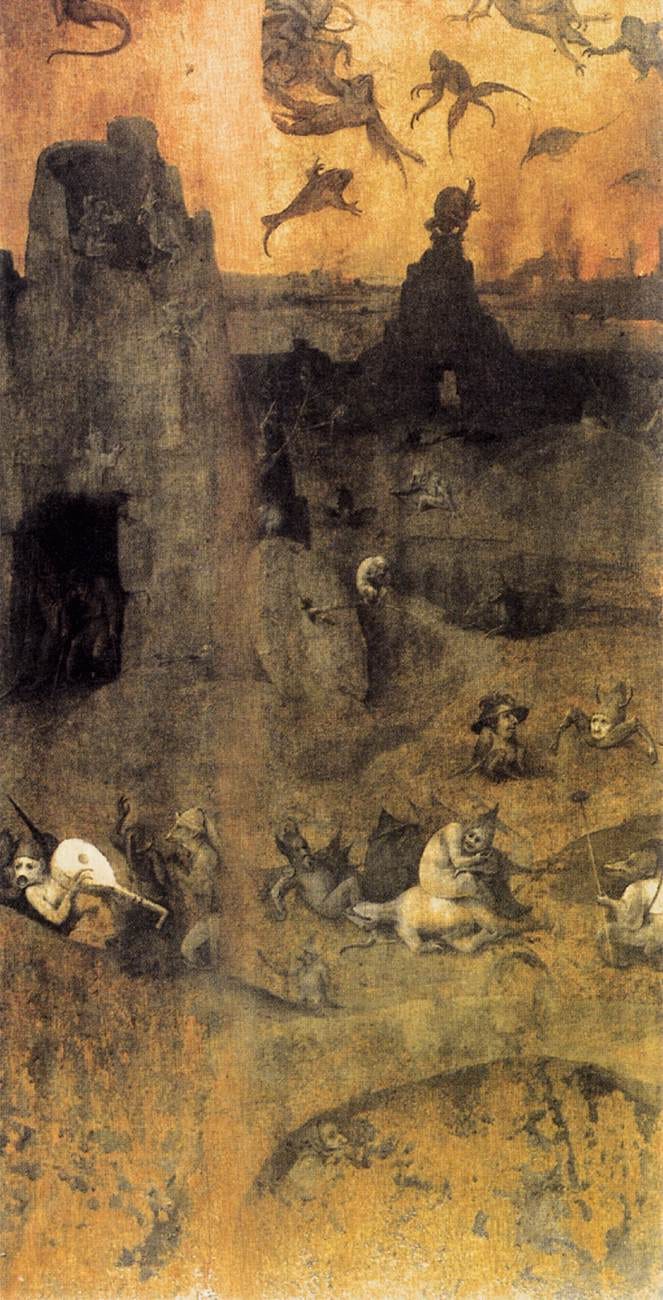
Thus, a completely false view of the human being, the political community, the emergence of the moral life, and the purpose of human existence has been wholly adopted as the fundamental worldview to undergird whatever this hell called modernity is. And having comingled with our nature it has forced into being a new kind of creature—a nephil—that is the product of all this political witchcraft. Hence, modernity emerged from government by egregore, a political system running on a complexus of errors, which depended on a large population of increasingly brutalised and vulnerable individuals who were sufficiently held captive by that very complexus.
Those comprising the population in question, by accepting the terms and false mythology of this system, grew sufficiently atomised that they had no choice in any case but to depend upon the state brought into being by the wicked spirit. What we have toiled under is the ultimate inversion of a top-down Plotinian politics of the One and the truthful ideas of the One emanating out via the Nous into the World Soul, that’s vivified into a rejoining community of truth-lovers. Instead, we have endured the rising egrḗgoros, permeating with error the blinded human community which is no community at all, leading to a ghoulish and confused population who together form the political nephil.
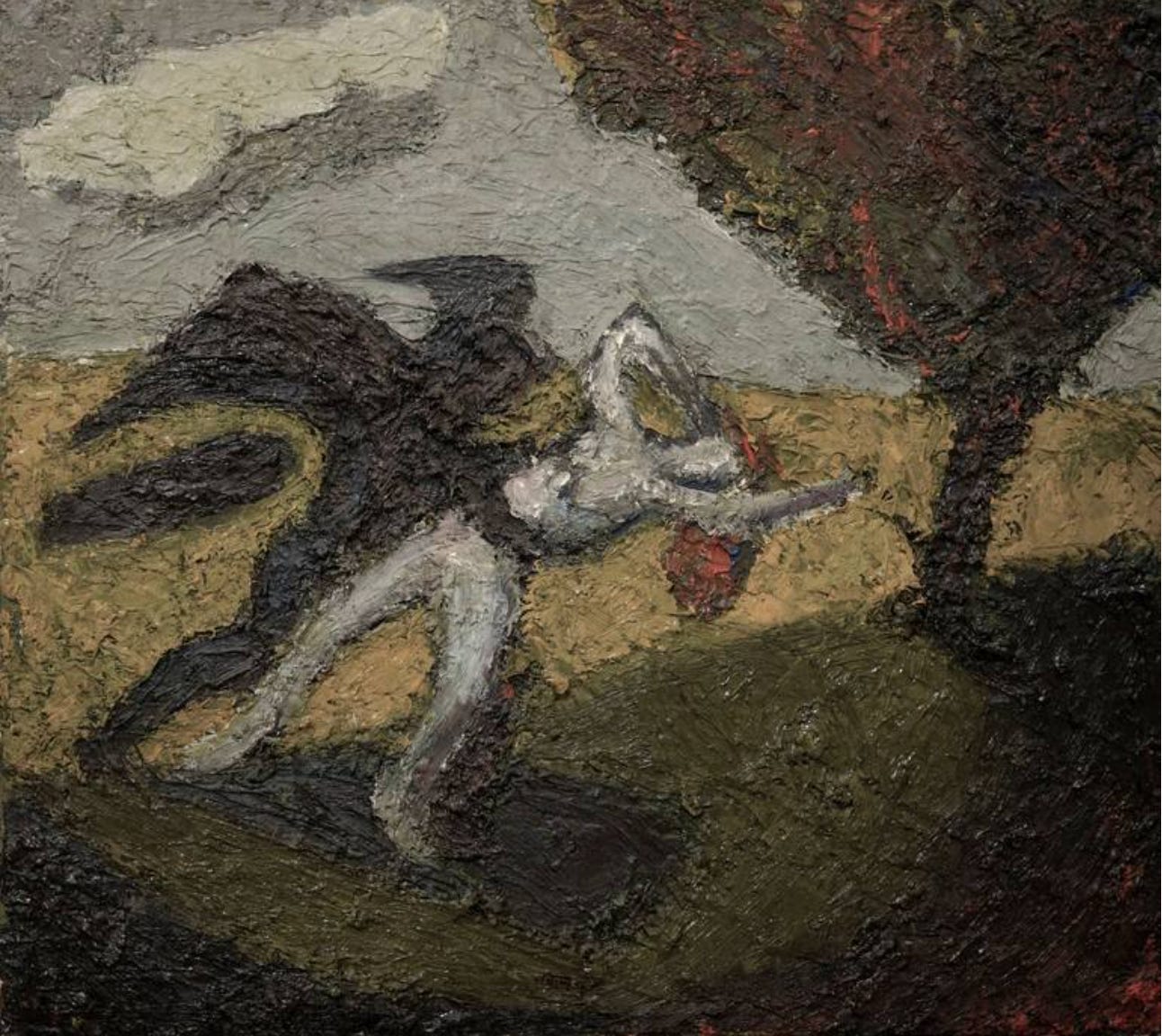
This state of affairs has been deeply distressing to those with the humble ambitions that correspond to the flourishing of their own nature: get married, have a family, run a business, get propertied, grow some food, remain healthy in mind and body, pass down traditions, worship God, and so forth. All such longings for a life contingent upon duty, self-sacrifice, dignity, and rootedness are diametrically opposed to the false mythos of modernity. Consequently, the political order that has run on that false mythos has self-preserved by habitually conflating those humble aspirations with “fascism” or “the far-right” or a whole host of other evils. That political order has thus repeatedly placed legal weight behind the nephil, its child which it has brought into being, a giant comprised on mindless pre-social zombies, seeking to consume those who pursue genuine human flourishing. This of course has given rise to a feeling—now widespread—among normal people that their politics, law, and elite institutions hate them with an unappeasable hatred.
When the UK government’s Nature and Rural Affairs Minister declares that owning a black labrador and drinking English ale in a rural pub is ‘far-right’, as she did last month, what she is saying is that the normal stuff that normal people do is wicked and must be destroyed. It is noteworthy that when she voiced this opinion, she also declared that such things as these have ‘never really existed’. So, a normal life enjoyed by normal people does not exist and yet must be eradicated. This is nonsensical but it is also telling. You see, one of the dominant features of egregoric thinking is the privileging of erroneous abstractions over concrete realities. This is why all ideological thinking is in some way egregoric in structure. And when a minister comes out with such things, if we respond with bafflement, it’s only because we haven’t understood how egregores work and how they guide politics. He is a child of egregore, a cell in the nephil.

I recall having drinks in a London club with three Texans who had stopped by our capital on their return home from a big game hunt in Africa. They were real southern gentlemen of the old school and I enjoyed their company. Donald Trump had just been elected for his second term and we discussed what this meant for the US. They described to me how wonderful they felt, and how optimistic they were about his return to office. Perhaps their opinions at the time haven’t aged so well, but at that moment there was great excitement among them. I expressed my own reservations about Trump, noting that he seemed to lack the stability of character and self-knowledge of a great statesman. ‘Yeah, that’s probably true’, said one of my new friends, ‘but you have to understand what it’s been like living under Biden’s government; to wake up every day knowing that because you’re a Christian, a devoted husband and dad, because you want your kids to get a decent education and feel protected, because you want to run your farm or your business and not get taxed to death or deal with constant government intrusion—basically, because you’re a normal guy with some natural hopes in life—your own government hates you and wants you gone forever … well, enduring that has been pretty demoralising’.
As it happens, the British peoples have been living under a similar regime for as long as I can remember, similar inasmuch as anyone who has such basic and wholesome aspirations for his life will feel—a feeling that corresponds to reality—that there is a Leviathan looming over him that wants him crushed. Britain’s towns and cities have changed beyond all recognition in my lifetime and can no longer be called British towns and cities in any meaningful sense. Brits have fled to rural areas, upon which the government openly declares that the countryside is now ‘too white’. The government has then proceeded to ban, regulate, or tax those activities that might root the remaining indigenous population in a sense of their own tradition and spiritual unity with the landscape, like hunting and shooting and farming. If you protest, you will be a native political prisoner, a growing number of which Britain currently holds in its gaols, while simultaneously letting Jihadis, illegal immigrants, and convicted rapists walk our streets, tyrannising the young and vulnerable. If we weren’t all deracinated and atomised dependents before, we certainly are now.
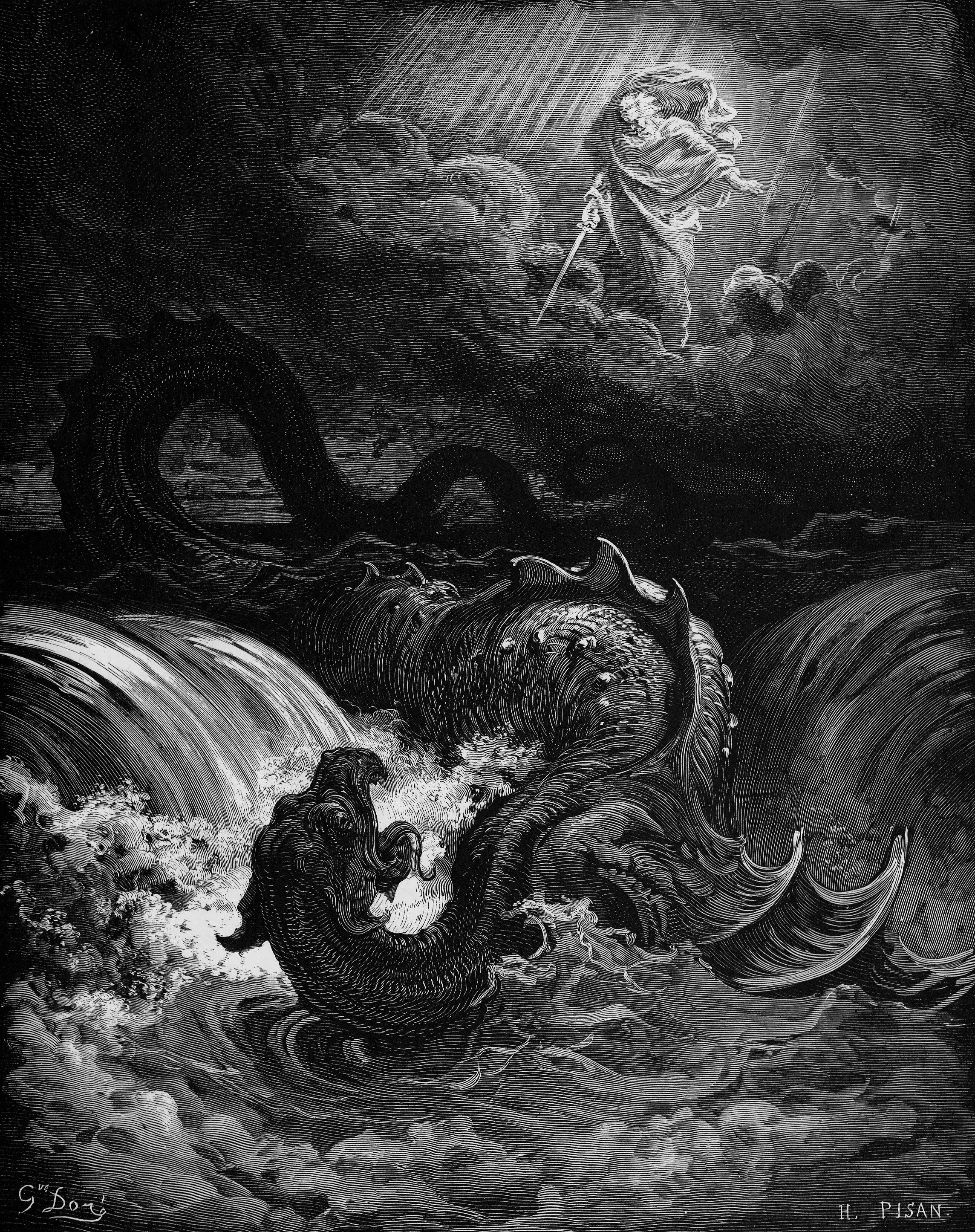
It is possible even in our age to envisage a political order that just seeks to conserve those aspects that everyone thought a polity depended upon for its preservation until modernity came along: belonging, piety, received culture, established tradition, efficient and moral connectivity with the land, a sense of history, etc. And what is perhaps surprising is that, despite its effectiveness in wrecking all that makes us truly human, I’m not even convinced that the regimes under which Britain and so many other countries toil even wants to spend enormous energy and resources on destroying all such things. But in creating the countries that the egregores and their false mythologies demand, our regimes keep coming up against reality.
In the face of reality, all these regimes can do is resort to violence. The Leviathan-egregore of modernity was never able structurally to recognise any pre-political realities except for the illusory pre-social ‘self’. Hence, whenever it encountered such realities it first had to deny that they existed at all and then sought to exterminate them. It’s been one long pathway of spilled ale and dead labradors all the way to this hell.
Nothing lasts forever, and even the egregores eventually consumed themselves. Just as the parasite ultimately kills itself by killing the host on which it depends, so the egregores eventually destroyed themselves by destroying that great social organisms wherein they worked away like a virus. We are no longer in the age of the egregores, nor even in the age of the nephilim, for late-modernity is what comes after both.
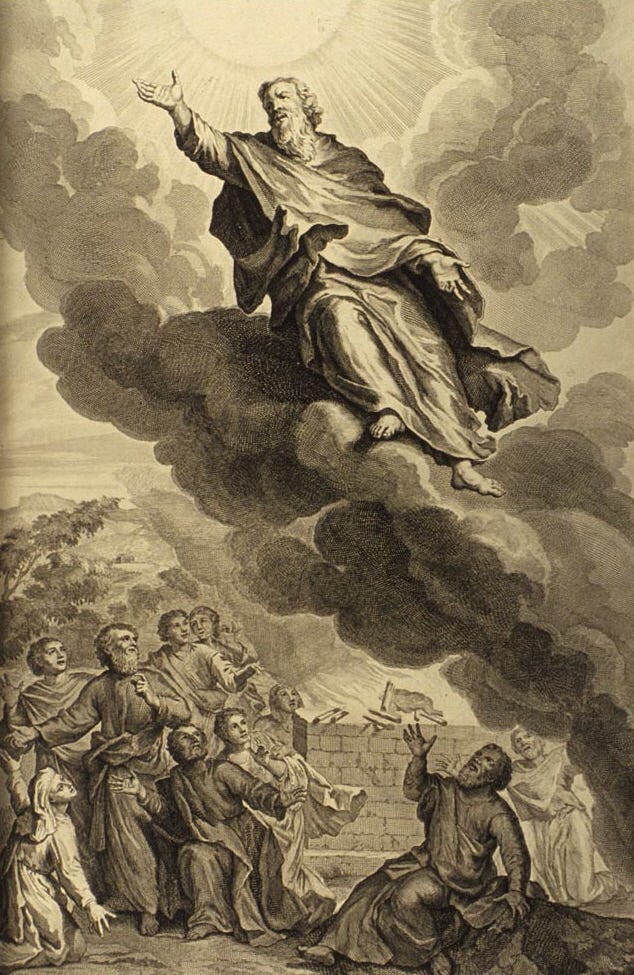
In Enoch, the egregores twist and corrupt humans by teaching them sorcery and the arts of destruction, and eventually seduce them, before God sends them to their eternal punishment. By that point, however, the nephilim are already here. This fiendish spawn swells. A multitude of giants squander the earth’s gifts and seek to devour all that is human. But the nephilim are eventually led by good angels to attack each other, and violence between them ensues until they have obliterated one another.
That, it seems, is the only way to destroy the children of the egrḗgoroi. Indeed, I see the mid twentieth century as a great battle between the children of egregores. That, however, was not the end of it. Enoch explains that once the nephilim are destroyed, their evil spirits go out into the world. These spirits, we are told, continue to corrupt human nature, foster violence between the members of the human family, and encourage the desecration of the earth. Indeed, the nephilim of the mid twentieth century may have been killed amid a war, the likes of which had never been seen before, but their spirits have never gone away. They continue to frame all political discussion as one between materialism, eugenics, and the accelerationist process of deracination that went by the name of ‘liberalism’. All such spirits have now converged as a single global order, tamed and utilised by the only god that could ever control them: Mammon.
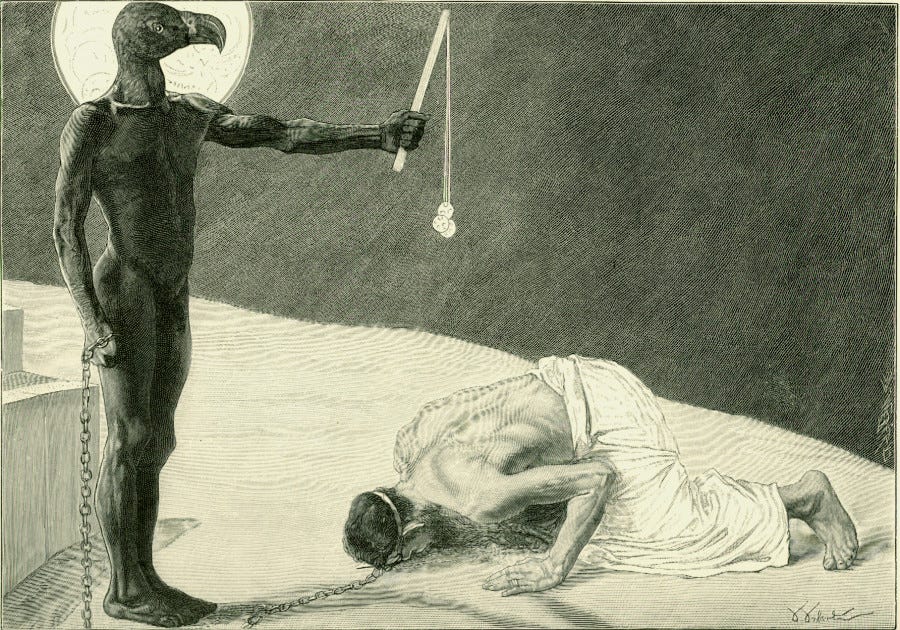
The false mythos that made all of this possible—the original egregore, if you like—namely the social contract and the phoney legend of the pre-social selves who opted in to it, is collapsing. The ignoble lie is finally beginning to be disbelieved. The whole system it supported is imploding. Once the political order has fully consumed itself, all that will be left is the pre-social atomic selves with nothing to opt in to, nothing with which to make a ‘contract’. It will be the current population of zombies, yet with no political flesh upon which to feed. It will not only be a world before Logos, but before even the devilish imitators of Logos: only ghouls wandering in a void.
Europe, that once sacred and magical land of gathered nations under the banner of Christ, is now a wasteland haunted by the spirits of dead nephilim. Its crumbling urban labyrinths stand as a network of grey tunnels for the scurrying of muggers and looters, and above that sits a spectral yet ever more quickly evaporating benefits system, itself looted by newly arrived opportunists. Two populations of barbarian, both respectively benefiting from the loot-settlement of the ebbing modern world, are now being copied by native populations. And this is the world at the end of it all: a return of subsistence hunter-gatherer living.
Many of the peoples who have flooded Europe, especially Britain, are simply doing what they have always done, drifting through a landscape and gathering up easily sourced produce without working for it. Such people have no history either of cultivating or making, only gathering and foraging, and this of course entails a very different kind of future for Europe. Other peoples that have recently arrived, especially those from Asia or the Middle East, are also doing what they have always done: living under the subsidence and protection of a local high caste overlord or caliph.
The lifeway-by-looting that now characterises our collapsing continent should be understood for what it is: the return of primitive subsistence living. As appalling and unjust as it is, it’s nonetheless the reappearance of a life before government by egregore. What we see before us is the festering corpse on the ground, now that the parasite has killed its host and consequently killed itself, and from the rot is emerging new fungal life.
Of late, France has shown us a brief vision of the post-egregoric and post-nephilimean world: burning schools and assaulting educators implies that people have together accepted that subsistence is more effective in this landscape of globalised systems than learning to become someone and labour for one’s flourishing. It is preferable to kill the father and then suck at the breast of the great stepmother. Even farmers themselves have had to accept this: they may farm, if they really must, as long as they do so on subsidies and beg for every remaining human normality, which the state then intermittently threatens to take away. We are all looters now. It is what’s being encouraged and funded into normality, and no one can resist it.
I have heard it said by some historians that one of the final stages of civilisational decline is the consolidation and gathering of all knowledge into localised venues and groups of highly controlled people, and its increasing vulnerability to mass eradication, which then happens. The tragedy of our situation is that we will cheer on the torching of our own birthright. We will watch as our libraries burn and we will dance before the flames. Recent images of a few indigenous Europeans standing amid great hordes of Africans and Asians in France, celebrating with them the incineration of their own schools, is confirmation of the fact that everyone is walking towards the hunter-gathering or subsisting lifeway, all at the benefaction of some bureaucratic lord who wants nothing but slaves. We have even been told that we will own nothing and we will be happy, supposedly sedated by Mammon’s daily condescension to supply us with fried battery chicken and dope. When we want more, we will steal, and we will not be punished.
The bureaucratic chiefs are building a landscape of benefits and goods which are meant to be browsed by placeless wanderers and snatched without consequence, and fraud and theft are now accepted means of distribution and economic growth. As I say, the old egregores are now dead: this is neither Marxism nor capitalism nor techno-feudalism but an entirely new settlement which is only now being born; it is the isolated and solipsistic grazing individual, satiated on deliberately exposed and served up temptations unto his ruination.
What I’m describing is a distinctly post-Christian landscape. What we have been living through—the age of the egregores and the nephilim—has been a mere transitionary stage, just as it was in that mysterious extra-canonical book of Enoch. We’re entering the global ‘soup kitchen’. Like at a UN station in central Africa, we all get to queue for free goods, with the mechanics of delivering those goods under the control of great chieftains whose mystique means we never get to see them or learn who or where they are. Their presence, though, is felt everywhere, as they competitively bribe the various administrations for contracts. Those who think this is a new Marxism or a new socialism or a new liberalism do not understand that all such egregores have had their time. What is here is a kind of reward-based empathy-market, more accurately understood as slavery amid widespread tribal attachment to the great Mammon in the sky.
Farming will end. Business, understood as the human ownership of one’s own labour, will end. Taxation will increase and anything except dependence on the sky-Mammon will be impossible. We will loot that wicked god and it will loot us in return. Eventually, we will all be hunter-gatherers with nothing to trade or sell or own, for we ourselves will be the commodity to be exchanged.
Already, our way of discussing geopolitics has created an idiom and phraseology for understanding such a condition. Behold, ‘the migrant’. In the past, we only ever had ‘emigrants’ or ‘immigrants’, people going or people coming. But now we have a new category, the migrant, the one who is not coming from one place and moving to another, but the one always on the move—the rootless one, the placeless one, the wandering one—the one who belongs nowhere except where there’s a slave-economy that can make use of him before he moves on to where another slave-economy has temporarily popped up.
What is heartbreaking for me as a Roman Catholic is that I believe there’s no remedy to this situation which isn’t the civilisational order that emerges from the baptism of the temporal life of nations by Holy Mother Church. I say heartbreaking, because if there’s seemingly still a great egregore on earth, it’s the one that has taken possession of the visible aspect of the Church. Such a notion is explored by the mystic Valentin Tomberg in his Meditations on the Tarot:
[A]lthough God, Christ, the Holy Virgin, the spiritual hierarchies, the saints, the Church (or the Mystical Body of Christ) are real entities, there still exists also a phantom or egregore of the Church, which is its “double”, just as every man, every nation, every religion, etc., have their “doubles”. But just as he who sees in Russia, for example, only the bear, in France only the cock and in Germany only the wolf, is being unfair towards the country of the Heart, the country of Intelligence and the country of Initiative—so is one being unjust towards the Catholic Church when one sees, instead of the Mystical Body of Christ, only its historical phantom, the fox. In order to see rightly one has to look rightly. And to look rightly means to endeavour to see through the mists of the phantoms of things.2
This is the challenge of the devoted Catholic Christian in our epoch: to love the Church and be obedient to her when we can only see her ‘double’. As we move into this new world of faceless chieftains operating globally and algorithmically, the Church appears largely to advance the mechanisms which foster the emergence of this new settlement. If the hunter-gatherer world unfolds out of mass deracination, then an ancient institution that condemns its own tradition, severs its members from their ancestral worship, insists that states secularise, makes excuses for slavery to unruly appetite, and wrecks its own sacred sanctuaries, is one that is aiding that very process of deracination. We may want to follow the Lamb wherever He goes, but we must daily contend with a fox wearing its fleece. So, I suppose, we have to wait for that egregore and its offspring to go to the punishment prepared for them.
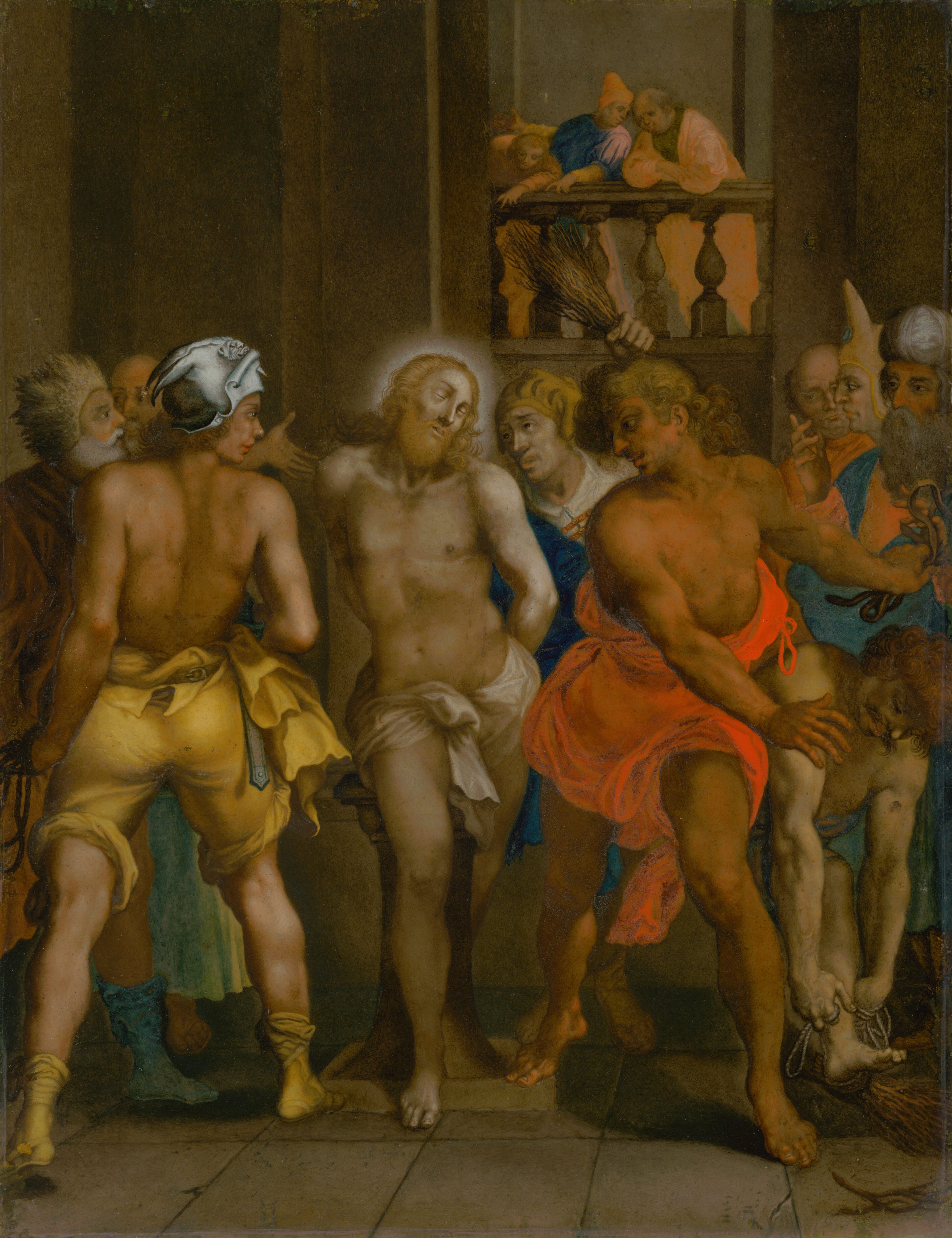
It is often quipped in the idiom of internet comments boxes that ‘The only way out is through’, a paraphrase of some lines from Robert Frost’s 1914 poem, “A Servant To Servants” (“Len says one steady pull more ought to do it/He says the best way out is always through/And I agree to that, or in so far/As that I can see no way out but through”). And certainly we must endure this epoch. This is the time given to us, and one reason for analysing things meta-historically in a way that admits of spiritual beings and powers that are beyond our control—but nonetheless may control us—is to make it clear that not everything is ours to change. Those who want to remain human, however, must not only seek to do so in the wasteland of post-Christian God-hatred, but must be aware that they are insisting on being free in a time when only slavery is permitted. In the eyes of the new masters, that doesn’t make them not slaves, just disobedient ones. And disobedient slaves must be put to death. We have, it seems, entered the new age of martyrs, but their blood will be the seed of something more glorious than we could possibly imagine.
See Mysticism, Magic, and Monasteries (Os Justi Press, 2024), 89-95.
Meditations on the Tarot: A Journey into Christian Hermeticism (Jeremy P. Tarcher/Penguin, 2002), 139.
POW
How does Morello nail it every time